Takes 30 seconds. We call you back to set a time.
When a garage door is replaced, one of the first questions is whether the opener can stay. Often it can. An opener that runs well, is not too old, and suits the weight and height of the new door can be taken down with the old door and mounted again on the new one. Sometimes it should not stay: the new door is heavier, taller or a different type, the opener lacks modern safety features, or it is near the end of its life anyway. This page goes through how we decide, so you know before install day whether the opener is part of the plan. Free estimate at (929) 429-2429.
By Sean Cohen, owner, On Point Garage Doors · Updated
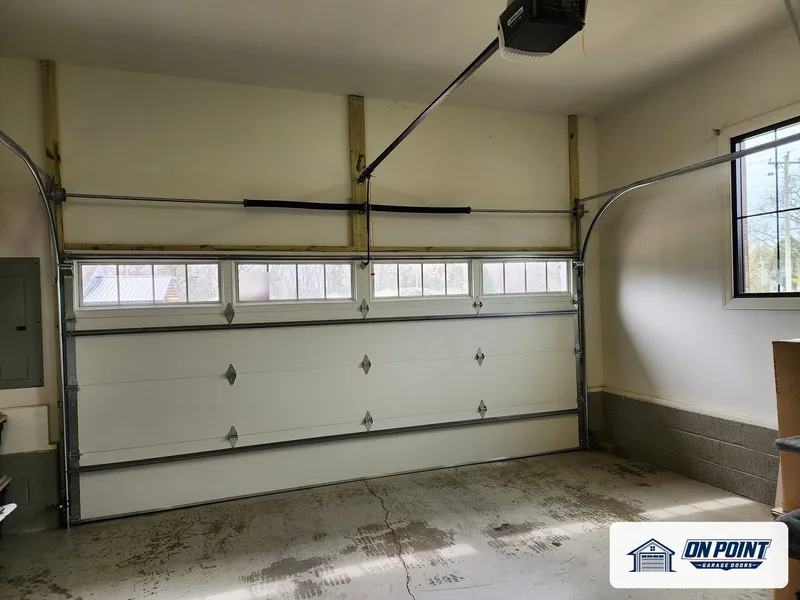
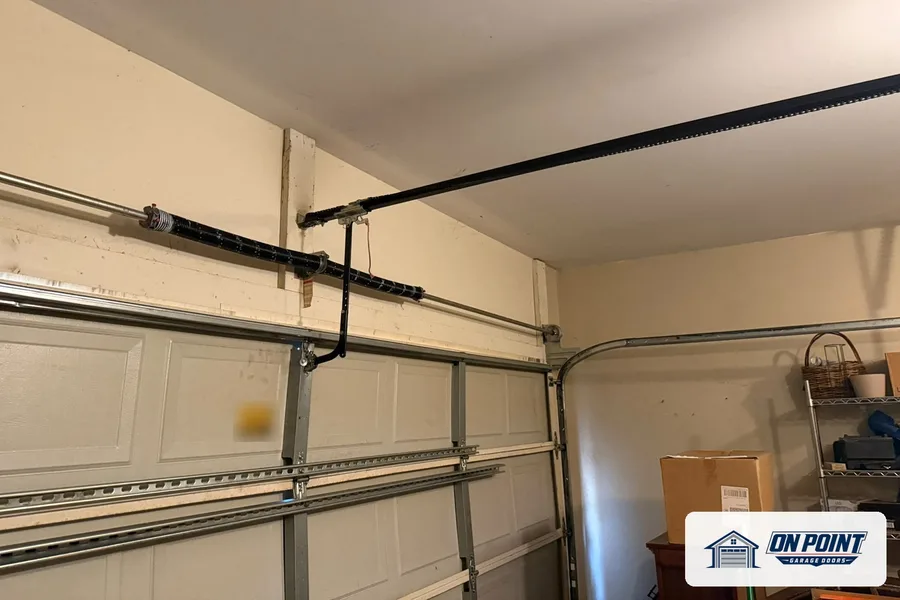
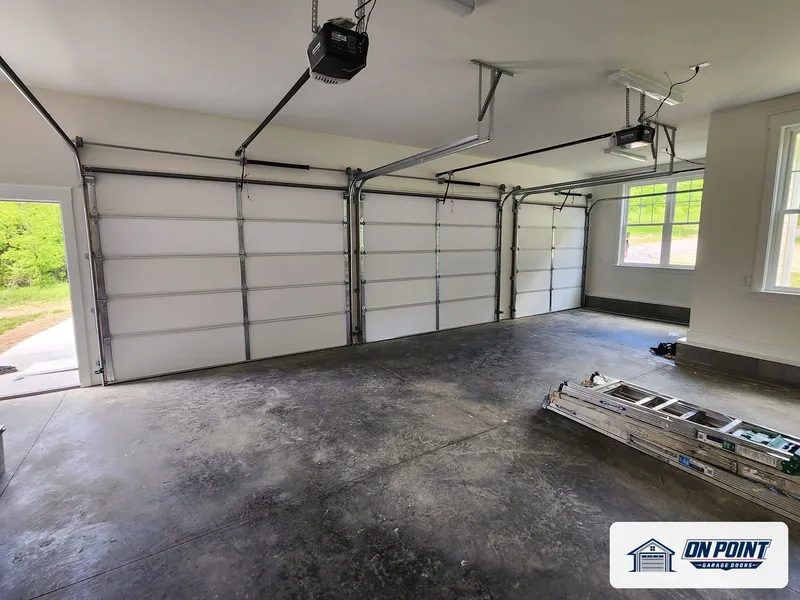
These photos are from our own jobs, with our logo on them.


An opener is a good candidate to keep when it runs smoothly and quietly for its type, starts and stops cleanly, reverses properly when something is in the way, and has working photo eyes. If the new door is about the same size and weight as the old one and uses the same kind of springs, the opener's job does not change much. In that case we take it down carefully, reuse the rail if it is straight and the right length, and set it up again on the new door.
A thin uninsulated steel door is light. Insulated doors, doors with full-view glass and wood doors can weigh much more. The springs on the new door are chosen to balance it, so a well-balanced heavy door should still be light to lift. In practice, though, a heavier door puts more load on the opener's gear, motor and trolley over time. An opener that was just coping with the old door may not cope well with the new one.
If the new door is taller than the old one, or the track is changed to a high-lift layout, the opener rail needs to be longer or the opener needs to change type. Extension kits exist for many openers, within limits. A switch to a wall-mount opener can be the cleaner answer when the ceiling is busy or the track now runs higher. Our page on opener extension kits explains how far a rail can go.
Every opener installed on a home in recent decades must have photo eyes and a reversing system. If your opener has neither, it should not go back up on a new door. If it has them, we check that they work properly: the door must stop and reverse on contact and must not close with the eyes blocked. Old sensors are worth swapping for new ones while everything is open.
Keeping the opener means keeping its remotes and keypads, which is convenient. It also means keeping its security code system. Very old openers use fixed codes that are easier to copy. If the opener is on the older side, this is a good moment to think about whether a modern rolling-code model is worth the change.
Most openers give many years of service, but a long life on a worn door can leave the gear and the motor tired. An opener that is clearly near the end of its life is usually better replaced along with the door, so you are not calling us back soon after to swap it. Our page on how long openers last covers the signs of a tired opener.
Going from a one-piece tilt-up door to a sectional door changes the way the door moves and where the opener attaches. Many old openers on one-piece doors were set up for that motion and need different arms, a new rail or a new opener. Going from extension springs to torsion springs can open the door to a wall-mount opener too. We plan the opener with the door, not after it.
If the opener stays, we disconnect it before the old door comes down, protect it while the new door goes up, and connect it again once the new door is balanced. Then we set the travel and the force for the new door, line up the sensors and test the reversing. If the opener is being replaced, the new one is mounted after the door is done. Our page on replacement day walks through the whole visit.
Would you be happy with this opener for several more years, and does it do what you want it to do today? If the answer to both is yes and the technician agrees it suits the new door, keep it. If not, doing both jobs on the same visit is simpler than doing them on two.
When we measure for a new door, the technician also runs the opener, checks its sensors and reversing, looks at the rail and the motor, and asks what you want from it. The written estimate shows the new door with the opener kept and, if it makes sense, with a new opener, so you can choose.
Often yes, if it runs well, has working safety sensors and suits the weight and height of the new door.
A balanced door should still be light to lift, but a heavier door adds wear. A tired opener may struggle with it.
The rail needs to be longer. An extension kit works within limits; past that, a different opener is needed.
If they are old or faded, swapping them while the new door goes up is worth it.
Yes. We check the opener when we measure for the new door.
Across Brooklyn, Queens and Long Island, tell us what the door is doing and we set a visit that fits your day.
Free estimate, call (929) 429-2429.
Tell us what the door is doing and we will give you an honest arrival time. The estimate is free.
Easier to explain by phone? Call (929) 429-2429.
Tell us what the door is doing. The estimate is free either way.