Takes 30 seconds. We call you back to set a time.
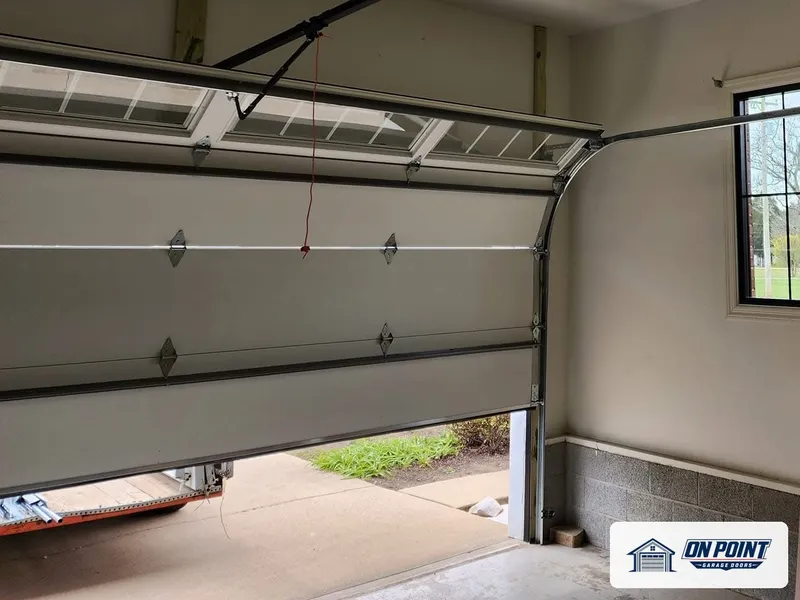
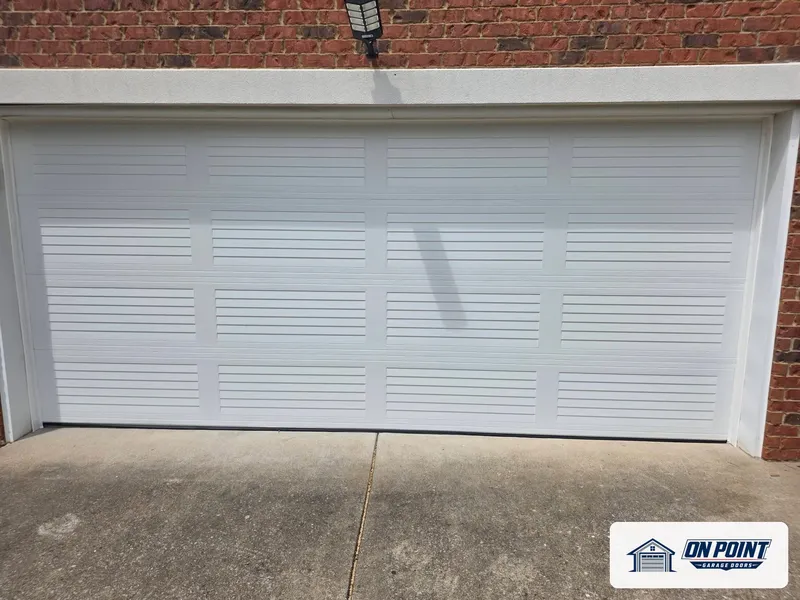
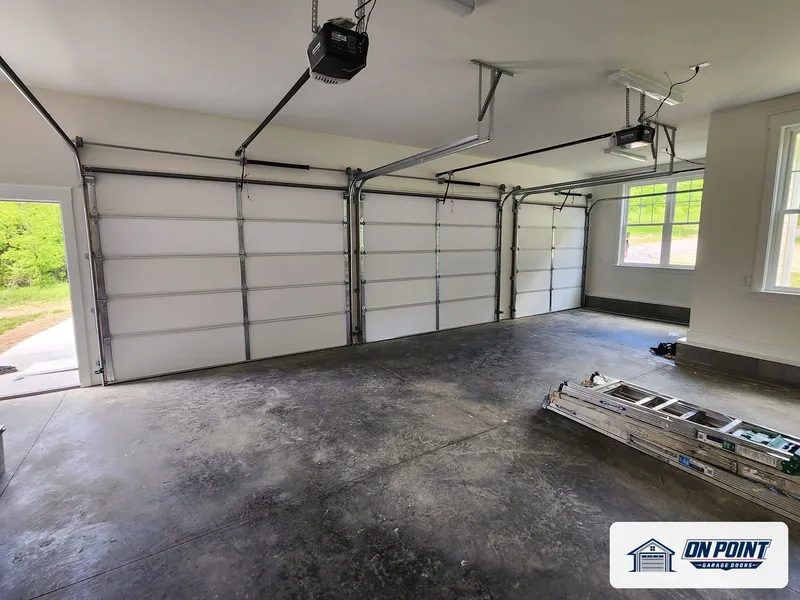
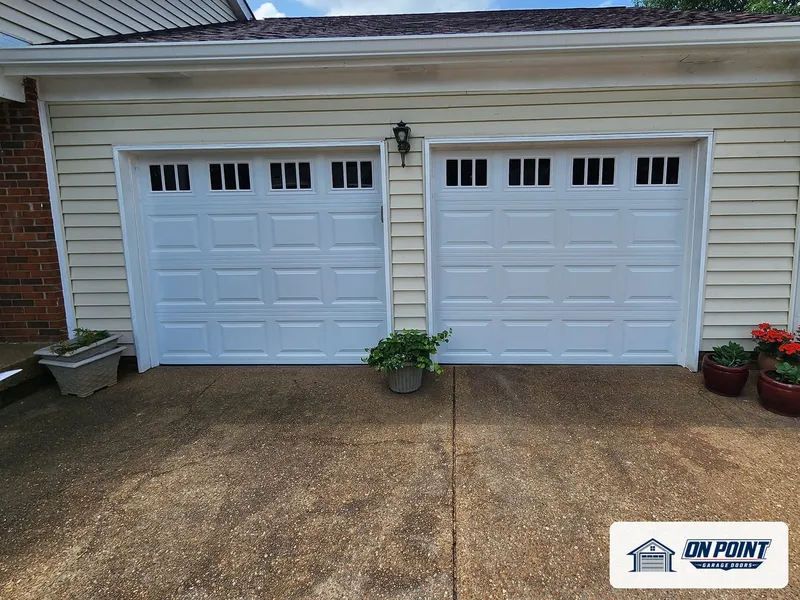
These photos are from our own jobs, with our logo on them.


Garage door repair in New Hyde Park for the capes, high ranches and colonials with attached and detached garages, the homes near the city line and the hospital, and the stores and auto businesses along the turnpike and the main roads. Free estimate first.
The blocks here sit where Queens turns into Nassau, with postwar capes and high ranches, many with a garage built into the lower level and a short drive sloping down to it.
The incorporated village is only part of it. The same mailing name stretches over unincorporated areas in two different towns, so next-door streets can answer to different building departments.
That rarely matters for a spring or a roller, but it is worth knowing before an opening is widened for a bigger door.
Those lower-level doors catch runoff in every storm and sit beneath bedrooms.
White and almond doors suit the capes and high ranches.
Plenty of homes have grown with dormers and extensions while the garage door stayed the same thin panel from decades ago.
Replacing it with an insulated door is often the last piece of a renovation.
Hospital staff on early and late shifts live throughout the area, and a door that will not open before a shift is a real emergency for them.
Tell us your shift and we work around it.
Jericho Turnpike, Hillside Avenue and Lakeville Road carry a steady stream of cars, and a driveway that empties onto one of them leaves little patience for a door that hesitates.
The railroad's Main Line cuts across the village as well, with underpasses where some of the old street crossings used to be.
Tire stores, body shops and other auto businesses on the commercial strips raise and lower their bay doors over and over between opening and closing.
Offices and medical buildings near the hospital have service doors and parking entrances that work just as steadily.
For doors like those, the spring cycle rating and the duty rating of the operator matter more than the brand on the cover.

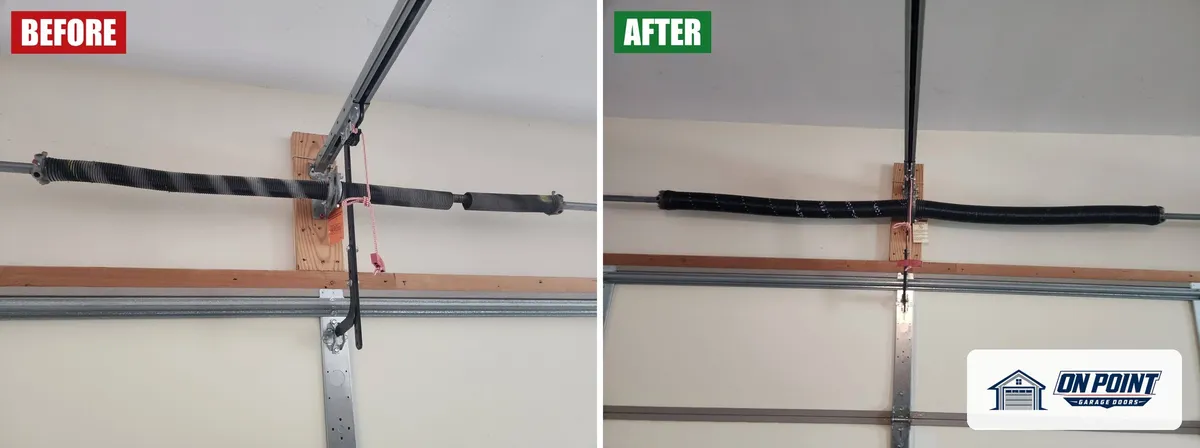
Cape, high ranch or service bay, we examine the door before putting a number on paper.
On a high ranch that includes the wall over the opening, because the header there also carries the front rooms.
After new siding or a second-floor addition, a tired garage door stands out, since it can take up a third of the front of a high ranch.


Lower-level garages. Runoff at the bottom panel and noise carrying up to the bedrooms.
A taller bottom seal and a belt-drive opener deal with both.
A door that has gotten heavy is checked for tired springs before anyone blames the opener.
Unrenovated doors. Thin panels, worn rollers and springs past their working life.
An insulated replacement finishes off a renovated house.
Dealer and repair bays. High-cycle springs, heavy rollers, operators and safety edges.
Bent sections from bumpers are repaired or replaced.
Remotes and keypads. Codes and remotes cleared and reset for every driver in the house.
Car buttons are paired too.
An insulated door keeps the bedrooms over a lower-level garage warmer.
If a bumper met the door at the foot of the slope, switch the opener off and leave the sections where they landed until we arrive.
A mirror or fender that hooks the edge on the way out can twist the vertical track, so that side is measured against the other before the door travels.
We serve both the village and the surrounding blocks of western Nassau, as we do neighboring Queens and Brooklyn.
Anything you mention about the slope or your schedule is passed to the technician.
A car trapped below the house before an early shift moves your visit up.
For anyone due at the hospital at dawn, the useful detail is when you must leave; give it on the call and the visit is arranged around it.
Anyone who sleeps days after a night shift can ask for an afternoon slot instead.
Winter. Freezing nights are when tired springs on lower-level doors finally give out.
Snow that melts down a short drive and freezes again can glue the bottom rubber to the sill, and the door should be allowed to free up on its own.
Spring. Storms send water down the short slopes and under worn rubber.
Where there is a trench drain across the sill, grit and seed pods can fill it just when it is needed.
Summer. West-facing doors soak up the late-day heat, so vinyl stop molding curls and the top seal goes brittle.
Weekends at the park pools and ball fields also mean bikes and coolers leaned against the tracks.
Fall. Swapping a worn spring before the cold keeps the repair on your schedule.
The same visit is a chance to see whether the sensors still line up after a season of stored garden gear.
He watches one trip under power, disconnects the motor to feel the balance, and then follows the load from the spring shaft down through drums, cables and bottom brackets.
You hear which part failed and which are simply aging, and the free estimate keeps those two groups separate.
Springs are picked for this door's weight and how often the family drives in and out.
He carries the spring sizes these doors use most.
A block of wood on the sill proves the auto-reverse works, and a wave through the beam proves the photo eyes do.
Broken springs and bent hardware are loaded up, so nothing sharp is left in a family garage.
You are invited to run it from the wall button and from the car before the ladder is packed.
Shift workers can book very early visits.
He calls when he is nearly there.
The work waits until you approve it.
Runoff, rooms overhead and several drivers sharing one door all add wear.
With a spring in two pieces the opener is facing the entire weight of the door, so keep it down and unplugged until the repair.
Busy family doors get springs rated for more trips.
Salted slush runs straight to the lower cable loops on a sloped drive, and when one has rusted the other is changed with it.
Worn drums are swapped out with them.
Sensor brackets at the foot of a slope are raised as far as the safety instructions permit, so the lenses sit out of splashing meltwater.
Track at the floor that rust has thinned is replaced.
Lag screws that have pulled out of damp framing get moved into solid lumber, or the soft piece of jamb is renewed.
A motor that clicks, hums or stops short is diagnosed part by part, from the capacitor to the logic board.
Below a high ranch bedroom, a belt rail on padded hangers keeps an early departure from waking the house.
Say whether the garage is on the lower level or beside the house.
If you are near the city line, give the town along with the street, since some street names repeat on the Queens side.
Every estimate is free.
The noise has several sources, so each is checked: rollers, hinges, the balance of the springs, the opener drive and the way the rail hangs from the joists. Nylon rollers, isolating hangers and a belt drive usually make a clear difference. An unbalanced door will still jolt the house with any opener, so balance comes first.
A new bottom seal and fresh jamb seals help with wind-blown rain and small puddles. They cannot hold back a driveway's worth of runoff. If water stands against the door, the drain, the pitch of the apron or the sill needs attention, and the technician will say so instead of selling rubber as a cure.
Yes, for permits. A house inside the incorporated village may deal with the village, while one outside it deals with whichever town it lies in, so confirm with your local building department before structural work. We can measure and talk through door sizes, while changes to a load-bearing header belong with a contractor and that department.
Yes. Wi-Fi openers and add-on controllers can show on your phone whether the door is down and alert you when it is left up. The garage needs a usable signal, which lower levels sometimes lack, so that is tested on the visit. A timer to close is available on many models as well.
In many cases, yes, if the jambs are sound and square and there is room above for the track. Insulated sections are thicker and sometimes heavier, so new springs are sized to the new door and the opener is checked against it. The opening is measured inside and out before anything is ordered.
Describe the sound or the stall, choose a time that fits the shifts in your house, and the estimate is free.
Call us at (929) 429-2429.
Share the house type and the problem; you receive a free estimate and make the decision from there.