Takes 30 seconds. We call you back to set a time.
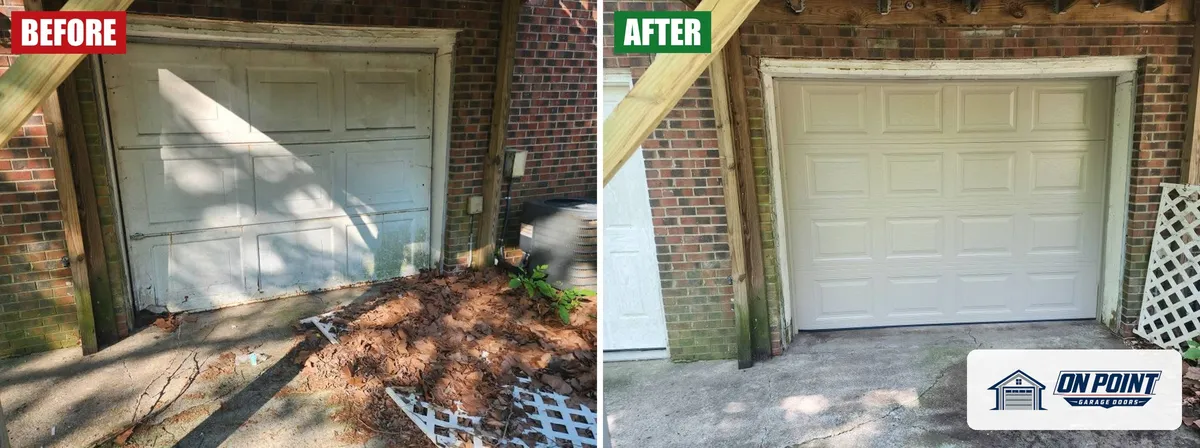
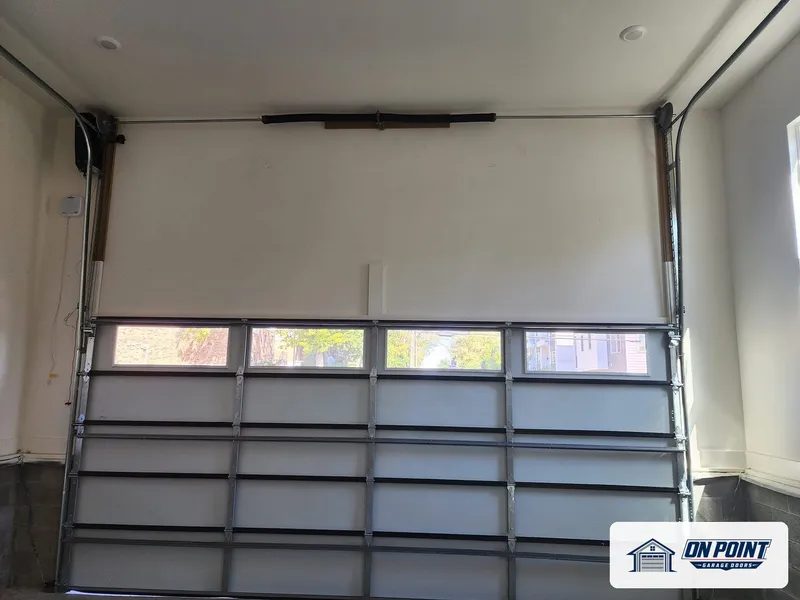
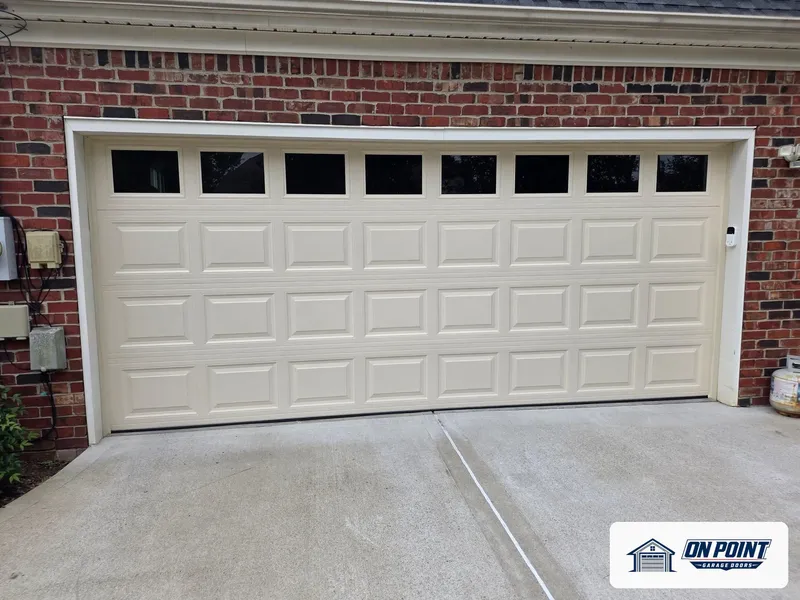
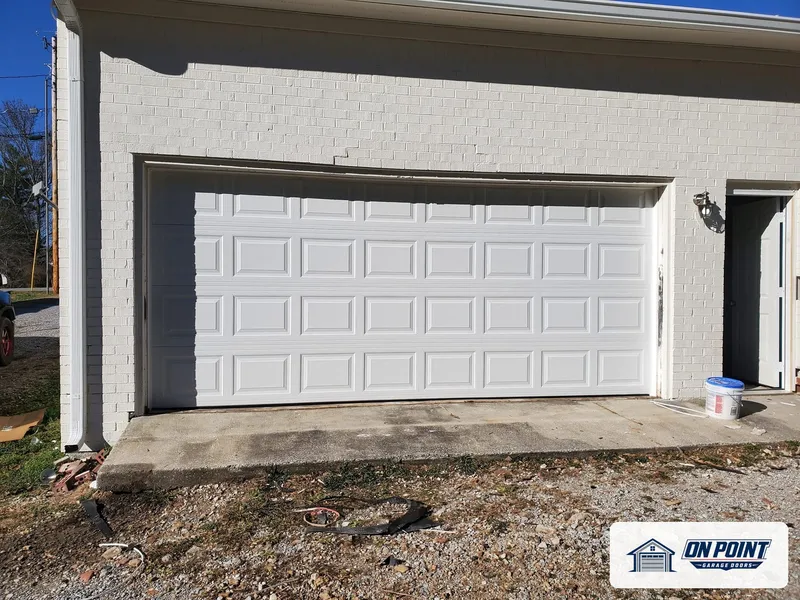
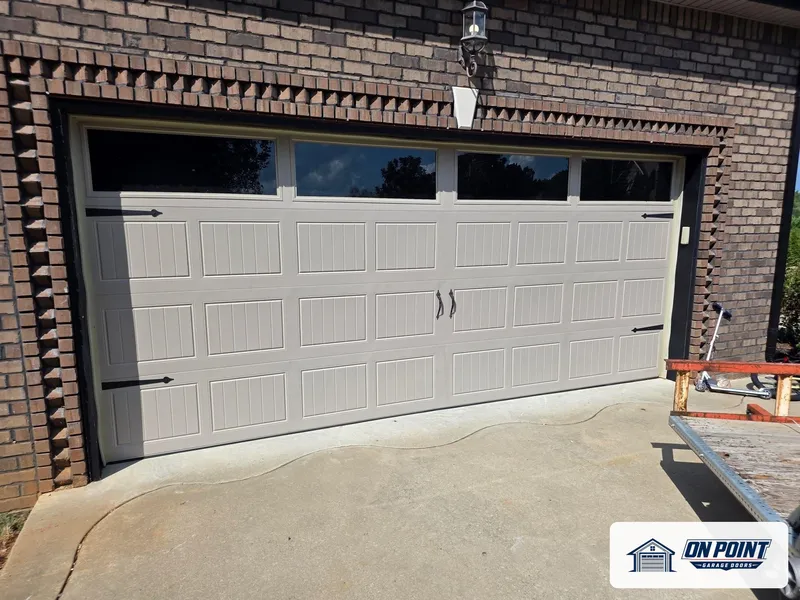
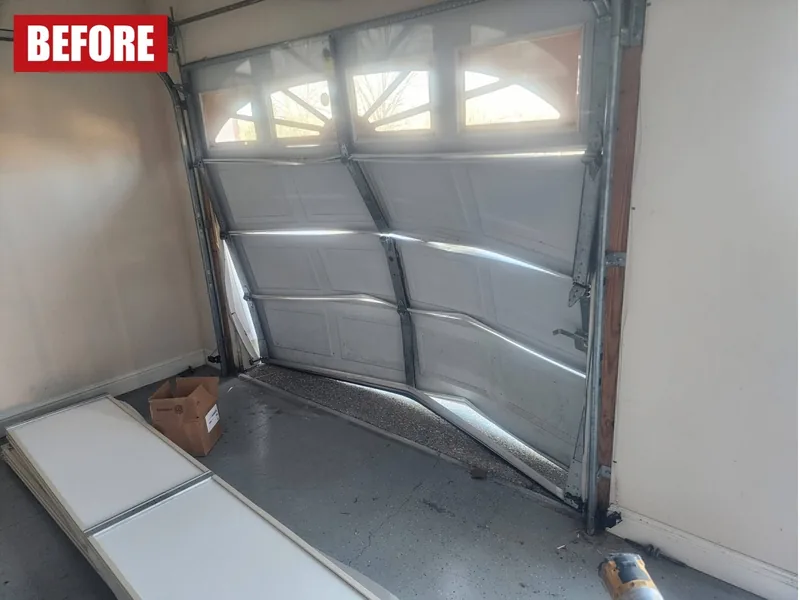
These photos are from our own jobs, with our logo on them.


Garage door repair in Merrick for the split-levels, high ranches and colonials with attached garages, from the canal streets by the bay to the blocks north of the train. Free estimate first.
Most homes here have an attached garage, and on the split-levels it sits half a level below the living room.
That makes the garage door the family's everyday entrance, so a stuck door disrupts the whole household.
Families with teenagers often have several remotes, and each is tested after any opener work.
High ranches put the garage right under the bedrooms, so every rattle of the opener travels up through the floor.
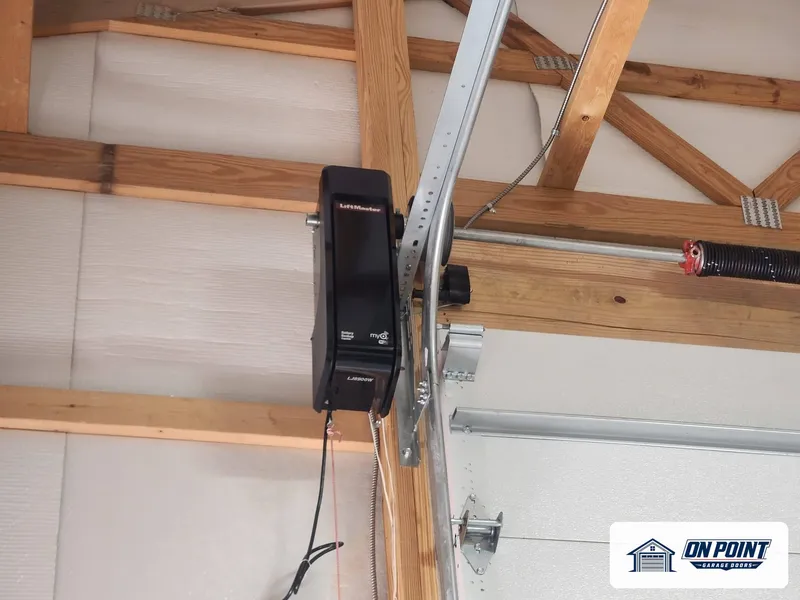
New rollers and a belt-drive opener are usually the quietest answer for those rooms.
South of the highway, canal streets get salty air and storm water that rust the bottom brackets and lower track.
Coated springs and galvanized hardware hold up longer on the streets that run down to the bay.
Canal homes often have a second, smaller door for kayaks and boat gear, and both doors get a look on the same visit.
Many garages hold kayaks, bikes and sports gear on shelves near the tracks.
Kayaks, bikes and sports gear pressing on the track or the sensors are pointed out during the visit.
Some garages here were raised along with the house after past storms, and their openings were rebuilt to new framing.

Canal side or north side, every door is inspected first and estimated after.


Broken springs. A sharp crack from the garage and a door that stays on the floor point to a spring. Leave it shut.
Near the canals, springs often give out early from rust rather than from use.
If the opener groans on the way up, the springs are put on trial before the motor gets blamed.
Openers below bedrooms. Clattering chain units come out and hushed belt drives go in.
When a nor'easter knocks out the lights south of the main road, a backup battery still raises the door.
Rusted bottom hardware. Brackets and cable ends near the water are changed before they give way.
That bottom bracket holds the full pull of the spring, so it is never left to rust through.
Rollers with sealed bearings run quieter and outlast the bare steel rollers on many older doors.
Sensors. Gear stacked near the door knocks the floor sensors out of line.
Wet sensors after a storm also stop a door from closing.
New seals at the bottom and sides stop sideways rain from wetting the floor of canal garages.
After a bump from a car or a storm, the door stays parked until he has looked it over.
If a car caught the door, the bottom section, both cables and the track on that side all get checked.

We cover the canal side, the north side and the rest of Nassau, plus Queens and Brooklyn.
Whatever you mention when you call ends up in his notes when he pulls up.
A door that will not close ahead of a storm, or a car stuck inside, goes ahead of routine work.
Winter. Wind off the bay and freezing mornings finish off tired springs.
In a deep freeze the rubber seal can glue itself to the concrete; wait for it to let go instead of letting the opener yank it.
Spring. After a winter of salt and storms, rust shows first on the lowest brackets.
Summer. Storm season is when the door has to close all the way and seal tight at the floor.
Fall. A pre-winter look turns up corroded brackets while swapping them is still simple.
First he runs the door, then he hunts for salt damage, then he moves through the springs, cables, rollers, tracks and opener.
You hear what broke and why, and the free estimate spells out each part.
Rust-resistant parts go on near the water; standard parts suit the north side.
Common springs, cables and rollers come along on the truck.
The opener's auto-reverse gets a test on the way out.
Worn parts leave in his truck, and the spot where he worked is swept.
Last, the door cycles a few times so you can see the seal land flat on the slab.
Since the garage is often the main way into these homes, it is put back in working order early in the visit.
He calls before he arrives.
What gets done is up to you.
Every door depends on a few parts, and near the canals they corrode faster than inland.
With a snapped spring the door turns into dead weight; keep it closed.
A door that crashes down, or drifts when stopped halfway, nearly always has a spring going soft.
Rust attacks cables at the bottom corners and the drums wear them at the top, so the pair is renewed together.
A cable that has slipped off the drum means the door gets clamped in place before anyone touches it.
Kayaks, paddles, bikes and bins by the door are the usual reason the sensors stop it closing.
Lower track sections rust through near the water and are replaced.
A bent track is trued before the door runs again.
Openers that took on water in a storm can fail weeks later; if one is done, the choices are explained.
Phone-connected openers let you check whether the door is closed when you are out.
Tell us if you are on the canals and what the door is doing.
Asking for an estimate is free.
Tell us about the door and choose a slot; the estimate is free.
Call us at (929) 429-2429.
Explain what happens when the door runs, and a free estimate comes back whatever you choose.