Takes 30 seconds. We call you back to set a time.
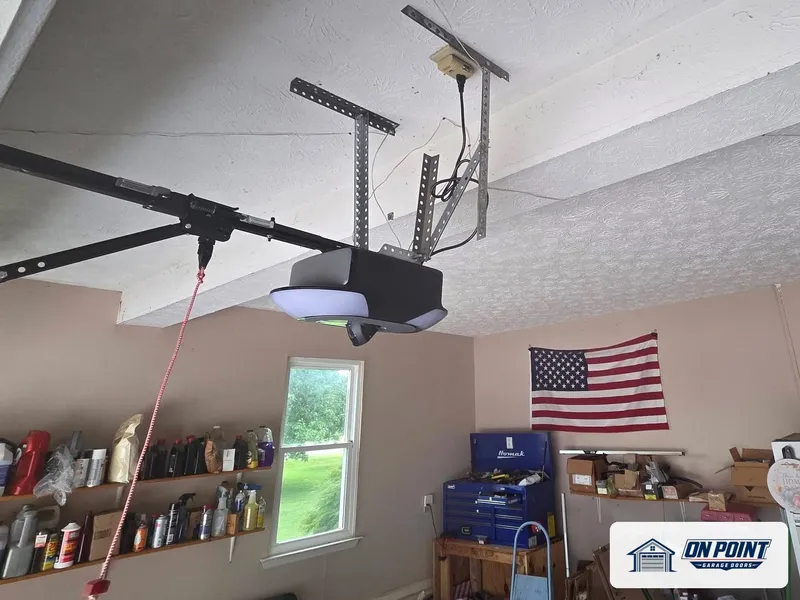
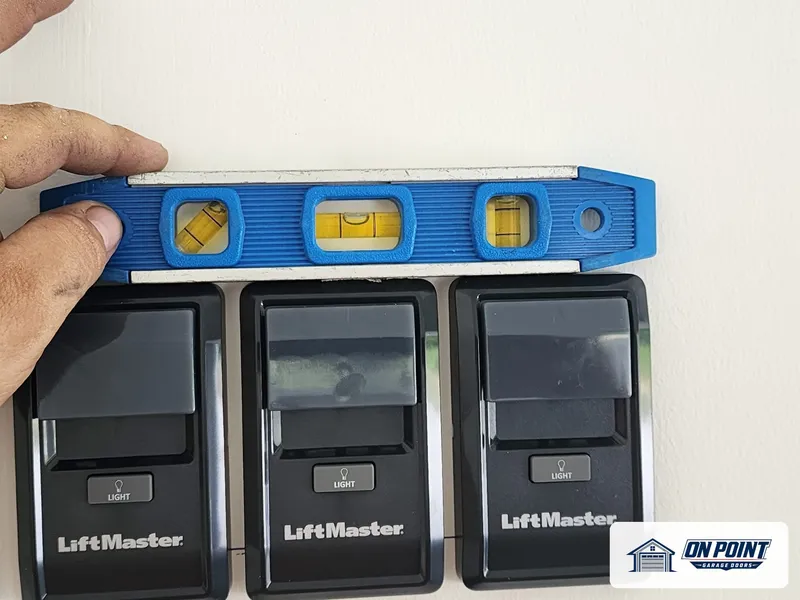
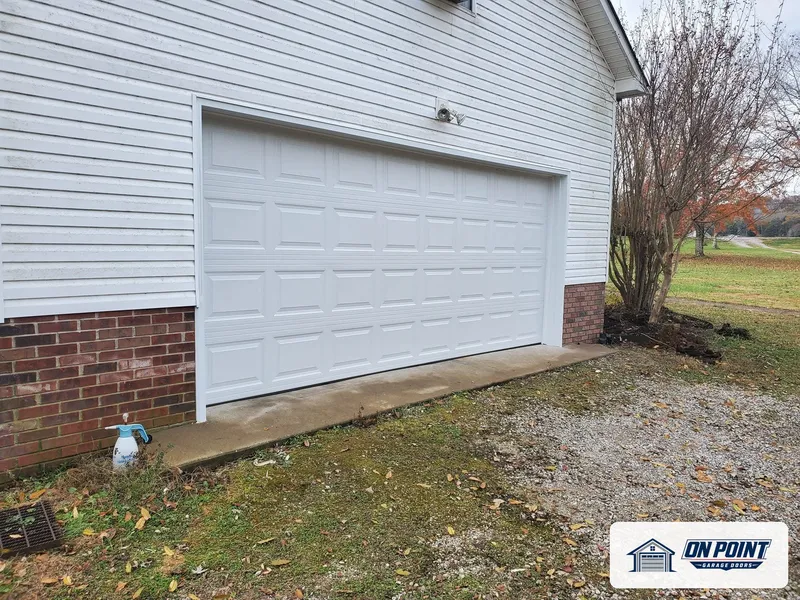
These photos are from our own jobs, with our logo on them.


Garage door repair in Carle Place for the garages on its residential side streets and the doors on the businesses that line its main roads. Every visit starts with a look at the door and ends with a free written estimate.
This is a compact hamlet in the Town of North Hempstead, set between Westbury and Mineola with its own school district and a station on the Main Line of the railroad. Old Country Road runs along its southern side with a long stretch of stores and shopping centers, and Glen Cove Road carries traffic north.
Most homes sit on modest lots on a tight grid of side streets: capes, ranches and some older houses, many of them expanded upward or out the back over the years. Driveways are narrow, and the garage is often a single bay either attached to the side of the house or set back in the yard.
Being inland, the hamlet is spared the salt air of the shore, so rust here comes from road salt dripping off tires and from water that pools on old concrete. Doors tend to wear out by use and age more than by corrosion.
Snow cleared from the street often ends up in a heap at the foot of the driveway and against the door. Wet snow freezes the seal to the slab, and older slabs that have cracked or sunk at one corner leave a gap that lets cold air and water into the garage.

A single-bay garage on a narrow lot and a service door behind a store on the main road get different parts, but both start with the technician watching the door run.


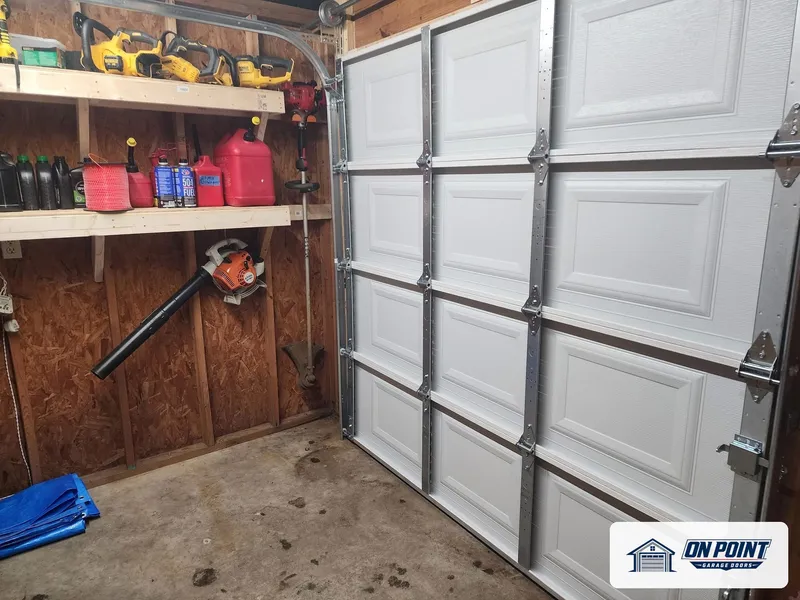
Single-bay attached garages. Narrow openings mean little clearance, so jamb trim and end hinges take knocks from mirrors and bumpers. A lighter door from an earlier era can crack across the top section where the opener arm pulls, and a reinforcing bracket is often the first fix.
Garages set back in the yard. Detached garages behind older homes can lean as their frames age, and the tracks lean with them. When a door binds at the same spot every time, the jambs and track fastenings are checked along with the rollers.
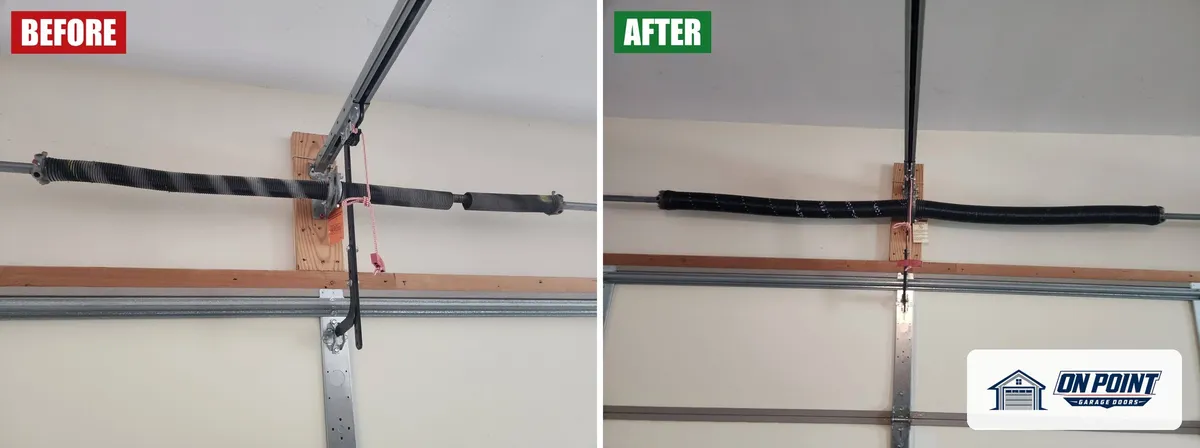
On some of the oldest doors the lifting is still done by long extension springs running beside the overhead tracks. A steel safety cable should pass through the middle of each one to catch it if it breaks, and if that cable is not there, it is listed first on the estimate.
Shop and service doors on the commercial roads. Retail units, auto shops and storage behind the stores use roll-up and sectional doors many times a day. The technician checks the spring, the operator limits, the safety devices and the guides, because a door that fails at opening time stops the business.
Doors and tracks that took a hit. Tight driveways, a delivery truck in a loading lane or a car backed in at the wrong angle can bend a track or a section. If a roller rides on the lip of the steel, stop using the door and call before the next trip.
The middle of Nassau is part of our Long Island area, along with Brooklyn and Queens, for homes and commercial doors.
Tell us whether it is a house garage or a business door, and whether the garage is attached or out back, so the right parts go on the truck.
A business that cannot lock its door, or a family car shut in behind a broken spring, is treated as urgent; say so when you call.
Winter. Hard cold finds a tired spring, and the bang is often heard from inside the house before anyone tries the door. Plowed snow against the bottom section and road salt off the tires then start working on the lowest hinges.
Spring. Melt water runs toward the garage on driveways that slope that way, and a worn seal lets it in. It is a good time to have the bottom rubber, the threshold and the lower hardware looked at.
Summer. A garage that faces the afternoon sun gets hot, and older plastic gears and receiver boards suffer for it. With school out the door also runs far more trips than it does in winter.
Fall. Leaves from the street trees blow into the tracks and pile at the threshold. Before the first freeze, have the balance, the cables and the safety reverse tested on a calm day.
He runs the door once with the opener and listens from inside the garage, then disconnects it and lifts the door by hand at a few heights. That separates a spring problem from a motor problem before any part is named.
Each finding is shown on your own door and explained in everyday words. The free estimate puts safety items at the top and things that can reasonably wait at the bottom, so the decision is easy to make.
Springs are sized from the measured weight and height of the door rather than copied from what was on the shaft. Common house door parts usually ride with him; a commercial part or a panel for a discontinued door may need ordering, and you hear that first.
You try the finished door from the wall button and a remote. He checks that it reverses on an object and will not close while the photo-eye beam is blocked.
Old springs, rollers and boxes go back on the truck, and anything moved to make room is put back.
With narrow lots and parking on both sides of many streets, space in front of the garage can be tight. Tell us where the truck can stand and whether a car must come out first, and for a business, when the door can be out of use with the least trouble.
A door that still has years left in it is described that way, even when a new door would be the bigger job.
On a door that opens and closes all day, moving parts wear by the count of trips while fixed parts wear by age. An older house can have both kinds of wear at once.
Springs. A spring is rated for a certain number of cycles, and a door used as the main way in and out reaches that number far sooner. For a garage that opens all day, a heavier high-cycle spring is a fair thing to raise at the inspection.
Cables. Signs of trouble include strands sticking out near the bottom bracket, a cable hanging loose or one that has jumped off its drum. With any of those, keep the door where it is and leave the car outside until it is fixed.
Safety eyes. The little sensors by the floor sit right where bins, strollers and sports bags get parked. A bracket that wobbles is moved to solid framing, so a single knock does not stop the door from closing.
Tracks and rollers. Bare steel rollers with no bearings chatter, wear a groove inside the track and produce a lot of the noise people put down to the opener. Lag bolts that have backed out of dry old studs are reset into firm wood.
Openers and operators. Gears wear and boards fail after power surges. He tests travel, force and the safety settings, and when parts for an older motor are no longer made he explains a belt drive or a jackshaft unit, or the right operator for a commercial door.

Have a short description ready: house or business, single or double, and whether the door is stuck up, stuck down or just loud. A photo helps but is not required.
Free estimates for homeowners, tenants with the owner's approval and businesses in the middle of the county.
A door cannot make the opening wider, since that is set by the framing, but slimmer jamb trim and a well-placed opener can win back a little clearance. Widening the opening means a new header and jambs, which is carpentry and may need a permit from the town. He measures and tells you honestly what is possible.
Most often the spring inside the barrel has lost tension, a slat has bent and catches in the guide, or the guides were knocked out of line. A worn chain hoist or operator can add to it. The technician checks each of those and tells you which one is holding the door back before anything is replaced.
Sometimes the door is fine and the frame has moved. Older detached garages settle over the years, and the tracks follow the frame. Resetting the tracks on sound framing and replacing worn rollers can often fix the binding. If the jambs are soft or rotted, he shows you before suggesting any parts.
It can. Heavy wet snow against the bottom section can bend the lower panel or freeze the seal to the slab, and running the opener against a frozen door can strip a gear or bend the arm. If the door is already stuck down, he checks the seal, the bottom section and the opener.
Yes. High-cycle springs carry the same weight with heavier, longer wire, so each turn stresses the steel less and the spring lasts more trips. The shaft needs space for them, and they have to suit the door's real weight. Bring it up at the inspection and he will say whether your door and its other hardware are a good fit.
Tell us the symptom and a window when someone can let the technician in. The visit starts with an inspection and ends with a free written estimate.
Call us at (929) 429-2429.
Name your street and how the door is acting, and a free written estimate follows the visit.