Booking today in New York(929) 429-2429Open six days a weekFree estimateGuaranteed work
On Point Garage Doors
Open 24 hours Sun-Thu, Fri 7-5 Free estimate Springs, openers, cables We come to you
Call same-day(929) 429-2429
From post-war colonials to newer builds

Yonkers Garage Door Repair

Broken springs, tired openers, frayed cables and doors off their tracks, on houses old and new. The estimate is free and comes first.

Free estimateSame day whenever possibleCommon parts on board

Put it on the schedule for your garage door

Tell us what the door is doing. The estimate is free either way.

Or just call (929) 429-2429 and talk it through.

Home › Garage Door Repair in Yonkers

The houses and their garages

The calls here are mostly the same handful of failures: a spring that has snapped, an opener that has given up, a cable that let go or a door that left its track. Each one gets a look at the whole door, not just the part that failed, and a free estimate before the work starts.

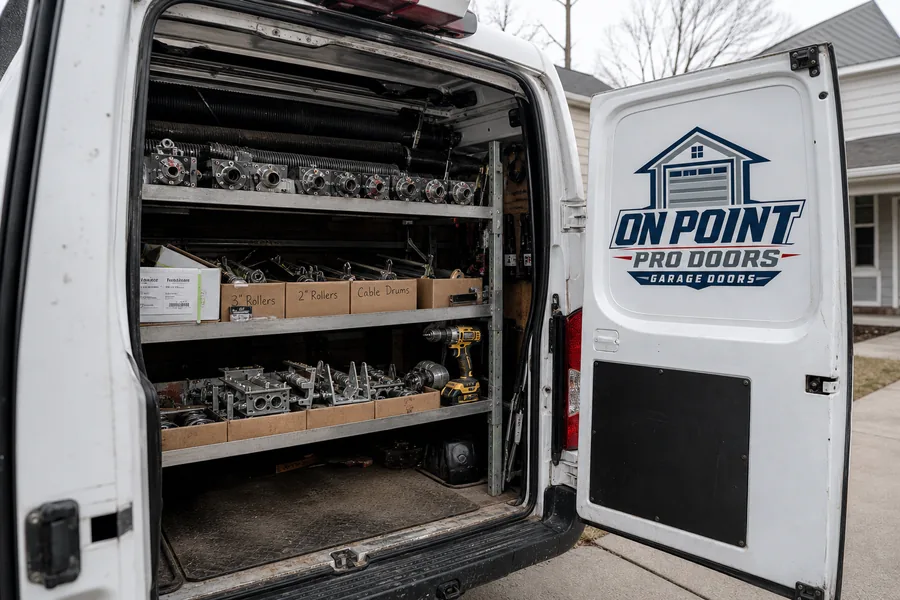
Yonkers is Westchester County's largest city, and its housing runs from post-war colonials in the southeast to newer construction in the northwest. Worn springs and aging LiftMaster and Chamberlain openers come up often on the older houses, so the parts for both travel on the truck.

Inside the On Point Garage Doors truck: springs, rollers, drums and hinges stocked for New York
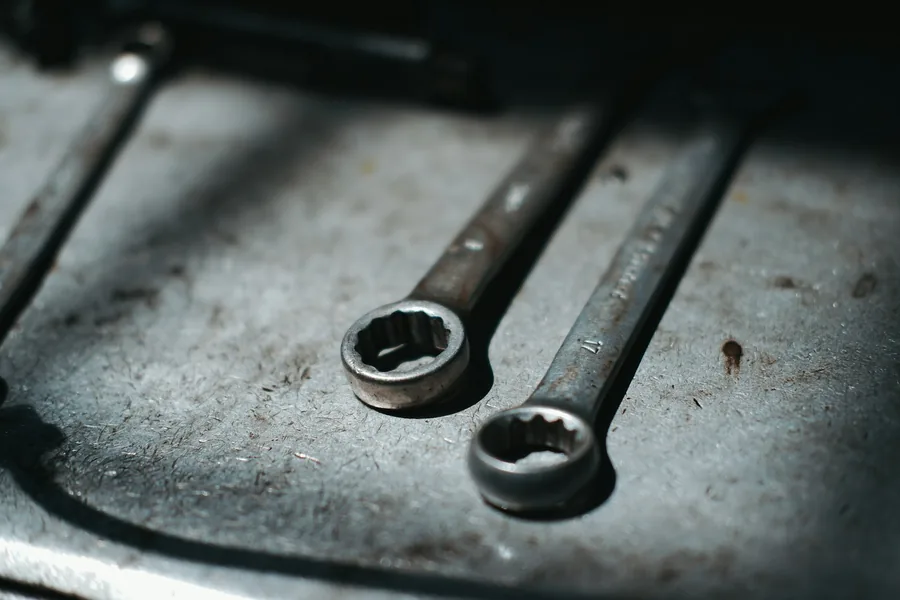
Tools On Point Garage Doors carries for garage door repair in New York, NY
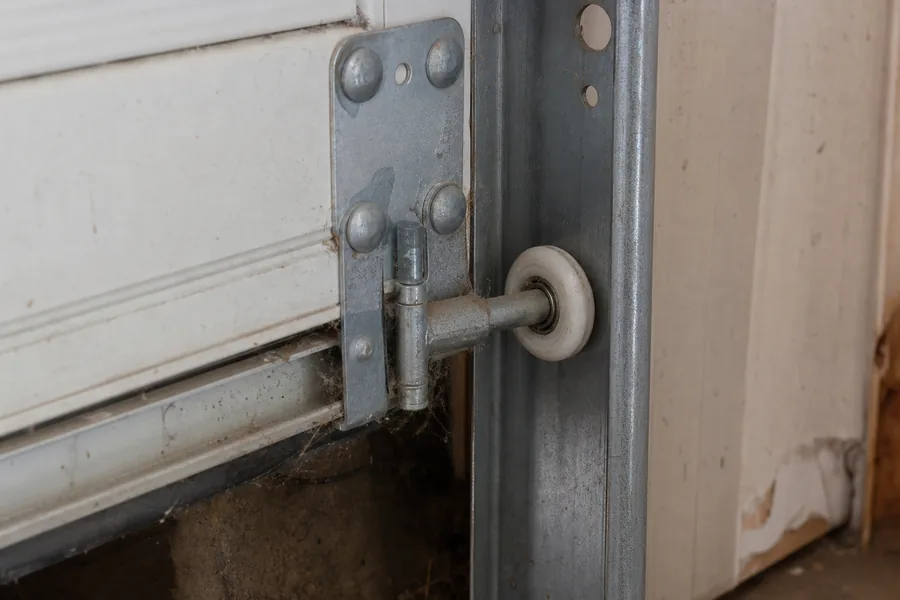
A garage door roller in its track in Yonkers

Why garage doors fail

Springs break more than anything else on a garage door. Every trip up and down takes a little out of them, and the end usually comes with a loud bang and a door too heavy to lift. Both springs are changed together, sized to the door, so the pair wears evenly.

Cables are often the next thing to go. They run up both sides of the door and wind onto drums at the top, and the wear shows first where they wrap. A spring that was too light for the door, or a pair where only one was ever changed, makes them fray faster. Cables are replaced as a pair and the door rebalanced so neither side carries more than its share.

Off-track doors usually follow something else: a bump from the car, a cable that let go, or rollers worn until they slip out of the track. A door in that state can drop or pull the track off the wall, so it's left where it stopped until a technician supports it. Whether any panels were bent decides what the repair involves, and the estimate is free.

Openers wear out in the end. Older chain-drive units often grind for a while first, which is the plastic drive gear losing its teeth inside the head. If the gear is the only problem it's a repair; if the motor or board is done too, a belt-drive LiftMaster is the usual replacement because it runs quieter.

Hills, weather and older houses

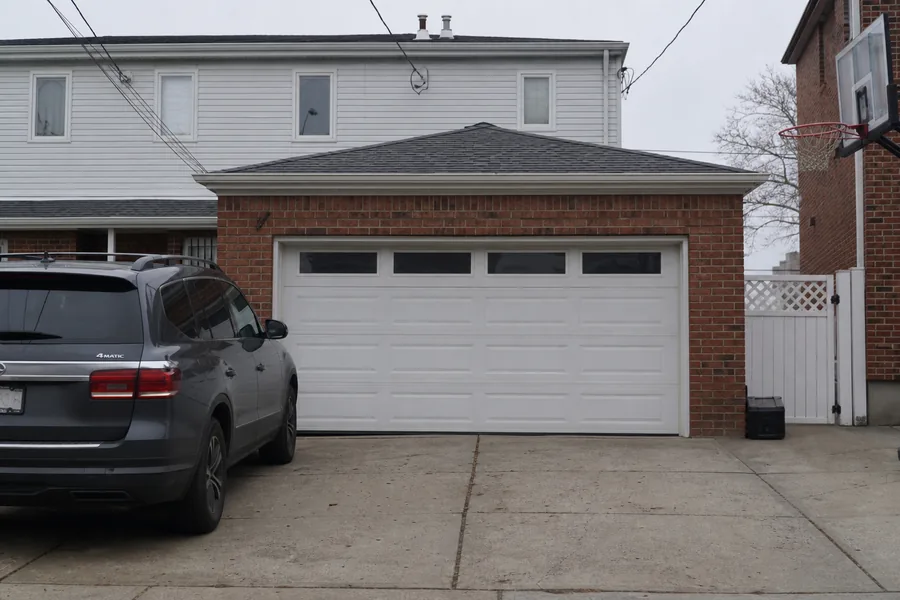
The weather does steady damage. Hard winters freeze bottom seals to the slab and crack springs that were already tired, humid summers swell wooden doors until they bind in the tracks, and snow piled against a door rusts the bottom section from the outside in. On a sloping lot, a door that doesn't sit level with the floor puts uneven strain on the cables and rollers, and that shows up as a door that closes crooked or leaves a gap at one corner.

Older houses bring their own wrinkles: doors that have been patched over the years, mixed parts from earlier repairs, and openers that were never adjusted to the door they lift. The technician figures out what's original and what isn't before deciding what the door needs. Sometimes the right fix is undoing an old shortcut, like a single spring on a door that was built to be carried by two.

Season by season

Fall. The run-up to winter is the time for a once-over: cables checked for rust and fraying, spring balance tested, worn rollers swapped and the safety reverse confirmed while it's still mild out.

Winter. When the rubber seal along the bottom freezes to the concrete, pressing the button again and again can strip the opener's gear, and springs already near the end of their life tend to snap on the first really cold mornings. If the door won't budge in the cold, leave it and call.

Spring. Springs that struggled through the cold often give out once the weather turns, so a door that sounds strained or rises slowly is worth a look now. A balance check by a technician tells you whether the springs still carry the door.

Summer. Wooden doors swell and steel tracks expand in the heat, and low sun shining into a sensor can make a door reverse for no visible reason. The technician can tell glare from a sensor fault and mount the pair where the sun can't reach the lens.

Makes we work on

LiftMaster and Chamberlain openers are the ones we see most on the older houses, and Genie, Craftsman and the rest are just as welcome. On the door side we work on Clopay, Amarr, Wayne Dalton, CHI and the other common makes. For anything older or less common, describe it on the call and the technician will say whether a part has to be ordered.

Building garages and HOAs

Condo associations, HOAs and building managers book the same way homeowners do. Say how many doors are involved and how the garage is reached, and the visit is arranged around the building.

For a shared garage it also helps to know who can let the technician in, whether the door is opened by remotes, a keypad or a card reader, and whether residents need a heads-up before the door is out of service during the repair.

Every job ends with a safety test

No visit ends without the opener's safety features being tried out, whatever the call was for. Under UL 325, a door on its way down has to stop and go back up if it touches something or if anything crosses the sensor beam; the technician tests both with the door running and sets the down-force so it can't push too hard.

Coverage

From the streets that run down to the Hudson to the neighborhoods along the parkways, the whole city is covered. Steep driveways and tight parking are part of the job on the hillier streets, so mention them on the call and the visit is planned around them. Give the address and you'll hear honestly when a technician can get there.

Short answers

Three questions come up often enough to answer here. The answers are general; your own door may need a look.

Can you set up a new remote or keypad?

Yes. New remotes and keypads are matched to the opener, old remotes cleared if you want them gone, and the HomeLink buttons in your car paired while the technician is there. The estimate is free.

Why does the door go back up right before it closes?

Most often it's a sensor problem: a leaf or web across the beam, glare in one lens, or one sensor nudged off line. If both sensors check out, the technician looks at the opener's close-force setting next.

What happens to the door when the power goes out?

The opener stops and the door stays where it is until the power comes back. If you need the garage open before then and the door won't move, don't force it; a door that feels too heavy usually has a broken spring, and lifting one by hand is how people get hurt. Call and it can be looked at.

What a visit can cover

Whatever the call was about, the technician can take care of the rest of the door at the same visit:

Before you call

Can someone come out today?

That depends on the schedule. Tell us what happened and you'll hear a realistic arrival window, not a guess; a door that's stuck open or has a car shut inside is handled ahead of routine visits.

The door won't open. What should I do?

Stop pressing the button and don't try to lift it. A door that won't open often has a broken spring, and without it the door is far too heavy to lift safely. Call (929) 429-2429 and describe what you heard or saw; that's usually enough to know what to bring.

Do you replace both springs or just the broken one?

Both. The two springs have done the same work, so when one breaks the other is close behind, and a door with one new and one old spring pulls unevenly. Replacing the pair keeps the door balanced.

Older houses, newer builds

On the post-war colonials in the southeast, the garage door has often outlived more than one opener, and the springs and cables may come from several different repairs. Those doors are worth a full look rather than a single-part fix, because one tired part tends to wear out the next.

Newer construction in the northwest brings its own work: a heavier insulated door needs springs sized to its weight, and a spring mismatched after an earlier repair is a common reason a door strains or closes unevenly.

Signs a door needs attention

New noises. A scrape, a squeal or a sharp pop that wasn't there last month usually means a roller, hinge or spring is going. Caught early, it's a small repair; ignored, it's often the reason a door comes off its track later.

A door that moves unevenly. If one side rises ahead of the other, or the door shudders or closes with a gap at one corner, a cable or spring is likely out of balance. Running it that way strains the opener.

An opener that labors. A motor that slows down or stops partway is often lifting a door whose springs no longer carry it. The opener isn't built to lift that weight, so the springs get checked first.

Smaller repairs we handle

Why the whole door gets checked

A broken part is rarely the only worn one. A spring that snapped has a partner of the same age, a frayed cable often means the rollers have been dragging, and an opener that strained for months may have worn its gear. The technician looks at all of it and tells you what's urgent and what can wait.

Nothing beyond the original repair is done without your say-so. You hear the findings, you choose what gets done now and what can wait for another visit, and the estimate is free.

A few typical jobs

A door frozen to the floor. On a cold morning the opener strained against a bottom seal frozen to the concrete, and repeated presses stripped its gear. The gear assembly was replaced and the seal freed, with advice on keeping the door from freezing down again.

An aging Chamberlain that skipped. The board tested fine and the rail had normal wear, but the motor brushes were worn through. Repairing the motor or putting in a new opener were both on the table; the owner went with a new opener.

A keypad that drowned in a storm. Rain got into an outdoor keypad on the garage frame and the backlight flickered and died. It was replaced with a sealed Genie keypad made for outdoor mounting and the code reprogrammed.

A bumper and a bottom section. Backing out, a car caught the bottom of the door and knocked the rollers on one side out of the track. The door was supported, the rollers put back, the track checked for bends and the door run through a full safety check.

Questions we get asked

Is it safe to drive out if the door is stuck half open?

Only if it's clearly high enough and not moving. A door that stopped part-way may have a broken cable or spring, and it can drop without warning. If in doubt, leave the car where it is and call.

Can you work on an older door that's been patched over the years?

Yes. Mixed parts from earlier repairs are common on older doors. The technician works out what's original, what was added and what's failing, and tells you whether repair still makes sense.

What does the free estimate include?

The technician checks the door, springs, cables and opener, tells you what's wrong and what the fix involves, and gives you the estimate. No work starts until you agree to it.

Booking takes a minute

Calling is the quickest way to get a door looked at. Tell us what it's doing and where the garage is, and the technician has a heads-up on what to bring.

The estimate is free on every call, big job or small.

Book a visit today

Give us a quick description of the problem and you'll hear a realistic arrival window. Both the visit and the estimate are free.

Rather explain it out loud? Call (929) 429-2429.

Two minutes to a free estimate on any garage door

Tell us what the door is doing. The estimate is free either way.

Or just call (929) 429-2429 and talk it through.

Related repairs