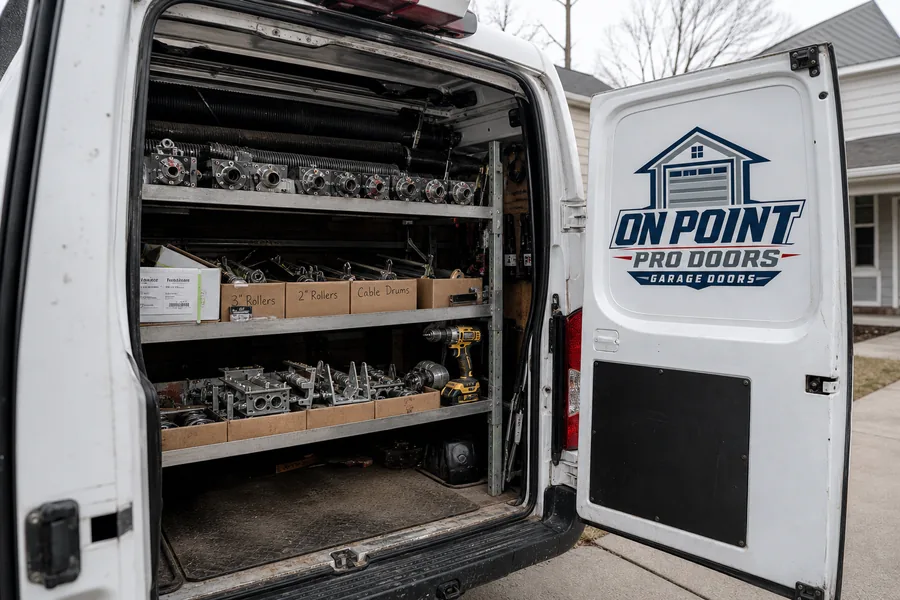
On Point Garage Doors repairs the garage doors whole buildings depend on in Union City, from townhome rows to multi-family parking, and every visit starts with a free estimate.
Tell us what the door is doing. The estimate is free either way.
In a place this crowded, a garage door is rarely one family's alone. Townhome rows share a driveway, multi-family buildings share a parking level, and a single entrance door may let every tenant's car in and out each morning. When that door stops, everybody behind it is stuck at the same time.
That is why the first questions on the call are about people, not parts: who else uses the door, whether a car is shut in, and who owns or manages the building.

Every job here starts with a free estimate: broken springs, tired openers, frayed cables, worn rollers, doors out of their tracks, urgent repairs and new installations.


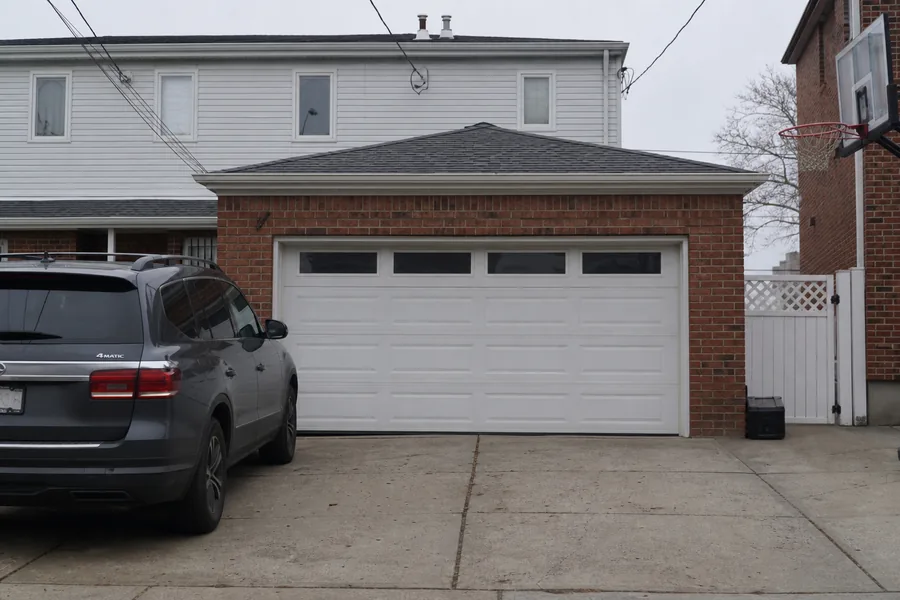
The city is one of the most densely built places in the country, and its garages show it. Attached townhomes, two- and three-family houses and apartment buildings often park behind one door, so a failure is never just one household's problem.
That changes how a repair is planned. If tenants need the door in the morning, the visit is arranged so the opening is secure and usable as soon as possible, and if a part has to be ordered, the door is left closed and safe in the meantime.
Shared doors also need a word with whoever runs the building. If the super or landlord should know before the door is opened up, tell us on the call and the technician checks in with them first.
Doors here work harder than suburban ones. A shared door may cycle many times a day, cars squeeze past it on tight driveways, and bumpers find tracks and jambs more often than they should. Add the weather, with snow piled against the bottom of the door, salt thrown up from the streets and humid summers that swell wood panels, and parts wear out on a faster schedule.
The city sits up on the Palisades, so wind off the river and steep side streets are part of the picture too. Doors that face the weather lose their seals sooner and rust from the bottom up.
From Park Avenue to the side streets off Bergenline Avenue, parking is tight, so the visit is planned to keep the truck out of everyone's way while the door is worked on.
Doors and openers from the familiar names are covered, including LiftMaster, Chamberlain, Genie, Clopay, Amarr and Wayne Dalton, along with older units whose labels have long since faded.
Before. On the call we ask what the door is doing, who shares it and how to reach it, so the technician arrives with the likely parts and knows where to park.
During. The technician looks over the whole door, not only the part that broke, explains what is wrong and gives the free estimate. Nothing is started until you agree.
Testing. Once the repair is done, the door is run several times, its balance is checked and the safety reverse is tested on contact and with the sensor beam blocked.
After. Old springs, cables and packaging leave with the truck, and you get a plain account of what was replaced and what is starting to wear.
An owner needs the door working for every tenant, not just the one who called. Visits are scheduled around tenants where possible, the opening is kept secure if a part has to be ordered, and the door is tried with the remotes and keypads people actually use before the job is called finished.
Where the building has a super, the technician can walk them through what was done, so the next tenant who asks gets a clear answer.
If several of your buildings have the same kind of door, say so. Wear on one is often a preview of what is coming on the others.
Busy shared doors do well on a scheduled tune-up, which catches small wear before it turns into a breakdown that strands every tenant at once.
Winter. Snow piled against the door melts by day and freezes by night, gluing the bottom seal to the ground. An opener forcing a frozen door strips gears and bends panels, and on a shared door someone always tries. If it won't lift on a cold morning, leave it and call.
Spring. Springs that struggled through the cold often break as the weather warms. A door that suddenly feels heavy or rises unevenly is worth a visit before it stops altogether.
Summer and fall. Humidity swells wood and ages rubber seals. Fall is the time to have the door gone over before winter returns, with cables, rollers, springs and the safety reverse all checked.
A shared garage sees tenants, children, delivery drivers and visitors moving under the door every day, so its safety systems matter more than most. Openers are built to the UL 325 safety standard, which requires the door to reverse when it touches something and when the sensor beam is broken.
A door that refuses to close is often the sensors doing their job. The cause gets found and fixed, never bypassed, because a door that closes on someone in a busy garage is the one failure that must never happen.
Shared doors wear in a fairly predictable order: springs first, then cables and rollers, then the opener's gears. Winter salt adds rust to that list.
Springs carry the door's weight and only have so many cycles in them, so a door that opens for many households uses up its springs much sooner than a single-family door. When one breaks, both are replaced and the door is balanced.
Cables fray at the bottom, where water and salt sit. A frayed cable lets one side drop, which can pull the door out of its tracks, so both are replaced as a pair.
Safety sensors are the usual reason a door refuses to close. On a busy shared door they get knocked by carts, bikes and bumpers. The technician finds the cause, resets them and tests the reverse.
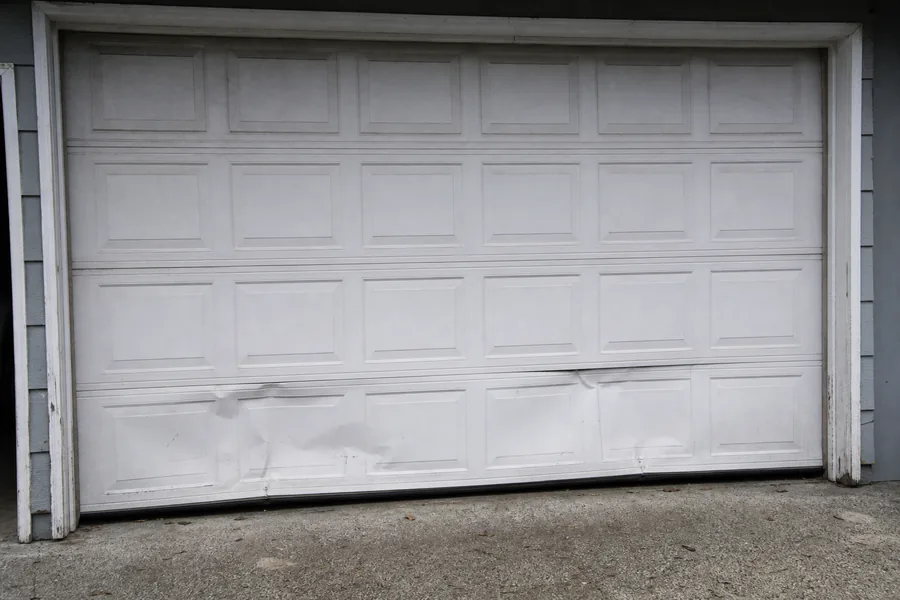
Doors out of their tracks come from a bumper tap or a cable giving way. Hanging loose, the door can come down, so keep cars and people clear and call; making it secure comes first.
Openers on shared doors run many times a day and wear out their drive gears sooner. Often the gear can be replaced; when the opener is worn through, a new one built for heavier use is the better choice, and you decide.
It depends on the schedule and where the door is; you get an honest arrival window when you call (929) 429-2429. Tell us if cars are shut in or the door is stuck open, and the visit is arranged around that.
Yes, and it comes before any work: you see what failed, hear why, and decide with the free estimate in hand.
Either one. A tenant can report the problem and the owner or manager can approve the work. Tell us who is who, so the right person hears the estimate.
Townhome rows often have a garage per unit, side by side, and the doors were usually installed at the same time. When one door's springs or opener give out, the doors next to it are often not far behind, which is worth knowing if your row was built as one project.
Multi-family buildings usually have one larger door and an opener made for heavier use. Those doors need parts rated for the extra cycles, and they are set up so every tenant's remote and keypad works after the repair.
On a building door, worn parts are not left to fail at the worst moment. The technician points out anything close to the end, such as cables starting to fray or rollers going flat, so the owner can plan for it.
More often than a single-family door, because it works harder. A busy door is worth a tune-up at least once a year, and the visit catches worn rollers, tired springs and loose hardware before they fail.
Not always. A single damaged panel can often be replaced if a matching panel is still made for that door. If not, the technician explains the options, and the estimate is free.
Before the technician leaves, the door goes through these checks, whatever the visit was for:
Anything that doesn't pass is corrected during the visit, and you are told what was changed.
One call gets you an arrival window and a call from the technician on the way. If the door is shared, tell us who else should know and whether anyone's car is stuck inside.
The form on this page works too. Describe the door, and someone gets back to you to set up the visit.
The estimate is free, whoever ends up approving the work.
Explain the problem and how many households rely on the door. We'll tell you honestly when a technician can come, and the estimate is free.
Managing a shared door? Call (929) 429-2429.
A line or two about the door is plenty. The estimate is free either way.