Takes 30 seconds. We call you back to set a time.
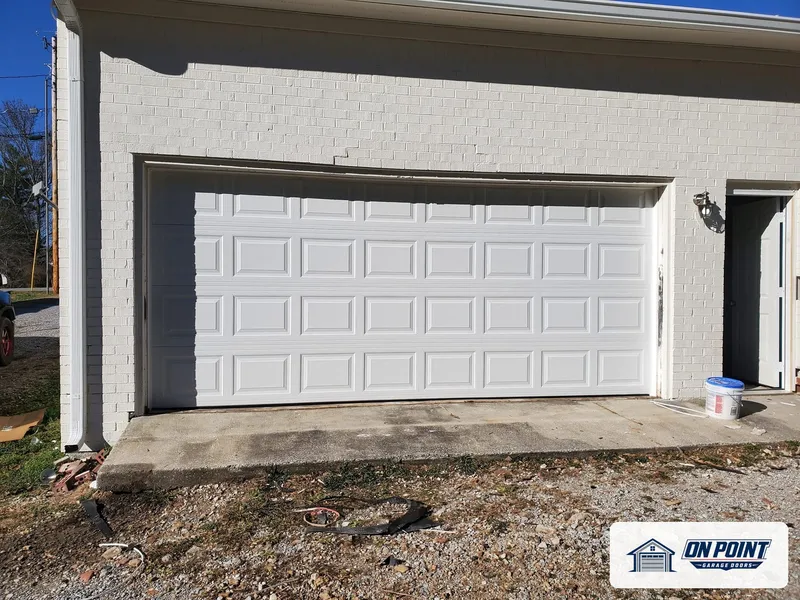
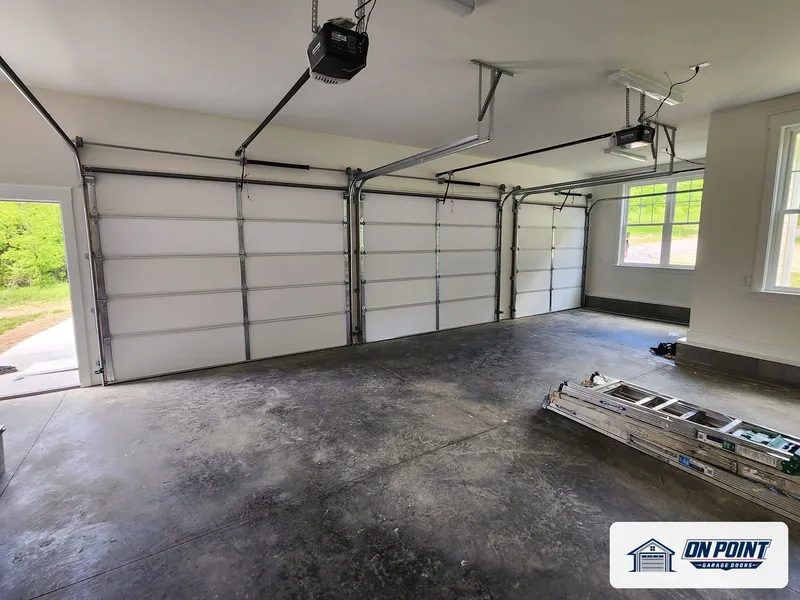
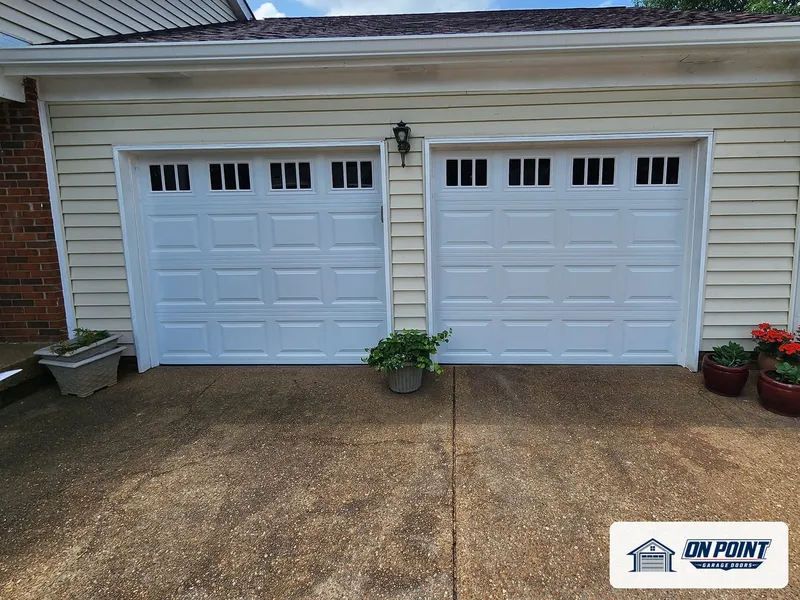
These photos are from our own jobs, with our logo on them.


Garage door repair in Lynbrook for the colonials, Tudors and capes with detached and attached garages on the village's tree-lined streets. Free estimate first.
Many homes here are older colonials and Tudors, and owners usually want a carriage or wood-look door that suits the house.
A carriage or wood-look door outweighs a plain steel one by a wide margin, and springs left over from the old door cannot carry it.
Tudor homes with steep rooflines sometimes have low garage headers, and low-headroom track is used when needed.
Detached garages behind some older homes still have swing-out doors.
Turning one into a sectional door with an opener is a common request here, and the old frame usually needs work before the new door goes in.
Commuters leave early for the train, and a door that sticks at dawn can mean a missed ride.
With the train station a short drive away, a car stuck behind the door at dawn is handled as urgent.
Many village streets have tall old maples, and their roots lift driveway slabs so the door no longer meets the floor evenly; the bottom seal is cut to fit.
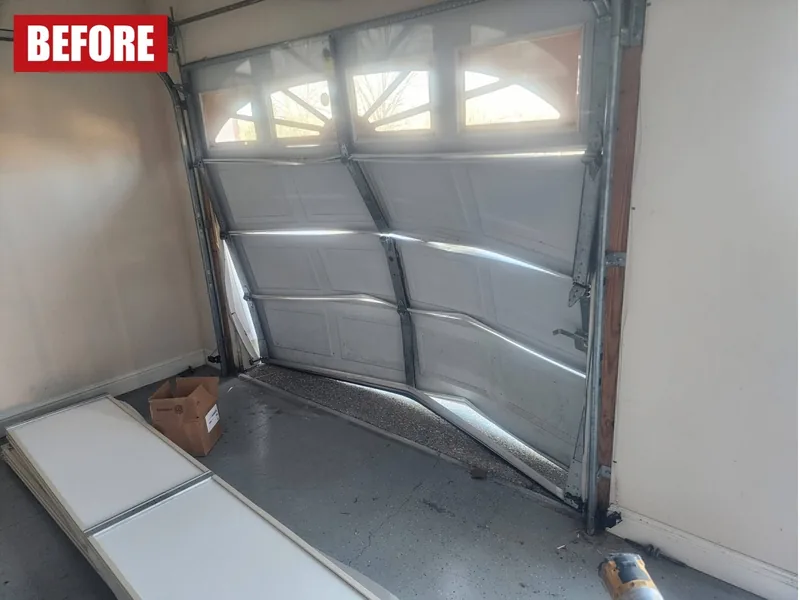
Narrow shared driveways between the older houses mean bumped tracks and creased panels.
On those strips of shared asphalt, the truck is parked so the house next door is never boxed in.
Rear garages reached through a narrow side yard leave little room to carry a door in, so delivery is planned ahead.

Older homes and newer ones get the same steps: look at the door, then estimate.


Carriage and wood doors. A bowed middle panel or a door creeping shut from halfway tells of weak springs or split hinges.
Decorative handles and strap hinges are matched to keep the street view.
When a door suddenly feels heavy, or the opener strains to lift it, the springs are measured before anyone blames the motor.
Swing-out conversions. The opening is measured and reframed so the new door seals evenly.
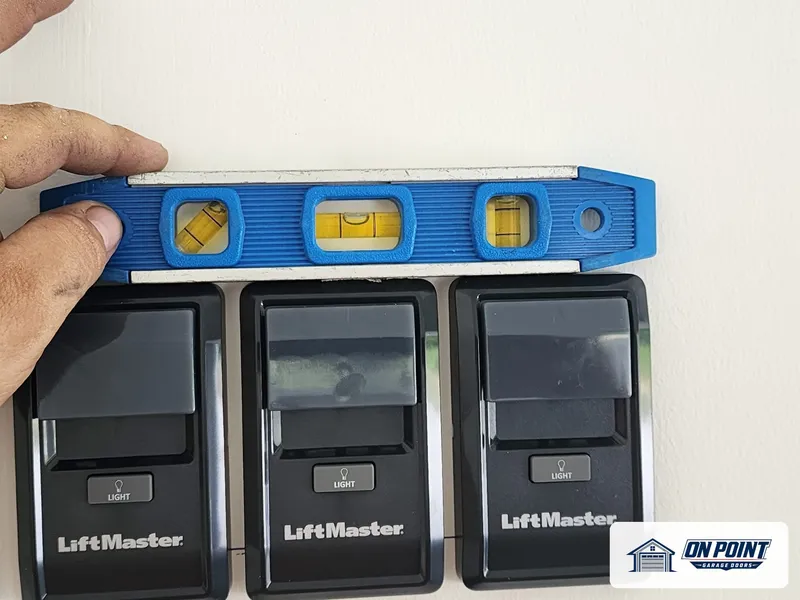
An opener and keypad usually go in at the same time.
Older wood doors that have soaked up water get heavier each year, and the springs have to be reset or replaced to match.
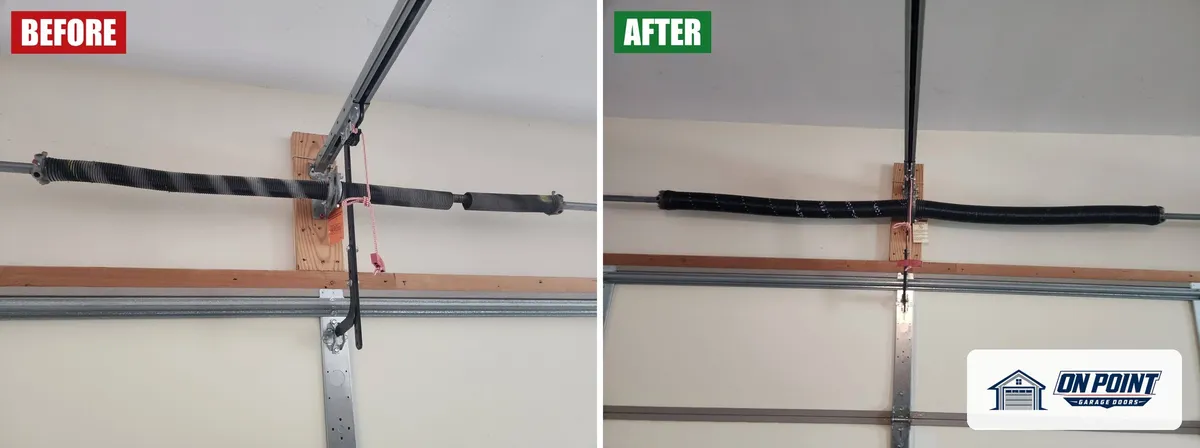
Broken springs. A spring sized for a light original door will not carry a heavier replacement.
That mismatch is the first thing checked on a newer door that strains.
Some older garages here still use extension springs along the tracks; safety cables are added where they are missing.
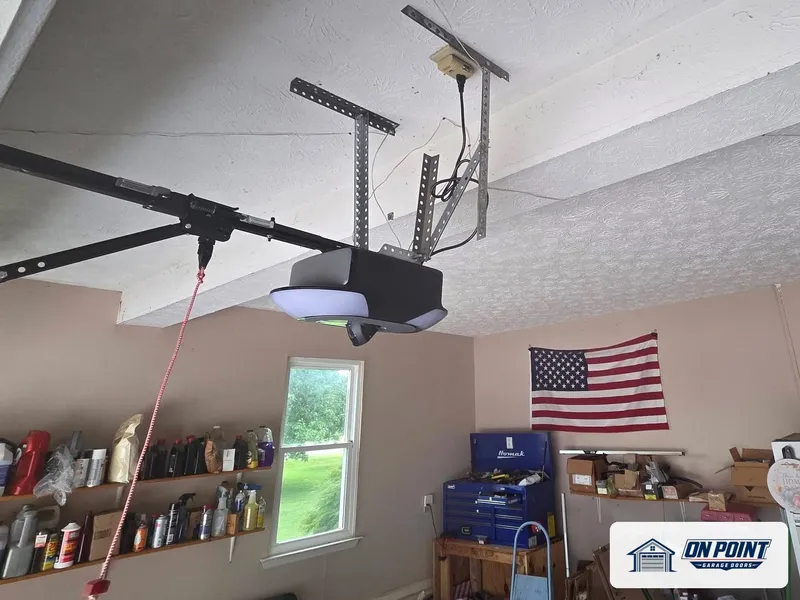
Openers. Belt drives and new rollers make a real difference on garages under bedrooms.
Garages converted into home offices or gyms do better with an insulated door and a quiet opener.
Driveway bumps. The lowest track section takes most hits in a tight driveway.
A bumped door stays put until it has been seen.
If a car has caught the corner of the door, the bottom bracket and cable on that side are inspected before anything moves.

Lynbrook is on our regular route across Nassau, Queens and Brooklyn.
Your notes, the Tudor out back, the gate to the side yard, what the door did, travel with the technician.
A wide-open garage at nightfall, or a car trapped behind the door, outranks a routine checkup.
Winter. Wood doors shrink in the dry cold, and old springs turn brittle.
Spring. Wet weeks swell wood panels until they rub the frame.
Summer. Sun cracks old paint and stain, letting water into bare wood.
Fall. Leaves off the street trees pack into tracks and along the floor seal.
Old jambs and peeling paint get his first look, then the shaft, drums, cables, rollers, track and seal in order.
A short talk about the worn piece comes next, with a free estimate naming each part.
Parts are chosen to suit both the weight and the look of your door.
Matching hardware is sourced so the door keeps its character.
The safety reverse is proven twice before he leaves.
Old hardware leaves with him and the driveway is swept.
Before leaving, the door is opened and closed a few times while you watch.
On a shared driveway the truck is parked so nobody is blocked.
He calls ahead before he turns into the driveway.
Your yes comes before any part does.
Every door rests on a few load-bearing parts, and heavy styled doors push them harder.
The spring must match the door's true weight, which older garages often get wrong.
Both springs are looked at whenever one is changed.
Drums are checked with the cables, since a worn drum chews up new cable.
Lift cables are always replaced on both sides together.
Leaves and garden tools are the usual reason sensors stop a rear-garage door.
Bottom track rusted through at the base is swapped so the rollers run cleanly again.
A crooked door usually means a track or cable on one side.
When an old opener is worn out, the quiet belt-drive and phone-ready models are laid out for you.
For a garage at the back of a dark side yard, an opener with a bright light makes coming home after the train much easier.
Share the look of the door and the trouble, a photo helps on a carriage style.
The estimate is always free.
Choose a morning or an evening off the train; we never bill for the estimate.
Call us at (929) 429-2429.
One or two sentences about the old door bring back a written estimate that is free.