Serving Brooklyn, Queens and Long Island(929) 429-2429Open six days a weekFree estimateGuaranteed work
On Point Garage Doors
Open 24 hours Sun-Thu, Fri until 5 pm Free estimate Springs, openers, cables We come to you
Emergency?Call nowBook free estimate
New York, NY - open six days a week

Converting extension springs to torsion springs

Free estimateSame-day serviceCommon parts on board
  • Free estimate
  • Same-day service
  • Common parts on board
Emergency garage door repair★★★★★ 5.0 on Google · 42 reviews

Book your free estimate

Takes 30 seconds. We call you back to set a time.

Or just call (929) 429-2429 and talk it through.

Home › Extension to Torsion Conversion

Many older and lighter garage doors use extension springs: long springs that run along the horizontal tracks on each side and stretch as the door closes. Most newer doors use torsion springs mounted on a bar above the opening. Converting an older door from extension to torsion springs is one of the most worthwhile upgrades for doors that are still in good shape. Free estimate at (929) 429-2429.

By Sean Cohen, owner, On Point Garage Doors · Updated

Real jobs. Real photos.

These photos are from our own jobs, with our logo on them.

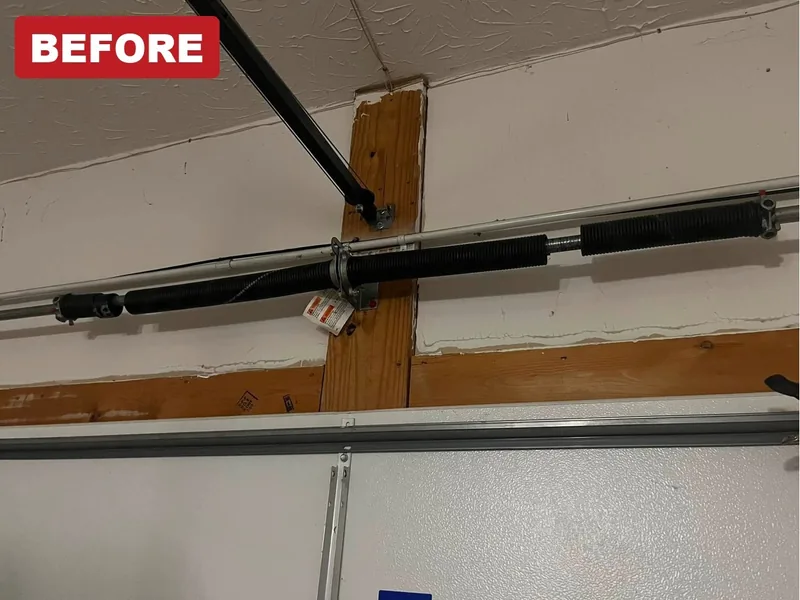
Broken garage door spring with a gap in the coil, before On Point Garage Doors replaced it
Torsion spring cone
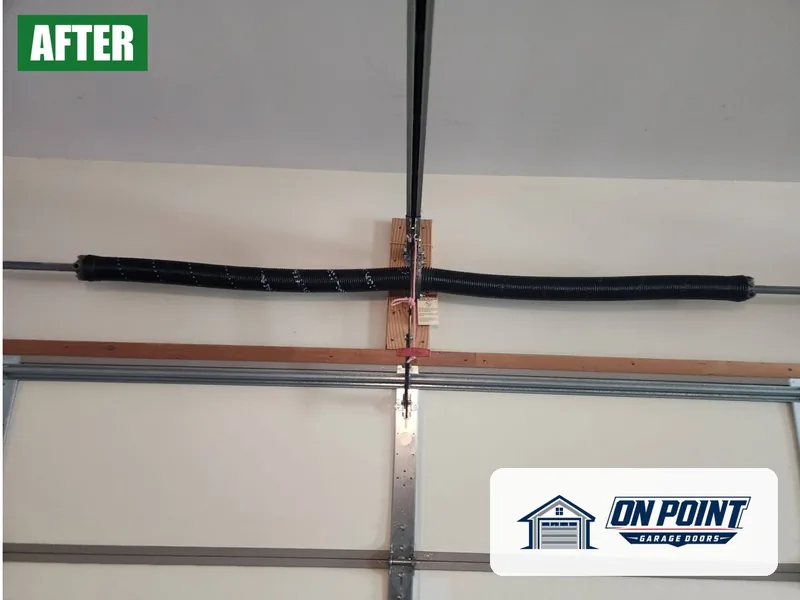
New garage door spring installed by On Point Garage Doors
Springs and cables
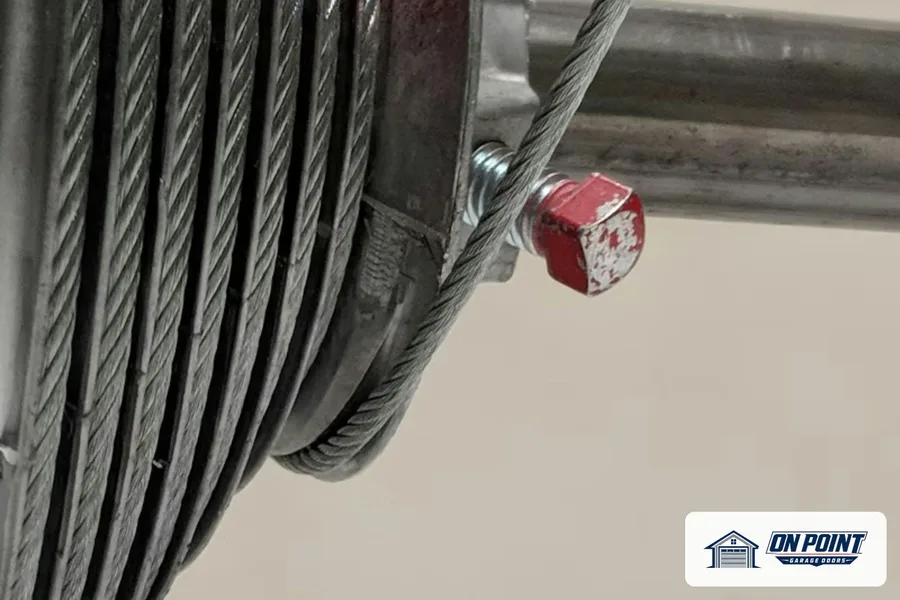
Cable drum on the spring bar, from one of our jobs
Cable drum on the spring bar

Why convert

  1. Smoother liftingTorsion springs lift the door more evenly, so it rises straight and quietly.
  2. Better balanceThe door stays where it is stopped, and the opener works lightly.
  3. Safer springsA broken torsion spring stays on its bar instead of flying across the garage.
  4. Longer lifeTorsion springs can be sized for many more cycles.
  5. Wall-mounted openersA torsion bar lets you use a quiet wall-mounted opener.

How extension springs work

Extension springs run from the back of the horizontal tracks to pulleys and cables near the front. As the door closes, they stretch and store force; as it opens, they pull it up. When one side is weaker than the other, the door lifts unevenly. Without safety cables through them, a broken extension spring can whip across the garage.

How torsion springs work

Torsion springs sit on a steel bar above the door. As the door closes, they twist and store force; as it opens, they unwind and turn drums that wind the cables. Both sides are driven by the same bar, so the door lifts evenly.

When conversion makes sense

What the conversion includes

The extension springs, pulleys and cables are removed safely. A spring bar with end bearings, a center bracket, drums, new cables and torsion springs sized to the door are installed. The header above the door is checked, because the center bracket bolts into it and carries the springs' force.

The header must be solid

Torsion springs need a sound header above the opening. In older garages the header may be thin, cracked or rotted. It is checked before the conversion and reinforced or replaced if needed. This is one reason conversions are done by a technician who looks at the framing, not just the springs.

Headroom

Torsion springs need a little room above the door. In garages with very low headroom, low-headroom torsion hardware or a rear-mount setup may be used. The technician measures first and explains what fits.

When to replace the door instead

If the door is old, rotted, rusted through or very heavy, putting new torsion springs on it may not be worth it. A new door comes with torsion springs, tracks and rollers matched to it. You get a free estimate on both.

Converting with a new opener

A conversion is a good moment to replace an old opener. A balanced door on torsion springs suits any opener, and a wall-mounted unit becomes possible.

What a visit includes

The technician checks the door, the header, the headroom and the current springs, explains whether a conversion or a new door makes more sense, and gives you a free estimate. After the work, the door is balanced, run several times and the safety reverse is tested.

Safety cables in the meantime

If you keep your extension springs for now, make sure each one has a safety cable running through it. If any are missing, they are added on the visit.

Cables and drums after conversion

The old extension spring cables and pulleys are removed, and new cables are sized to the door's height and wound onto the torsion drums. Both cables are set to the same tension so the door lifts level.

Doors near the water

On homes near the bay and the canals, galvanized or coated torsion springs and rust-resistant cables last longer in salt air. A yearly check of the springs and drums catches rust early.

Spring life after conversion

Torsion springs are chosen for the door's weight and for how often it is used. Busy family doors get longer-life springs, so the conversion keeps the door working well for years.

Signs your extension springs are failing

Stretched springs that no longer pull back tight, a door that lifts one side first, squealing pulleys, frayed cables and a door that feels heavier than it used to all point to worn extension springs. Those are good moments to convert rather than replace like for like.

The visit itself

A conversion is usually done in a single visit. The technician secures the door, takes down the old springs, pulleys and cables safely, installs the bar, bearings, drums and torsion springs, winds and balances the door, and runs it several times with you watching.

Questions we get asked

Can I convert my garage door from extension to torsion springs?

Usually yes, if the door is in good shape and the header is sound.

Why are torsion springs better?

They lift more evenly, keep the door balanced, last longer and are safer when they break.

Does the conversion need a strong header?

Yes. The center bracket bolts into it, so it is checked and reinforced if needed.

Can I add a wall-mounted opener after converting?

Yes. A torsion bar is what wall-mounted openers drive.

Is the estimate free?

Yes. You see the options before any work starts.

Booking takes a minute

Across Brooklyn, Queens and Long Island, tell us what the door is doing and we set a visit that fits your day.

Free estimate, call (929) 429-2429.

Not sure what is wrong? We will come and look

Tell us what the door is doing and we will give you an honest arrival time. The estimate is free.

Easier to explain by phone? Call (929) 429-2429.

Two minutes to a free estimate

Tell us what the door is doing. The estimate is free either way.

Or just call (929) 429-2429 and talk it through.

The other six things that go wrong