Takes 30 seconds. We call you back to set a time.
Vinyl garage doors are made with a tough vinyl skin over a frame and insulated core. Their big selling points are that they do not rust and they resist dents: a ball or a bike that would crease a thin steel door often bounces off vinyl. That makes them a popular choice near the water and in driveways where kids play. Free estimate at (929) 429-2429.
By Sean Cohen, owner, On Point Garage Doors · Updated
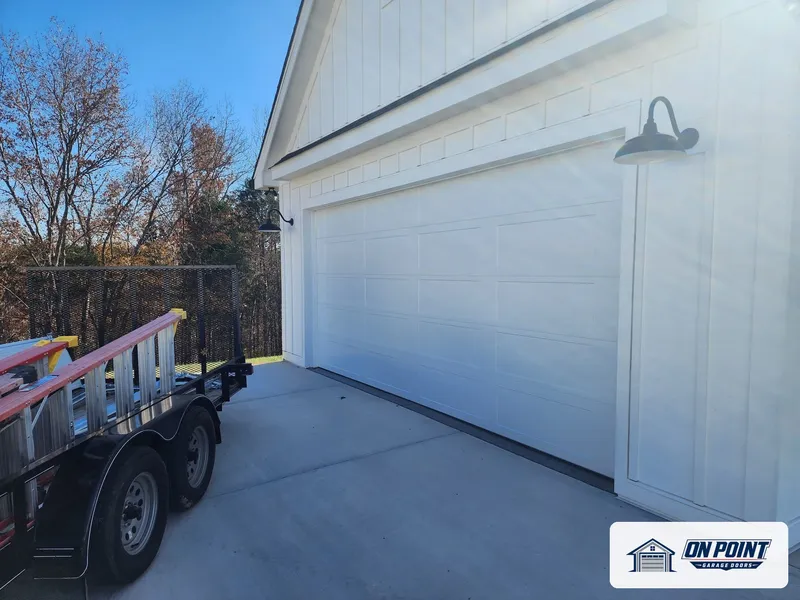
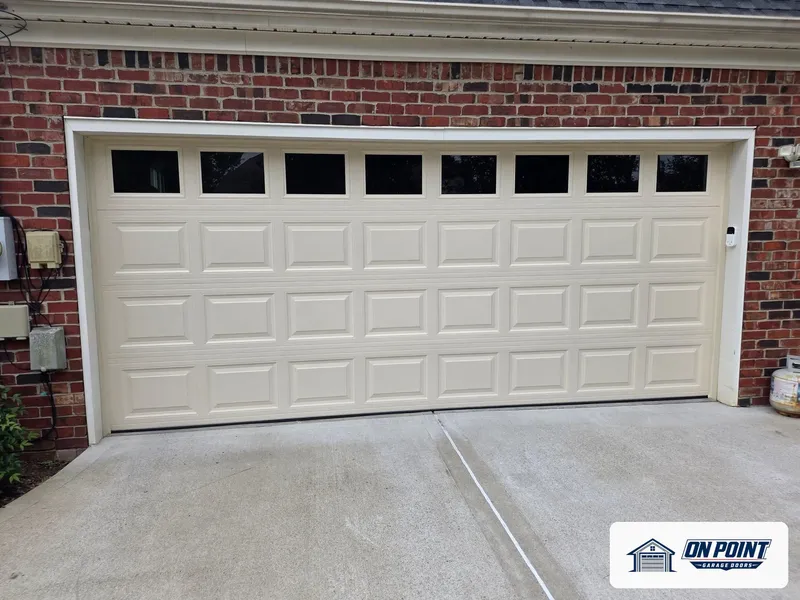
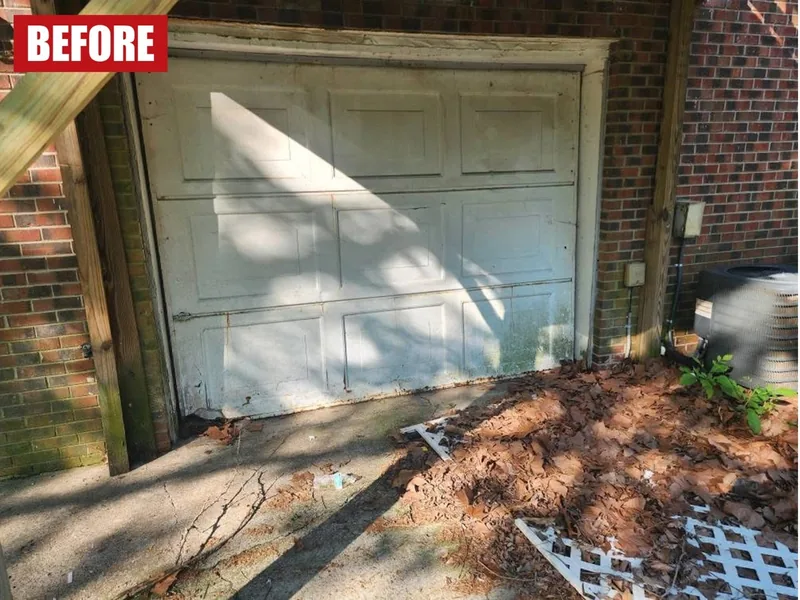
These photos are from our own jobs, with our logo on them.


Vinyl doors usually come in lighter colors. Very dark colors absorb heat, and vinyl can soften or warp in strong sun if it is the wrong formula or color. Light colors stay stable, which is why most vinyl doors are white, almond or light tones.
Most vinyl doors have an insulated core, which makes them quieter and warmer. For garages attached to the house or under living space, that is a real plus.
The door may not rust, but the springs, cables, brackets, rollers and tracks are still steel. Near the water, galvanized and rust-resistant hardware is still needed, and the springs and cables are checked every year.
Vinyl needs little care: a wash with mild soap and water a few times a year. There is no painting. Keep the bottom seal in good shape and have the hardware checked once a year.
Vinyl doors come with window options and a few panel designs. If you want a carriage look with heavy wood-grain detail, a steel or composite door may suit you better. The technician brings samples of both.
Composite doors are another rust-free option, molded to look like wood. They offer more wood-look styles; vinyl offers simpler designs with excellent dent resistance. Both suit salty, damp locations.
The old door, tracks and springs are removed. The vinyl door goes in with new tracks, springs sized to its weight, rollers, hinges and seals, with rust-resistant hardware near the water. The opener is set to the new door, and the safety reverse is tested.
The technician measures the opening, looks at your location and how the driveway is used, and shows you vinyl, steel and composite options side by side, with a free estimate for each.
Vinyl doors use the same springs, cables, rollers and openers as other sectional doors, and those are repaired the same way. Damaged sections are replaced when a match is available.
Vinyl can be less flexible in very cold weather than in summer. Quality vinyl doors are made to handle winters like ours, and their insulated cores add stiffness. The springs and opener are set for the door's weight, and the door is run in front of you before the technician leaves.
Vinyl doors with a strong frame and insulated core handle everyday wind well. On the most exposed homes near the water, the technician explains reinforcement options, whatever door material you choose.
White and almond vinyl doors suit most siding and trim. For a stronger color or a wood look, steel and composite doors offer more choices. Samples are brought so you can compare against your house.
If you want a dark color, a carriage design with heavy detail or a specific wood grain, a steel or composite door may suit you better. The technician will tell you honestly which material fits what you want.
Vinyl doors with insulated cores can weigh about as much as insulated steel doors of the same size. The springs are sized to the finished door, and the opener is set to its weight, so the door lifts easily and the opener lasts.
A detached garage at the back of a damp lot is a good place for vinyl, since the bottom of a steel door there tends to rust first. Pair it with galvanized hardware and a good bottom seal.
Any modern opener works with a vinyl door. A belt drive or wall-mounted opener keeps it quiet, and the opener's force is set for the door's weight.
Yes for rust and dent resistance, especially near the water. Steel offers more styles.
The door itself does not. The springs and hardware are still steel and need rust-resistant parts near salt water.
Usually not; light colors are more stable in strong sun.
Most have an insulated core.
Yes. You see vinyl, steel and composite options before anything is ordered.
Across Brooklyn, Queens and Long Island, tell us what the door is doing and we set a visit that fits your day.
Free estimate, call (929) 429-2429.
Tell us what the door is doing and we will give you an honest arrival time. The estimate is free.
Easier to explain by phone? Call (929) 429-2429.
Tell us what the door is doing. The estimate is free either way.