Takes 30 seconds. We call you back to set a time.
Most garage door openers pull the door with a chain or a belt. A screw drive opener uses something different: a long threaded steel rod running down the rail. As the motor turns the rod, a carriage rides along the threads and pulls the door open or pushes it closed. Screw drives have fewer moving parts than other openers and have a loyal following, especially among owners of older openers. This page explains how they compare with chain and belt drives, what goes wrong, and when they make sense. Free estimate at (929) 429-2429.
By Sean Cohen, owner, On Point Garage Doors · Updated
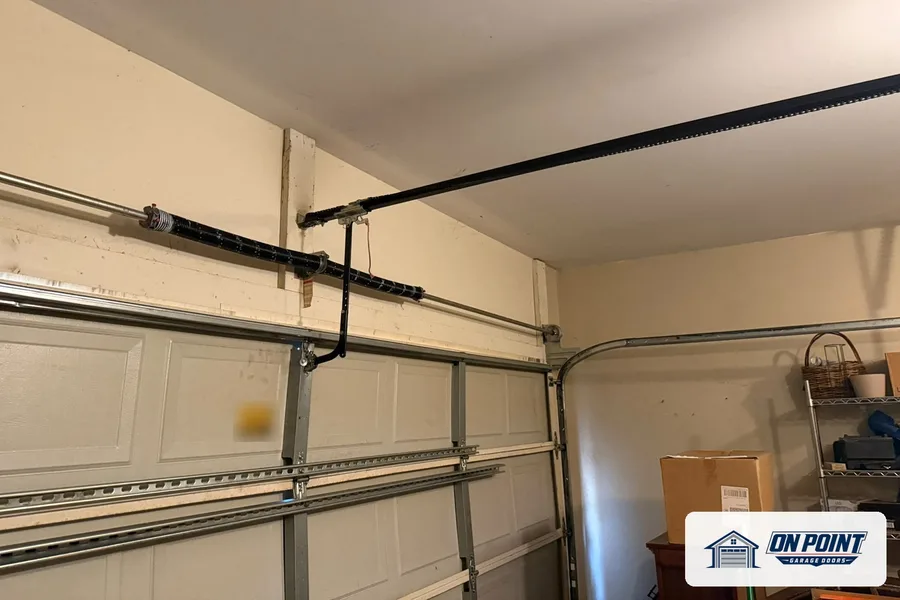
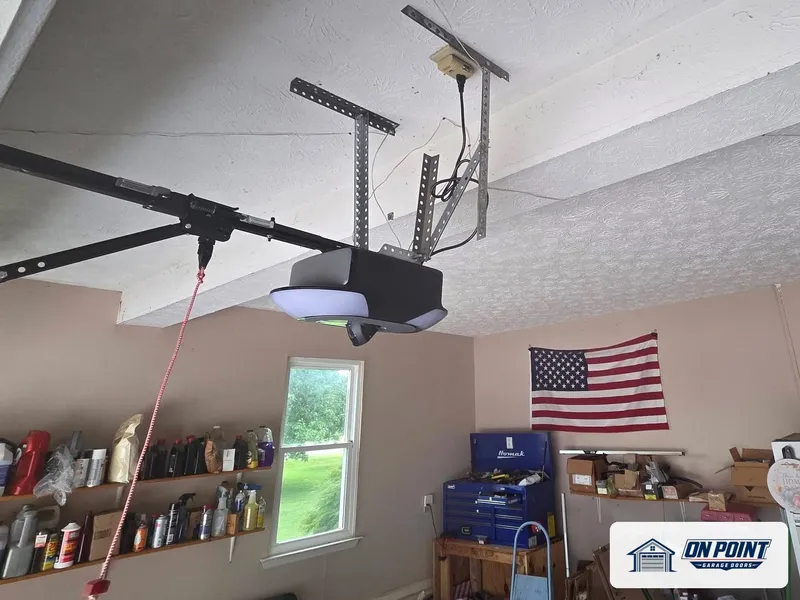
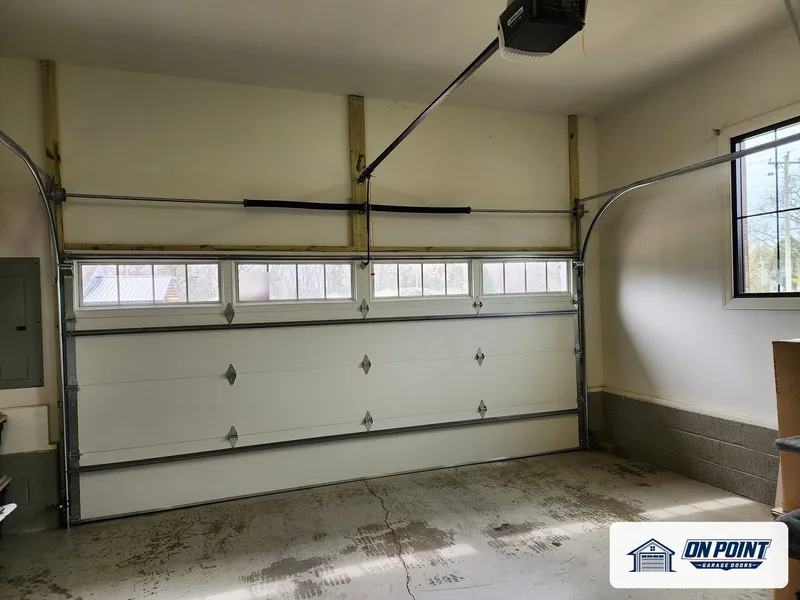
These photos are from our own jobs, with our logo on them.


The motor turns a threaded rod that runs the length of the rail. A carriage, sometimes called the trolley, has a threaded insert that rides the rod. When the rod turns one way, the carriage moves toward the door; the other way, it moves back toward the motor. The door is connected to the carriage by an arm, just as on other openers.
With no chain to stretch or belt to slip, a screw drive has fewer parts to wear out. It pulls heavy doors well, and many models open the door at a good speed. Owners who have had a screw drive for years often want another one for those reasons.
The carriage insert that rides the threads is the most common wear point. As it wears, the door may stop short, jerk or make a grinding sound. The coupler that joins the rod to the motor can also crack, and the rod itself can wear if it ran dry for a long time. On many models these parts can be replaced without changing the whole opener.
Grease on the rod thickens in the cold, which can slow older screw drives on winter mornings. In very hot garages, dried grease can make the carriage drag. Newer screw drive designs handle temperature swings better, but a garage that sees big swings is worth mentioning when you choose an opener.
If the garage sits under a bedroom or an apartment, the vibration of a screw drive can carry through the ceiling. A belt drive or a wall mount opener is usually quieter in that case. Our page on wall mount openers explains a quiet option that leaves the ceiling clear.
Genie is the brand best known for screw drive openers in our area, and we see many of them on homes in Brooklyn, Queens and Long Island. We repair them and can replace one with another screw drive or with a chain or belt model, depending on what suits the garage.
A door that stops partway, an opener that runs but the door moves in jerks, a loud grinding along the rail, or a carriage that seems to slip on the rod are all reasons to have it checked. Before blaming the opener, we also check the door's springs and balance, because a heavy door wears any opener out.
A screw drive hangs from the ceiling like any other rail opener, with the motor toward the back of the garage and the rail running to a bracket above the door. The rod must be straight and well supported along its length, or the carriage binds. We set the travel limits, the force and the safety sensors, and run the door with you before we leave.
A screw drive pulls hard and works well on most single and double residential doors, including heavier insulated ones, as long as the springs carry the weight. It is a less common choice for very wide or very tall doors, where a heavier chain drive or a wall mount opener is often a better match.
If the carriage or coupler is worn on a current model, a part is usually the right fix. If the opener is old, has no safety sensors, or has several worn parts, a new opener often makes more sense. We explain which way we would go and why.
The technician checks the opener, the rod, the carriage, the safety sensors and the door itself, then explains the repair. You get a free estimate before any work starts.
An opener that moves the door with a threaded steel rod instead of a chain or belt.
Usually yes, but a belt drive is quieter still.
Most often the carriage insert that rides the rod, and the coupler between the rod and motor.
Newer models handle the cold well. Older ones could slow down when the grease thickened.
Yes. We check the opener and the door before any work starts.
Across Brooklyn, Queens and Long Island, tell us what the door is doing and we set a visit that fits your day.
Free estimate, call (929) 429-2429.
Tell us what the door is doing and we will give you an honest arrival time. The estimate is free.
Easier to explain by phone? Call (929) 429-2429.
Tell us what the door is doing. The estimate is free either way.