Takes 30 seconds. We call you back to set a time.
A new roll-down gate is one of the biggest things a store owner buys for the front of the business. It has to close every night, open every morning, stand up to weather and to people trying to get in, and still look right on the block. Most of the choices are made before anything is ordered: how the gate mounts, what the curtain is made of, how it opens and how it locks. This page walks through those choices and what we look at when we measure. We install rolling gates on stores, restaurants and small commercial buildings across Brooklyn, Queens and Long Island. Free estimate at (929) 429-2429.
By Sean Cohen, owner, On Point Garage Doors · Updated
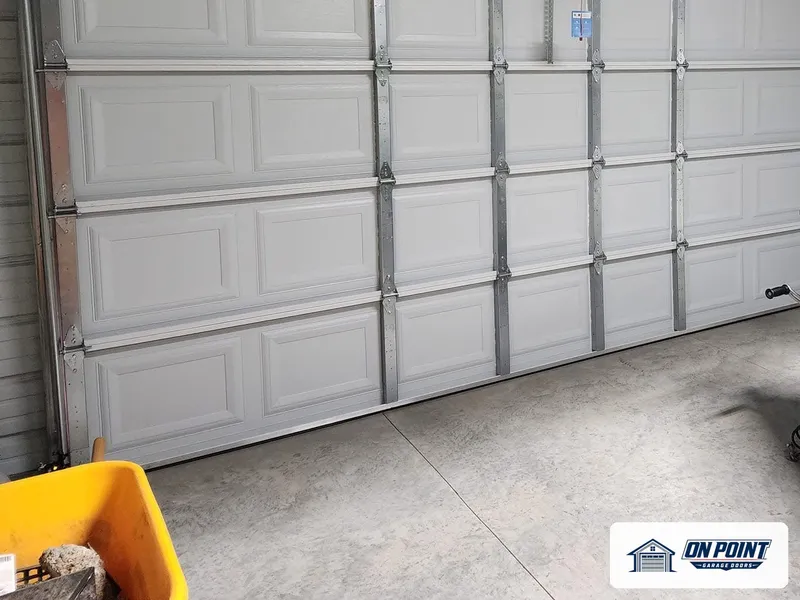
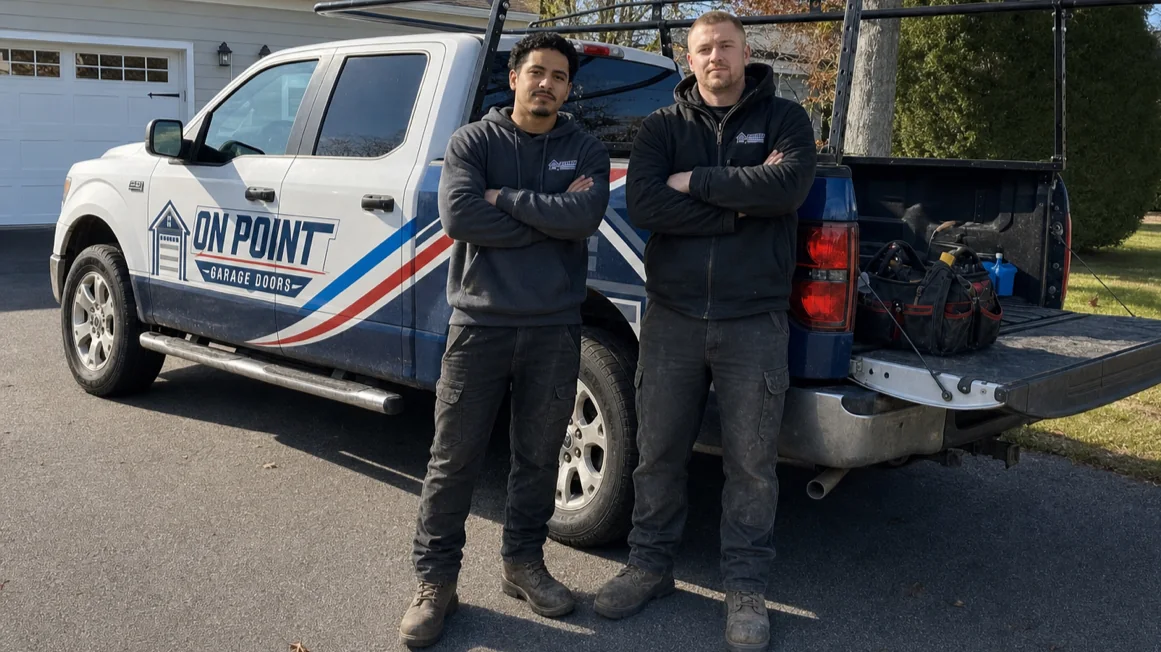
These photos are from our own jobs, with our logo on them.


Plenty of old gates can be repaired, and we will say so when that is the case. A new gate makes sense when the curtain is rusted through or badly bent across many slats, when the barrel and springs are worn out together, when the store is new or the front has been rebuilt, or when the owner wants a see-through gate in place of a solid one. A new tenant taking over a space with a tired gate is one of the most common reasons we get the call.
A good install starts with careful measuring. We measure the width and height of the opening, the room above it for the hood and barrel, the depth of the wall, and the space at each side for the guides. We look at what the gate will mount to: brick, block, steel framing or a storefront system. Awnings, signs, lights and security cameras near the top of the opening all affect where the hood can go, so we note them before anything is ordered.
Most storefront gates mount on the face of the wall, with the guides and hood outside the opening. That keeps the full opening clear and suits most brick fronts. Some openings call for the gate to sit between the jambs, inside the opening, which can look cleaner but takes away some width. Some fronts have the hood hidden inside the building above a ceiling. We explain which options fit your front and what each one means for the opening and the look.
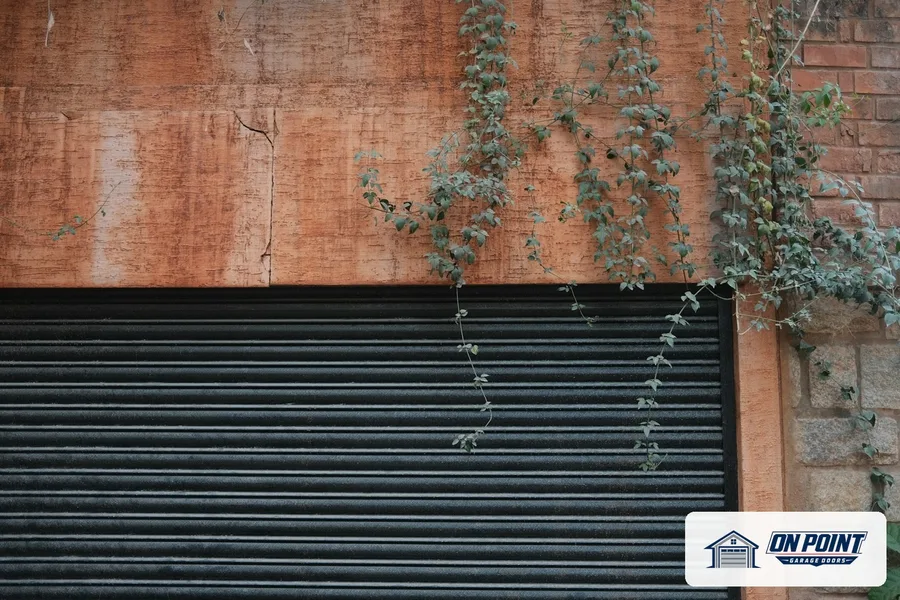
The curtain is what people see from the street. Solid slats give the most privacy and the strongest barrier. Perforated slats look solid from a distance but let light and some view through. Open grille curtains show the storefront fully when closed. In the city, there are rules that favor gates you can see through on many storefronts, so we talk through what applies to your space before ordering. Finish matters too: galvanized steel, painted steel and aluminum all wear differently.
Small, light gates can be lifted by hand with good springs. Wider or heavier gates are easier and safer with a motor mounted to the barrel, run by a key switch, a remote or a wall control inside. A motor also keeps staff from leaving the gate half open because it is a chore. Every motor gate we install keeps a manual way to open it, usually a hand chain, for power cuts.
Most gates lock at the bottom bar into the sidewalk or into the guides at each side. Wide gates often get a center lock as well. We choose locks that suit the way the store opens and closes, and we place them where they can be reached without kneeling in a puddle. A gate that is easy to lock gets locked properly every night, which matters more than any one feature on the gate itself.
The hood covers the coiled curtain at the top and keeps rain, snow and debris out of the barrel. A good hood is worth having on almost every outdoor gate. We also look at how water runs down the front of the building, whether the sidewalk slopes toward the store, and how much salt the corner sees in winter, so the bottom bar and guides can be chosen to last.
When a new gate replaces an old one, we take the old curtain, barrel, springs, guides and hood down safely. The springs in an old barrel can still hold tension, so removal is part of the job, not something to leave for a handyman. We patch the old anchor holes where the new gate does not cover them and haul the old gate away.
Stores cannot close for long, so we plan the install for the time that suits you. Usually the old gate comes down and the new gate goes up in one visit, and the store is never left without a way to lock up at night. If parts need to be ordered, the old gate stays working until the new one is ready.
On install day the technician mounts the guides and the brackets, hangs the barrel, sets the curtain and the springs, fits the hood, mounts the locks and, if there is one, the motor and its controls. The gate is run through several full cycles, the springs are set so it does not drift, the locks are tested, and you are shown how the manual backup works.
If the curtain is mostly sound and the problem is the springs, the motor, the lock or a few slats, it can usually be repaired. A curtain rusted or bent across much of its height is the main reason to replace it.
Yes. Perforated slats and open grille curtains let people see the storefront when it is closed. We talk through which fits your front and any rules that apply.
No. We plan the work so the store can be locked at the end of the visit, and the old gate stays in place until the new one is ready.
Only if you want one. Smaller gates work well by hand, and larger ones are easier with a motor that still has a manual backup.
Yes. We measure the opening and walk through the options before you decide anything.
Across Brooklyn, Queens and Long Island, tell us what the door is doing and we set a visit that fits your day.
Free estimate, call (929) 429-2429.
Tell us what the door is doing and we will give you an honest arrival time. The estimate is free.
Easier to explain by phone? Call (929) 429-2429.
Tell us what the door is doing. The estimate is free either way.