Takes 30 seconds. We call you back to set a time.
Garage doors make some noise, but squealing, grinding, rattling or banging means something is worn or out of place. The sound itself is a good clue: squeaks usually come from rollers and hinges, grinding from the opener or the track, rattling from loose hardware, and a single loud bang from a spring. A quieter door is usually a healthier door. Free estimate at (929) 429-2429.
By Sean Cohen, owner, On Point Garage Doors · Updated
These photos are from our own jobs, with our logo on them.


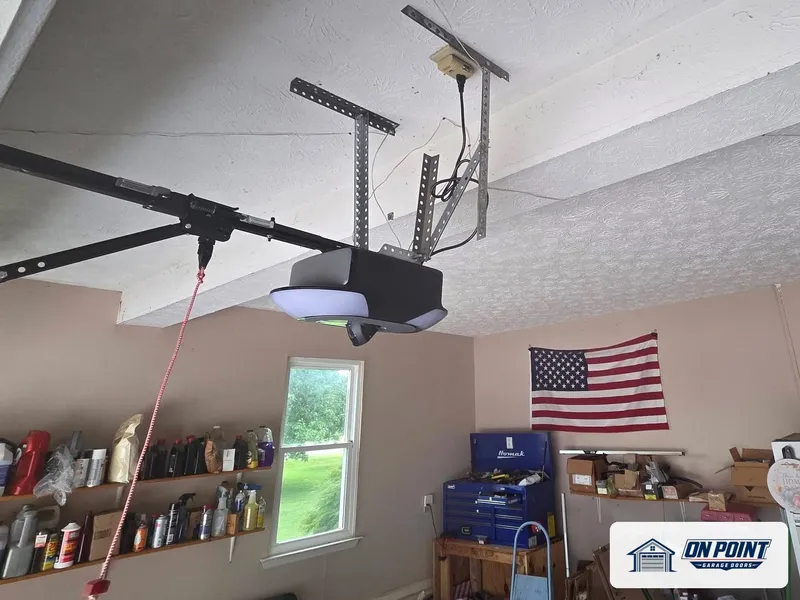
Many homes here have bedrooms or living rooms over the garage. A chain-drive opener bolted to the ceiling carries every clank into the house.
New rollers with sealed bearings, a belt-drive or wall-mounted opener and well-secured hardware make the biggest difference.
You hear which parts are making the noise and what the fix involves before any work starts.
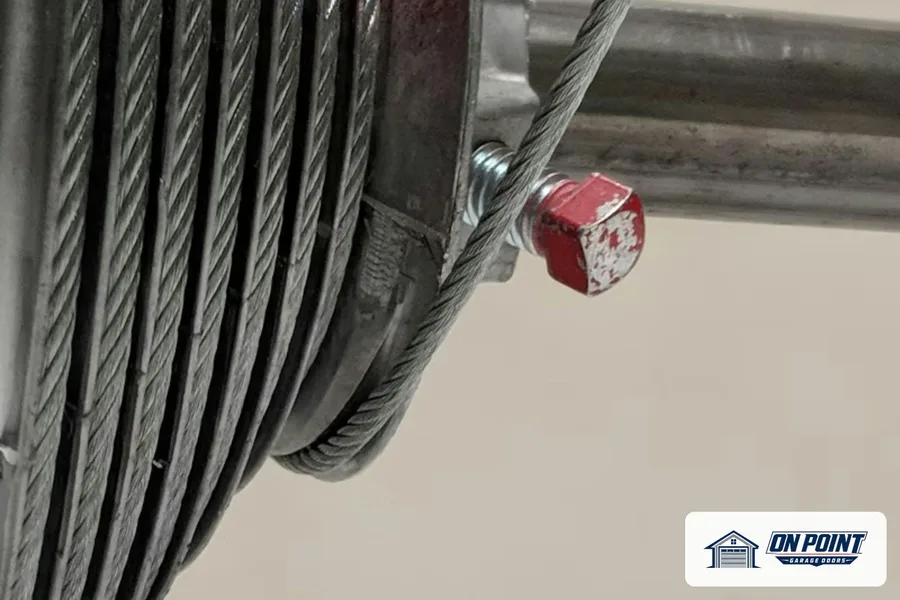
Heavy grease packed into the tracks collects dirt and makes rollers drag, so it is not the answer. And never work on the spring bar or the bottom brackets to stop a noise. Those parts hold the door's full weight under tension.
Most noises are wear. A few mean stop: a bang followed by a door that will not lift, a grinding sound from the spring bar, a cable that looks frayed, or a door that lifts crooked with a loud scrape.
In any of those cases, leave the door closed and keep people and pets away from it until it has been checked.
Cold weather stiffens old grease and makes rollers and hinges louder in winter. Heat dries out rubber and plastic in summer. A door that suddenly gets louder in a new season is often telling you a part is near the end of its life.
A yearly check catches worn rollers and hinges before they fail.
Opener noise comes from the motor housing on the ceiling or wall: a hum, a grind or a chain slapping the rail. Door noise comes from the door and its tracks: squeals, pops and rattles that follow the rollers as they move.
Telling the two apart is the first step. A quiet opener on a worn door is still loud, and new rollers will not quiet a failing motor.
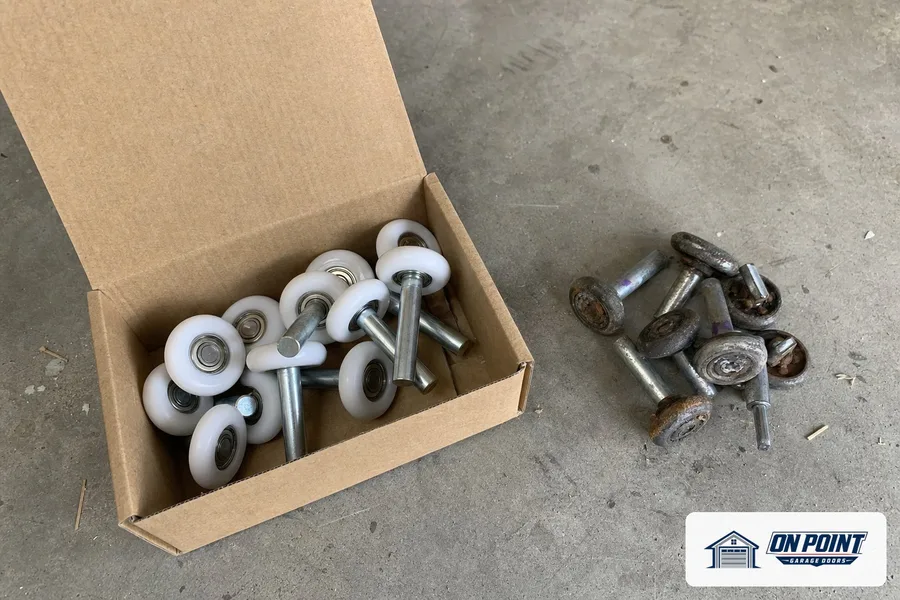
Doors installed years ago usually came with plain steel rollers that have no sealed bearings. They grind on the axle and rattle in the track as soon as they wear.
Swapping them for sealed nylon rollers is often the single biggest improvement, especially on doors that sit under a bedroom.
In row houses and two-family homes, the garage often shares a wall or a ceiling with a bedroom, a kitchen or a neighbor. A door that clanks at dawn wakes more than one household.
Fixing the noise there is about more than comfort: a quieter door is usually a door whose rollers, hinges and springs are in good shape.
Usually worn rollers, loose hardware, a worn opener drive or a door out of balance. The type of noise points to which one.
Often, yes. Sealed nylon rollers run much more quietly than worn steel rollers.
Yes, noticeably. That matters most when there is a bedroom or living room over the garage.
Most likely a torsion spring broke. Leave the door down, keep people away from it and call.
Yes. You hear what is making the noise and how to fix it before any work starts.
Across Brooklyn, Queens and Long Island, tell us what the door is doing and we set a visit that fits your day.
Free estimate, call (929) 429-2429.
Tell us what the door is doing and we will give you an honest arrival time. The estimate is free.
Easier to explain by phone? Call (929) 429-2429.
Tell us what the door is doing. The estimate is free either way.