Serving Brooklyn, Queens and Long Island(929) 429-2429Open six days a weekFree estimateGuaranteed work
On Point Garage Doors
Open 24 hours Sun-Thu, Fri until 5 pm Free estimate Springs, openers, cables We come to you
Emergency?Call nowBook free estimate
New York, NY - open six days a week

Turning a manual garage door into an automatic one

Free estimateSame-day serviceCommon parts on board
  • Free estimate
  • Same-day service
  • Common parts on board
Emergency garage door repair★★★★★ 5.0 on Google · 42 reviews

Book your free estimate

Takes 30 seconds. We call you back to set a time.

Or just call (929) 429-2429 and talk it through.

Home › Manual to Automatic Garage Door

Plenty of garages in our area still have a door that is lifted by hand. Sometimes it was never given an opener, and sometimes the old opener died and was taken down. Most of those doors can take an opener, but not every one is ready for it. The opener is made to guide a door that is already balanced, not to haul a heavy one up. This page goes through what we check before adding an opener, what changes on the door and when the door needs work first. Free estimate at (929) 429-2429.

By Sean Cohen, owner, On Point Garage Doors · Updated

Real jobs. Real photos.

These photos are from our own jobs, with our logo on them.

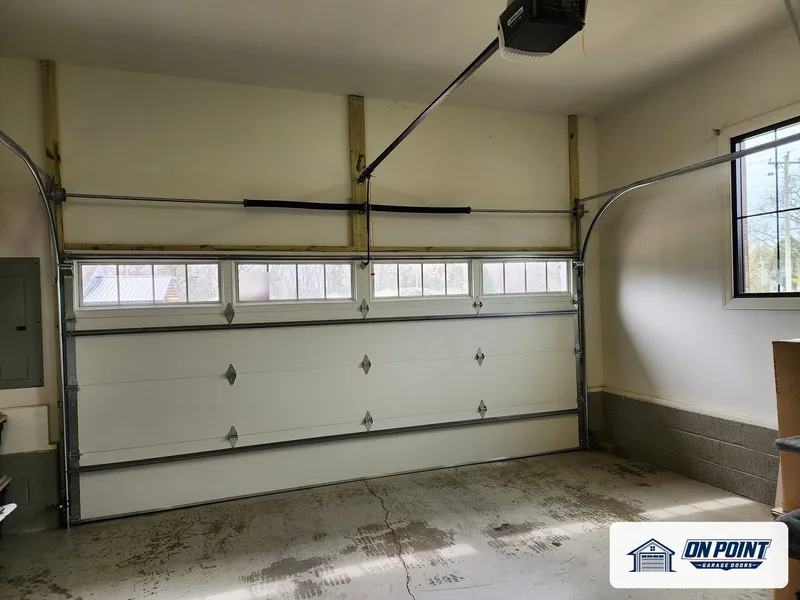
Door and opener inside a garage, from one of our jobs
Door and opener inside a garage
Opener on a garage ceiling, from one of our jobs
Opener on a garage ceiling
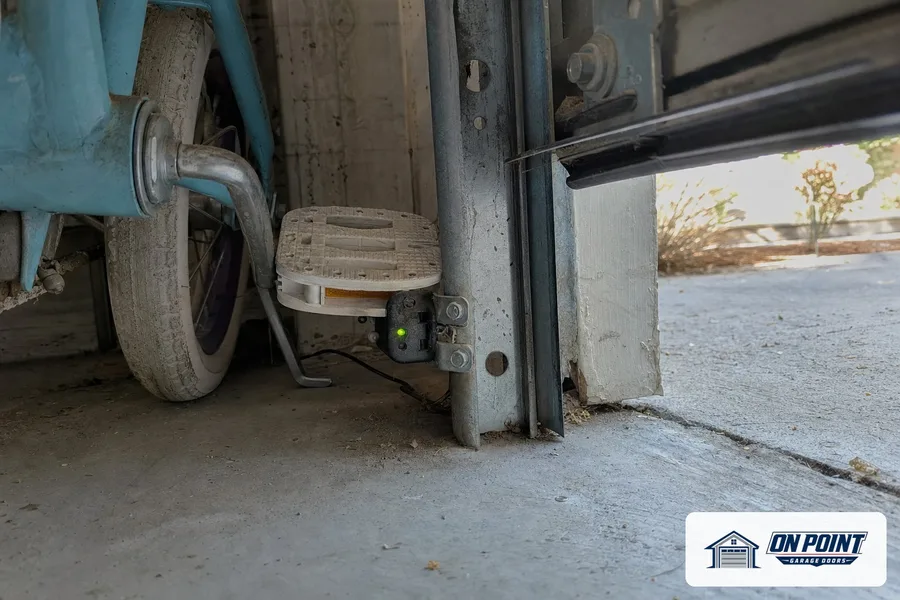
Safety sensor on the track, from one of our jobs
Safety sensor on the track

Is the door balanced?

A door that is ready for an opener feels light when you lift it, and it stays put when you let go partway up. If it drops, rises on its own or takes real effort to lift, the springs are not matched to it. An opener on that door will strain, wear out early and may not reverse properly. Balancing the door, or changing the springs, comes first.

Is the door the right kind?

Sectional doors and most one-piece doors on tracks can take an opener. Swing-out carriage doors and side-hinged doors need special operators or are better left manual. A very old one-piece door on worn hardware may need attention before any opener goes on it. We tell you plainly what the door in your garage can handle.

The lock has to come off or be disabled

Manual doors usually have a lock: a handle with a latch, or slide bolts that go into the track. If an opener tries to lift a locked door, it can bend the top section, strip the gear or pull the rail. When we add an opener, we remove or disable the old lock, and point you to opener features that keep the door secure instead.

The top section needs support

The opener pulls on the top section of the door through a bracket. Doors that were only ever lifted by hand were not always built to take that pull. A steel strut across the top section, or a reinforcement bracket, spreads the force so the section does not crack or bow. This is especially true on wide single-skin steel doors.

Room on the ceiling and over the door

An opener needs space: room above the door for the header bracket and a ceiling long enough for the rail. Low garages, garages with beams or ducts in the way, and garages with storage overhead may need a low-headroom setup or a wall mount opener that sits beside the door. We measure before anything is ordered.

Power and the outlet

The opener plugs into an outlet on the ceiling near the motor. Many manual garages have no outlet there, or have a single bulb on a switch. An electrician may need to add a proper outlet first. We let you know before the visit so the installation is not held up.

Safety sensors and the wall button

Every opener made for homes today comes with photo eyes at the bottom of the tracks, so the door will not close on a person, a pet or a car. They are wired to the opener along with a wall button inside the garage. On older garages, the jambs need to be solid enough to hold the sensors in line.

Choosing the opener

Belt drives are quiet and suit garages next to or under a bedroom. Chain drives are tough and suit detached garages. Wall mount openers free the ceiling. Most current openers come with a phone app, a battery backup option and a keypad for the outside. We go through what fits your door and how you use the garage.

Keeping a way to open it by hand

Once the opener is on, the door is still opened by hand in a power outage using the emergency release. We show you where it is and how it works. On a garage with no other way in, an outside release or a battery backup keeps you from being locked out.

Old wood doors and heavy doors

Solid wood doors from decades ago can be far heavier than a modern steel door of the same size. Some were hung on extension springs that were never sized for daily use, and some had their springs adjusted over the years until nobody knows what they were. Before an opener goes on a door like that, the springs are matched to its real weight, worn rollers and hinges are changed, and the top section is checked for soft wood where the opener bracket will go.

What a visit includes

The technician checks the door's balance, springs, cables, rollers and tracks, looks at the ceiling, the header and the power, and explains what the door needs before an opener goes on. You get a written estimate first. After installation, the travel, force and safety reverse are all tested with you watching.

Questions we get asked

Can any manual garage door get an opener?

Most sectional and many one-piece doors can, if they are balanced and in good shape. Swing-out doors need special operators.

Why does the door need to be balanced first?

The opener only guides the door. A door that is heavy to lift will wear the opener out and may not reverse properly.

What happens to the old lock?

It is removed or disabled, so the opener never tries to lift a locked door.

Do I need an outlet on the ceiling?

Yes. The opener plugs into an outlet near the motor, and an electrician may need to add one.

Is the estimate free?

Yes. We check the door and the garage before any opener is chosen.

Booking takes a minute

Across Brooklyn, Queens and Long Island, tell us what the door is doing and we set a visit that fits your day.

Free estimate, call (929) 429-2429.

Want to stop lifting the door by hand? We will check it first

Tell us what the door is doing and we will give you an honest arrival time. The estimate is free.

Easier to explain by phone? Call (929) 429-2429.

Two minutes to a free estimate

Tell us what the door is doing. The estimate is free either way.

Or just call (929) 429-2429 and talk it through.

The other six things that go wrong