Takes 30 seconds. We call you back to set a time.
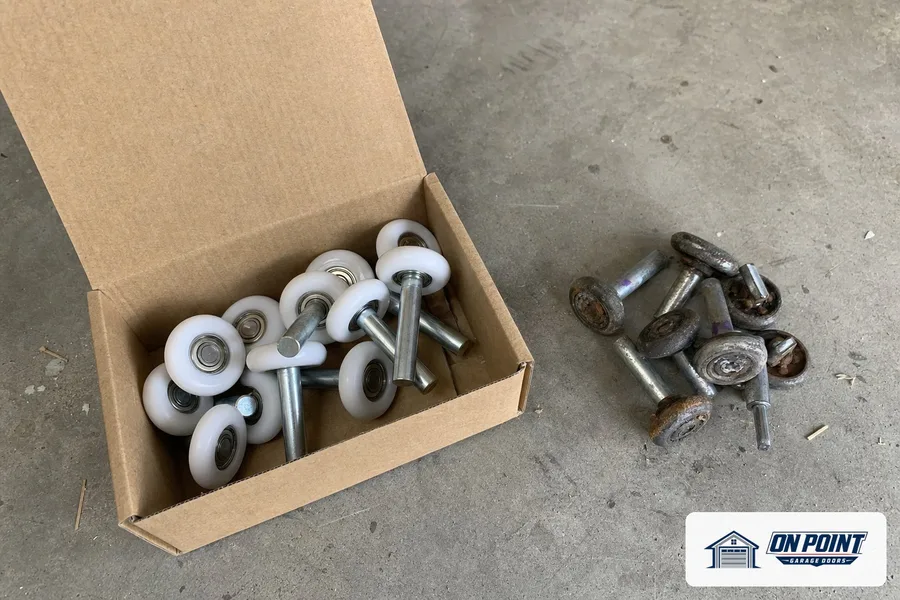
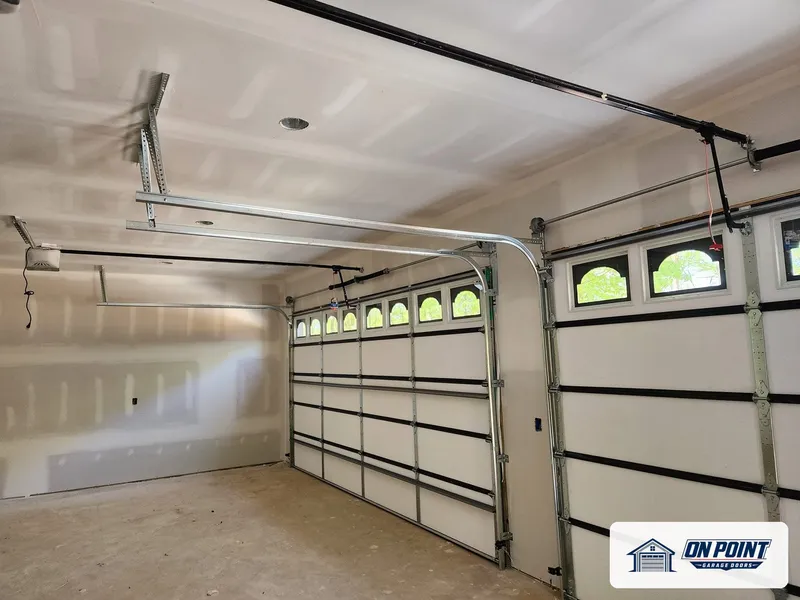
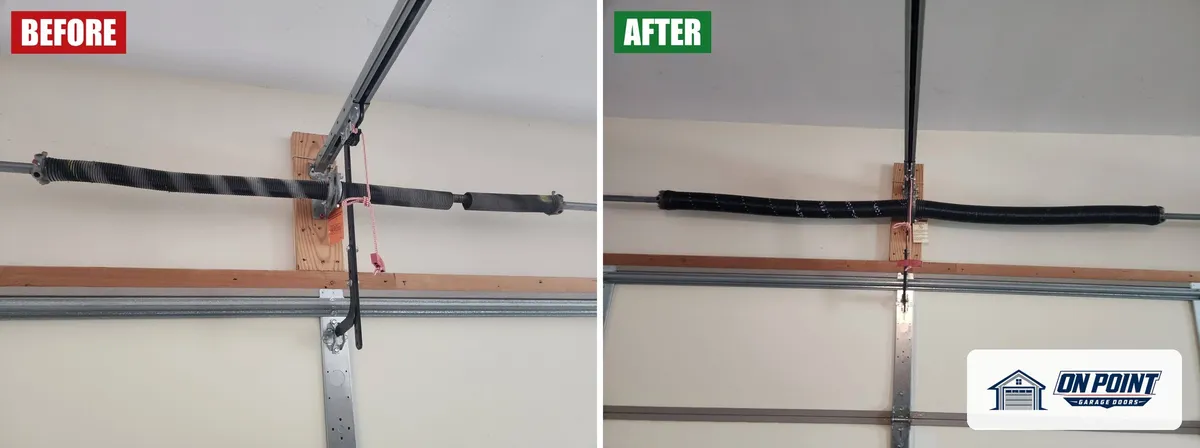
These photos are from our own jobs, with our logo on them.


Garage door repair in Windsor Terrace for the small frame and brick row houses, the few homes with private garages on the side streets, the garages near the expressway, and the shops along the main avenues. Free estimate first.
Most of the row houses tucked between the park and the cemetery were built without garages, so the homes that do have one guard it closely; parking nearby is hard to find.
The expressway was cut straight through the middle of the neighborhood, which left short dead-end blocks and overpasses where streets once simply continued.
Those garages are often narrow, with the door opening right onto the sidewalk.
An older swinging pair of doors may still hang on one, and swapping it for a sectional door takes a close look at the headroom and the floor.
Simple doors in dark colors suit the frame and brick rows.
A few blocks have older detached garages behind houses or garage buildings shared by several neighbors.
Power in those outbuildings can be a single old outlet, so an opener plan starts with what electricity is really there.
Their doors are often old and have been patched more than once.
Bakeries, cafes and bars along the main avenues raise their gates at dawn and drop them late at night.
Apartments sit right above many of those shops, so a screeching curtain is a problem for the people upstairs as well as the owner.
A gate stuck halfway on a busy sidewalk is handled as urgent.
Park visitors and cemetery traffic fill the narrow streets on weekends, and parked cars crowd garage entrances.
Big trees from the park and the cemetery drop leaves and seeds that end up in tracks and along seals.
When he is out in the fall, the technician looks for that packed debris at the floor and inside the track along with the usual parts.
Some garages are rented to neighbors for parking or storage.

A private garage under a frame house, one bay in a shared row or a storefront by the circle at the park, each is inspected before any figures are written.
With so few garages in the neighborhood, owners want them working every day, and a stuck door often means circling for a long time to find a spot.
A door stuck open is no better, since the garage then faces passers-by on the sidewalk.


Sidewalk garages. Doors that must stop and reverse reliably for passers-by.
Both photo eyes sit low and tucked to the inside, out of the way of shoes, stroller wheels and dogs headed for the park.
An old door that drags usually has tired springs, and those get checked before the opener.
Older detached and shared garages. Worn springs, rotted jambs and doors that rub.
The frame is fixed first, then the door.
Openers. The rattle of an old chain unit under a bedroom ends with a belt drive.
In frame houses that share a wall, rubber mounts at the ceiling also spare the family next door.
Every remote and any keypad is paired again before the visit is over.
Avenue shopfronts. Gates that drag, drop, will not lock or have a tired motor.
Hand gates can take a motor.
Insulated doors make garages under small row houses warmer.
After a scrape from a parked or turning car, switch the opener off and let the door sit until the track has been looked over.
Mirrors have little to spare in these openings, and a nudge against the jamb can push the vertical track inward, so both get measured.
Windsor Terrace is covered from our Brooklyn base, park side and cemetery side alike, and so are Queens and Long Island.
Whatever you mention about the block and the garage goes to him beforehand.
A car stuck in one of these rare garages, or a shop that cannot lock up, gets moved up the list.
A shared garage building with several doors is handled with all owners in mind, so the work is planned around everyone's cars.
Tell us who holds the key to the building and whether the lane has to stay clear.
Winter. Cold breaks worn springs, and sidewalk salt reaches the bottom of the door.
A door that meets the public sidewalk can freeze where shoveled slush refroze against it; wait for the thaw instead of leaning on the opener.
Spring. Seeds and pollen from the big trees collect in tracks.
Summer. Heat dries out gate guides and door seals facing the street.
Fall. The park and the cemetery shed onto these roofs and driveways for weeks, and wet leaves wedge into the bottom of the track.
Cold November rain then runs over the top of them and under the seal.
He works the door while watching the frame and the springs, then checks the cables, rollers, track and opener.
In an old frame house he also looks at what the brackets are screwed into, because plaster and crumbly lath hold nothing.
Each problem is explained plainly on a free estimate.
Replacement springs follow the real weight on the cables, which for a many-times-painted wood door can be a surprise.
Common parts are carried on the truck.
To finish, a box is set in the doorway and the door has to back away from it.
Broken parts ride away in the truck and the stretch of sidewalk out front is swept of scraps.
You see the door work properly before he leaves.
Cafe and shop gates can be fixed before the morning rush.
He calls ahead.
Work starts only with your okay.
Narrow sidewalk garages and old shared garages wear differently.
With a spring snapped, the door's whole weight is unsupported; leave it closed and keep back.
That warning goes double where people walk inches from the door.
Stretch springs along the track on the oldest doors get a safety cable run through them if none is there, so a broken coil cannot fly.
Cables fray where salt and water sit; both are replaced together.
The grooves of both cable drums are inspected while the cables are off.
Photo eyes on sidewalk garages are mounted where they stay aimed.
Tracks in tight garages are straightened if a car clipped them.
Rusted bottom track is replaced.
An opener is tried with and without the door's load before a word is said about a new one.
Wall-mounted openers suit tight garages with low ceilings.
Say which kind of garage or gate it is and whether a truck can stand anywhere near it.
Every estimate is free.
The photo beam, the force reversal and a door that does not drift are the core of it. The eyes are mounted where they see the whole opening, the reversal is tested on an object, and the balance is set so the door cannot creep down by its weight. A timed close is generally a poor fit on a busy sidewalk, so it is better to watch the door shut before you drive off.
Yes, if the trouble is in your bay. The technician also notes anything common that affects it, such as a sagging shared header, a failing roof edge dripping on the track or wiring that feeds several openers, and writes that separately. The other owners can then decide together. Your door is repaired on your approval, and the lane is left passable for the rest of the row.
Often there is, though not always the standard kind. A wall-mounted unit works beside a torsion shaft and needs no rail, while low-headroom track can make space for a short rail on other doors. What decides it is the gap above the opening, the depth behind the door, the side room and a safe outlet. Those are measured on the visit before any model is suggested.
No. Sound swing doors can be rehung on heavier hinges, trimmed where they drag and given a proper latch, and some can take an operator. They do need room to swing, which is scarce when the doors face a sidewalk or parked cars. If that is the daily struggle, a sectional or side-sliding door may fit better, and both routes can go on the written estimate after measuring.
Tell us what you know when you book: a hydrant, street cleaning days, a dead end at the expressway or a driveway you can lend for the visit. The truck can wait in front of your own garage when you allow it. For a new door the long sections have to be carried from wherever it stops, so a clear path to the opening saves everyone trouble.
Give us the block and the symptom, then pick a day when someone can open up; the estimate is free.
Call us at (929) 429-2429.
Describe the garage or the gate and what it stopped doing; a free estimate comes back with no pressure attached.