Takes 30 seconds. We call you back to set a time.
These photos are from our own jobs, with our logo on them.


Garage door repair in Red Hook for every kind of door on these blocks: house garages, and the roll-up and sectional doors on workshops, studios and warehouses near the water. A free estimate comes before any work.
Red Hook mixes row houses and small apartment buildings with workshops, studios and warehouses along the waterfront, and the garage doors follow suit. A house garage might have a sectional door with an opener overhead; the workshop next door might have a steel roll-up door that coils above the opening, or a wide sectional door with a motor on the wall.
Each type fails differently and is repaired differently, so the technician starts by identifying exactly what kind of door, spring system and operator you have.
The low blocks by the harbor take salt air every day and, in the worst storms, flood water. Hurricane Sandy pushed the harbor into ground floors and garages across the neighborhood, and doors that lived through it often still show rust at the bottom brackets, the cable ends and the lowest rollers. Those are the parts the technician looks at first here.
Doors on older buildings have often been worked on by several hands over the years, and parts may have been swapped along the way. The technician checks that the springs, cables and hardware actually match the door, because a mismatched part can keep a repair from lasting.

A row house garage on a cobbled side street and a loading door on a converted warehouse need different parts, but both start the same way: the door is looked at before anyone talks about the repair.


Garages in row houses and small lots. Torsion springs that snapped, frayed cables, rollers worn flat and openers that grind. When a door suddenly feels heavy or slams down the last part of the way, the springs are checked before anything else.
Roll-up doors. Steel roll-up doors coil around a drum above the opening and are balanced by springs inside that drum. When they get hard to lift or stop partway, the usual causes are a tired spring, slats that have bent and catch in the guides, or guides knocked out of line by a vehicle.
Smaller roll-up doors are often raised with a chain hoist or a pull strap rather than a motor. A hoist that has grown hard to pull, or a door that drifts down on its own, tells the technician the spring tension needs attention.
Commercial sectional doors. Wider and heavier than house doors, they work their springs and cables harder and often run on a wall-mounted operator. Worn cables, bent track sections and operators that stop short are typical problems. Because these doors are heavy and used often, a small problem such as a frayed cable or a loose track bolt can turn into a large one, and catching it early keeps a loading door from failing in the middle of a working day.
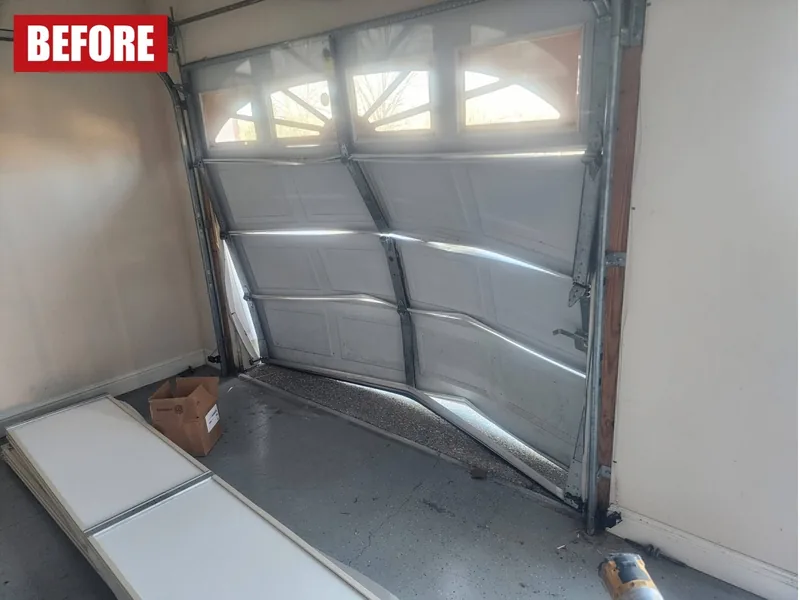
Doors that took a hit. Box trucks backing up to warehouse docks, delivery trucks squeezing down narrow streets and cars turning into tight garages all clip doors here. A hit can bend a section, a track or a guide, and the door should stay put until it has been checked.
The row houses, studios and warehouses by the basin are a regular stop on our Brooklyn route, and the same crews work Queens and Long Island.
What you tell us on the call, the kind of door, what it is doing and how to reach it past the trucks, is in the technician's notes before he sets out.
A warehouse that cannot lock its loading door for the night, or a car trapped behind a dead garage door, is treated as urgent; say so when you call.
Winter. Cold stiffens springs and makes plastic opener parts brittle, and wind coming off the water leans on wide doors, straining their tracks, guides and fasteners.
Spring. After a wet winter by the water, rust shows up at the bottom of the door first, on the brackets, the cable ends and the lowest rollers. Catching it then saves a cable from snapping later in the year.
Summer. Heat and humidity swell wooden doors and bake the rubber seals. A door that rubs or sticks in the heat is telling you something about its fit or its balance.
Fall. Before the cold winds come off the harbor, a check of the springs, cables and safety reverse finds the weak part on a calm day instead of a freezing morning.
The technician looks over the whole door first: springs, cables, rollers, track or guides, and the opener or motor. Nothing is said about the repair until he has seen how it all works together.
He explains what he found in everyday words and puts it on a free estimate, one line per item. If several things are worn, you choose what to fix now and what can wait, and no work starts until you have said yes.
Repairs are made with parts that match your door, whether it is a garage on a residential block or a rolling steel door on a warehouse. The common parts for house doors ride with him; a part for a large commercial door may need ordering, and you are told that up front, with a plain idea of when it will arrive.
Before he leaves, every door with an opener or motor gets its safety reverse tested, once against an object in the doorway and once with the photo eye beam blocked.
The old springs, cables and rollers leave with him, and the garage or loading area is swept clear.
A garage on a narrow block may have little room to work outside, and a loading door may need to be closed by the end of the day. The visit is planned around how you use the door, not the other way around. For a business, the timing is worked out with you, so the door is out of action as little as possible.
You get the estimate first, and what happens next is up to you.
Every door has a few parts that carry most of the load, and those are where trouble usually starts. Knowing which part is wearing, and how badly, is what turns a breakdown into a planned repair.
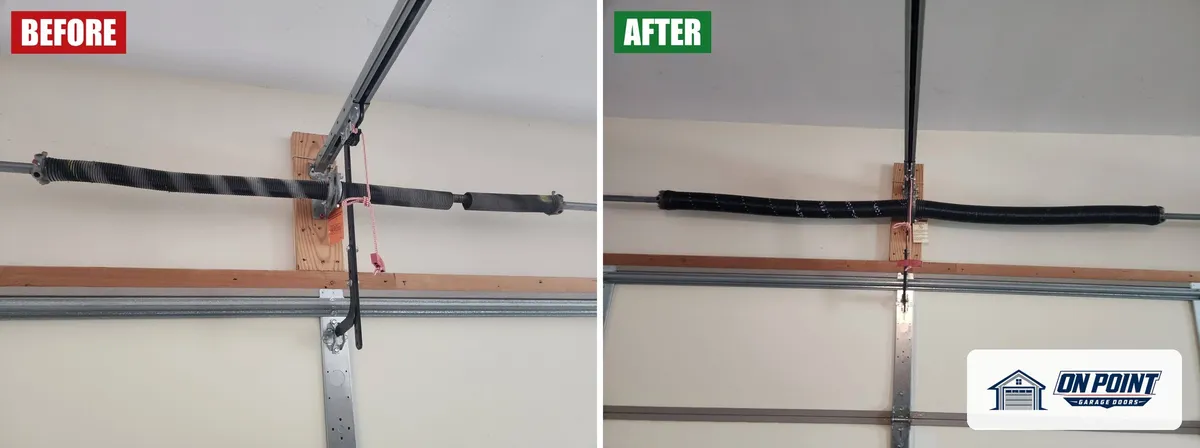
Springs. On a house door they sit on a steel bar above the opening; on a rolling steel door they are hidden inside the barrel at the top. Either way they carry the weight, and once one breaks the door is far too heavy to lift safely.
Cables. Lift cables fray, stretch and, near the harbor, rust at the bottom ends where water sits. A cable that lets go drops one corner of the door, so both sides are always replaced together.
Safety eyes. The two small sensors near the floor get knocked out of line by hand trucks, bikes and boxes, and a door that refuses to close is often nothing more than a sensor that has been bumped.
Tracks and guides. A bumper or a pallet jack can bend a track or a rolling door guide, and a door running in a bent track can jam or jump out. A door that has come off its track should stay where it is until it is set back properly.
Openers and operators. Gears wear, boards fail after surges, and older units eventually need more than a part. Commercial operators are checked for their limits and safety devices as well. If an operator is past repair, you hear the options for replacing it, matched to the size of the door and how often it runs.

When you call, tell us whether it is a home garage or a business door, sectional or rolling steel, and what it is doing. That is enough for the technician to load the right parts before he heads over.
Free estimate for homes, warehouses and shops across Brooklyn, Queens and Long Island.
Salt water that sat against a door leaves rust where it is hard to see: inside the bottom brackets, on the cable ends and in the lowest rollers and hinges. An opener whose board or wiring got wet can start acting up much later. The technician checks those parts first and shows you anything that has thinned before it gives way.
Wide doors facing the water flex in strong wind, which strains the track, the hinges and the fasteners. Steel struts across the sections, heavier track brackets set into solid framing and a door built for wind loads all help. The technician looks at how the door is braced now and explains which of those your opening needs.
Usually it can. A standard bottom seal cannot follow uneven stone, so a taller, softer seal that presses into the low spots goes on the bottom bar, and the door's closing limit is set so it seals without slamming. Where the stone has sunk badly at one corner, the gap that remains is pointed out honestly.
Most often it is the spring inside the barrel at the top, which has lost tension, so the hoist ends up lifting dead weight. Bent slats catching in the guides and a dry hoist gearbox are the other usual causes. The technician checks all three and sets the spring so the door is light on the chain again.
After a hit the door stays where it is until it is looked at. The technician checks the bottom section, the track or guides on the struck side, the cables and the brackets holding the track to the wall. Bent track is replaced rather than hammered straight, and heavier guides or a reinforced bottom bar can help the next time.
Describe the door, and we set a visit around your home, your studio schedule or your loading days. The estimate is free.
Call us at (929) 429-2429.
Tell us what the door or gate is doing, and a free estimate comes back whatever you decide.