Takes 30 seconds. We call you back to set a time.
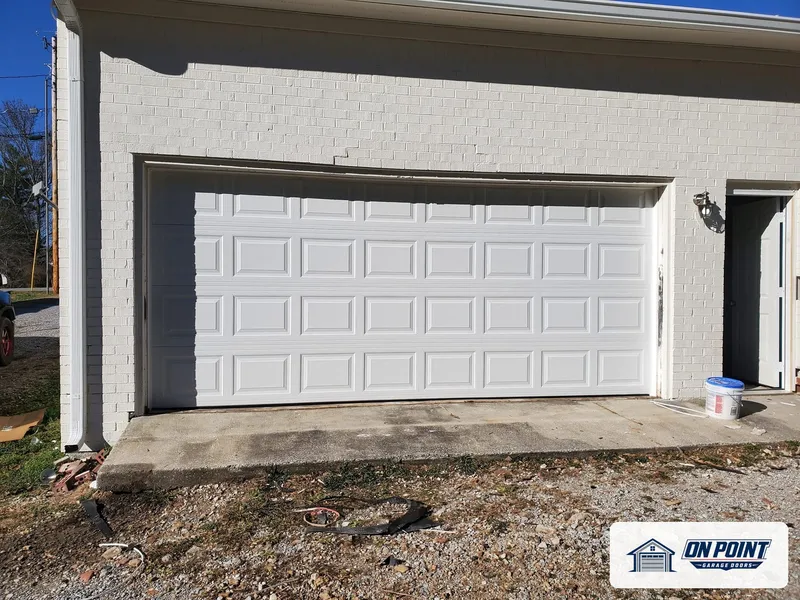
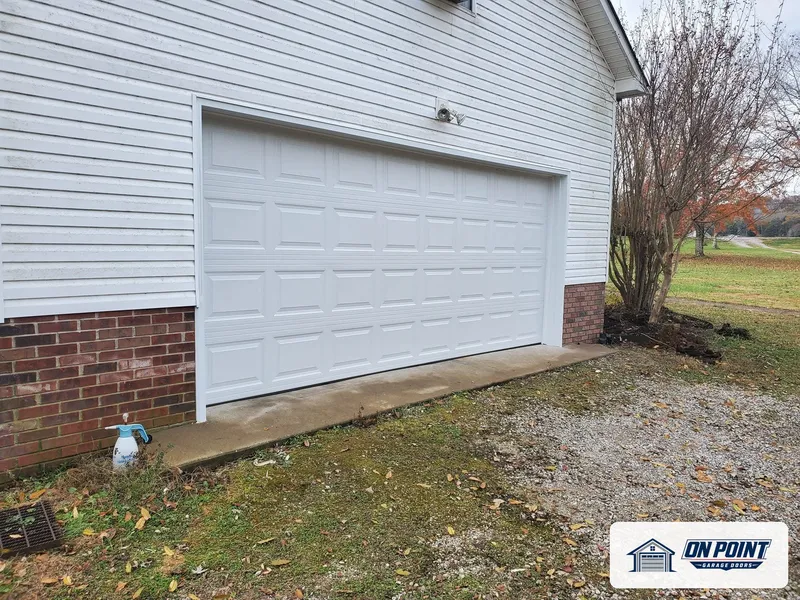
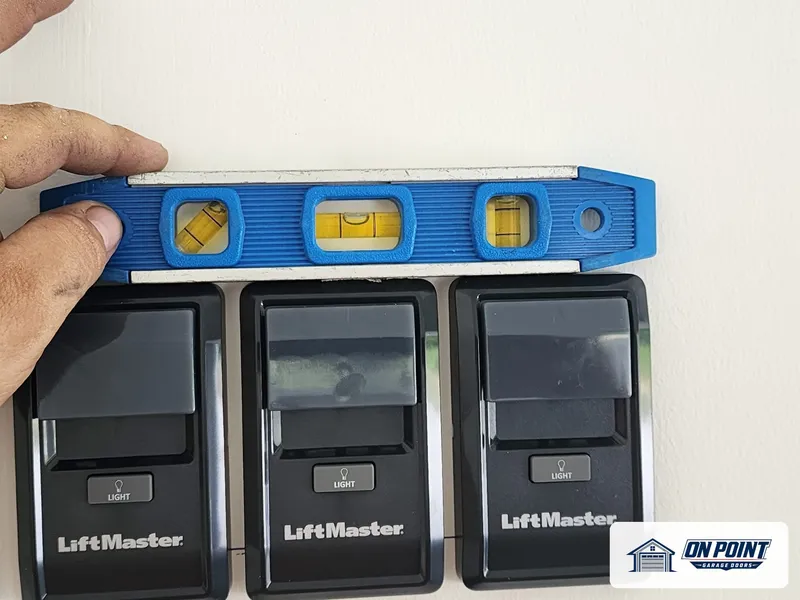
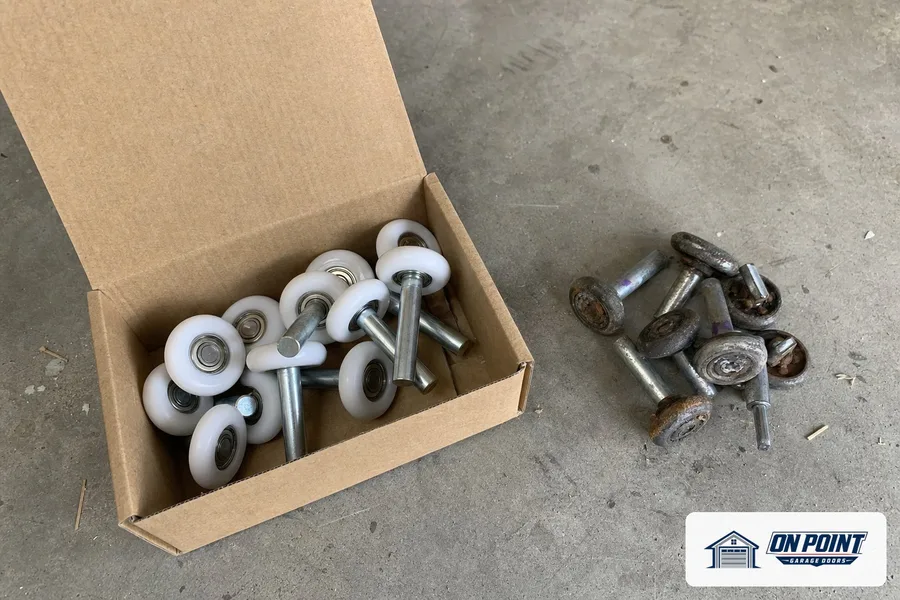
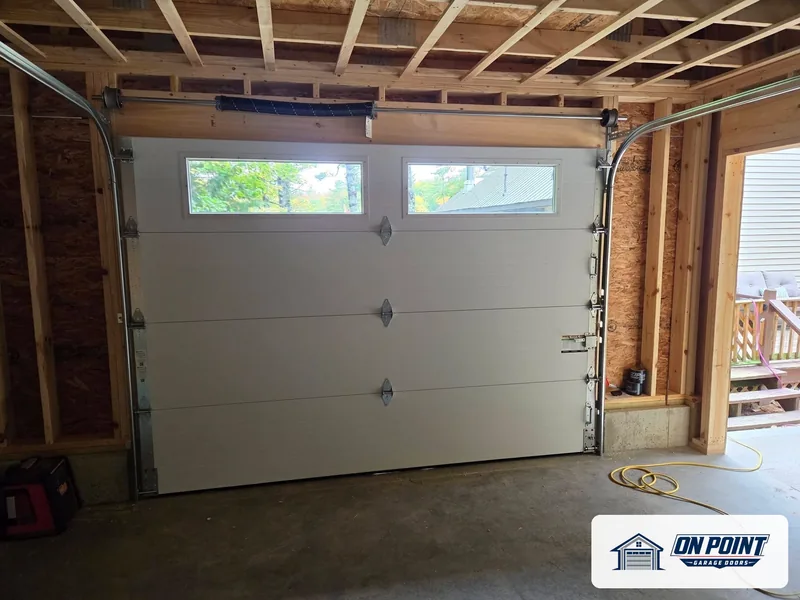
These photos are from our own jobs, with our logo on them.


Garage door repair in Hempstead for the older colonials and two-family homes near downtown, the capes and ranches toward the village edges, and the shops and service doors along Fulton Avenue and Main Street.
The village is the old center of the town, and its housing shows it. Near downtown, older colonials and two-family houses sit on narrow lots, many with a detached garage at the end of a long driveway. Apartment buildings near the train station have parking garages that open for residents all day. Toward the edges of the village, post-war capes and ranches have attached one-car garages. Hofstra University sits along the east side, and the blocks around it hold many rentals where remotes change hands often. Each of those garages wears out differently, so the technician looks at the house, not only the door.
Downtown, Main Street and Fulton Avenue carry the stores, offices and restaurants, and the transit hub and train station bring steady foot and bus traffic. Shops there pull down roll-down gates at night, and a gate that jams halfway leaves the owner unable to open or to lock up.
The side streets mix owner-occupied homes with houses split into apartments, so a single garage door may serve two or three households. Doors that open for several families every morning and evening use up springs, rollers and opener gears much sooner than a door at a house with one car.

The core repairs we do across Long Island, with the springs, cables and opener parts these doors use most carried along.


Many post-war homes across the middle of the county were built quickly in the years after the war, and plenty came with one-piece tilt-up doors on extension springs. Most have since been changed to sectional doors with torsion springs, but some garages still run the original setup, often with springs stretched far past their life and no safety cables through them. Those doors are dangerous when a spring lets go, and a modern door is usually the right answer.
A tilt-up door swings out at the bottom as it rises, so it needs clear space in front of the garage and it often scrapes the driveway as the house settles. Its long extension springs stretch along the sides of the opening and can snap with real force. Switching to a sectional door gives a door that rises straight up, seals better along the floor and runs on springs that are much safer to live with.
Some owners want to keep the tilt-up because the opening is unusual or the garage is used only for storage. In that case, the springs are replaced, safety cables are added and the pivot hardware is checked, so the old door is at least safe while it lasts.
Long Island winters freeze and thaw again and again. Water collects between the bottom of the door and the concrete, freezes overnight and holds the door shut. When someone presses the opener button in the morning, the motor strains against the ice, and the result can be a snapped cable, a stripped opener gear or a torn bottom seal. Letting the door thaw, and having the bottom seal and the slab looked at, keeps it from happening again.
Salt spread on driveways and sidewalks also gets tracked into the garage on tires and boots. It collects along the bottom seal and in the lower track, and over a few winters it rusts the bottom brackets that hold the lift cables. A rusted bracket can let go under spring tension, which is why the technician looks at the bottom corners of the door on every winter visit.
Many older homes in the middle of the county have a detached garage at the back of the lot, often fed by its own small electrical panel or a long run from the house. Some opener failures here turn out to be a breaker that trips when the motor starts, not a broken opener. The technician tests the power at the outlet before condemning the opener, and if the wiring is at fault, you are told to call an electrician.
Detached garages at the back of a lot also tend to have older framing. Jambs that sit on the slab soak up water and soften at the bottom, and headers can sag after decades of carrying a heavy wood door. The technician checks the wood before mounting new track, because a bracket screwed into soft wood will pull loose.
Cables come next on the list of common failures. They run from the bottom corners of the door to drums on the spring bar and hold the door's weight while it moves. Rust, wear and a spring that was too small all fray them, and so does a door where only one spring was ever replaced. We change both cables at once so the door lifts evenly.
Off-track doors usually follow a bump from a car, a broken cable or cables pulling unevenly, and a roller leaves the track. Do not run a door in that state, because it can drop, hit a car or rip the track from the wall. Keep clear and call, and the technician checks the sections before giving a free estimate.
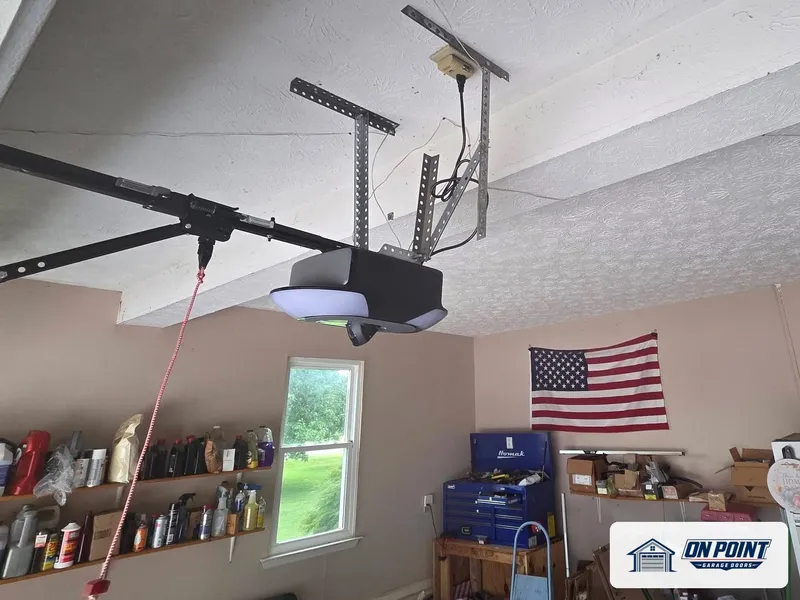
Opener motors eventually give out after long service. A grinding older chain drive often has a gear wearing away inside the motor head. When the opener cannot be saved, a belt drive is the usual choice, since it runs quieter and has fewer parts that wear.
On Point Garage Doors works throughout the Town of Hempstead and across Nassau County. Pick an area below for its own page, or call us if your village is not listed.
The village is the busy center of the town: older colonials, two-family rentals, small commercial buildings and the large campus buildings along its edge. Garages here are mostly older detached ones at the back of the lot, and their doors and frames have often been patched more than once over the years.
Two-family houses are common on these blocks, and landlords often call when a tenant reports that the door is loud, slow or stuck. A short note about who uses the door and who holds the remotes helps the technician plan the visit and set up every remote before he leaves.
Garden City, just to the north, is known for its planned streets, Tudor and colonial houses and big shade trees. Many garages there are attached or set behind the house, and owners usually want a door that keeps the look of the street.
Levittown and the neighborhoods around it were built as rows of nearly identical capes in the years after the war. Almost every house there has been expanded since, and garages have been added, widened or turned into rooms, so no two are quite alike anymore.
Because so many of these houses started out the same, their garages share the same weak spots: original framing around the opening, older springs carried over from an earlier door and openers that were added long after the house was built. Those are the first things the technician looks at.
Around the village and its eastern neighbors, many houses are rentals or family homes with a detached garage, and the doors there often run on old springs. Uniondale and Roosevelt add streets of capes and ranches with attached garages beside the kitchen.
Garden City, Mineola and Williston Park share older housing with many attached garages and detached ones added later. Frames, headers and jambs on those older garages are worth checking before a new door is hung.
Many of these houses are close to the Long Island Rail Road lines and the county offices, and owners who commute by train often want a keypad or a smart opener so family members can get in without a remote. Those are added as part of an opener install or on their own.
In the post-war capes of Levittown, Hicksville, East Meadow and Bethpage, garages range from the original small openings to wide two-car additions. Springs, openers and doors from several different decades can turn up on the same street.
From Massapequa west through Bellmore, split-levels and colonials line the streets, and many canal-front homes were rebuilt or raised after Hurricane Sandy. Salt air near the canals rusts springs, cables and bottom brackets much faster than it does inland.
Homes on the canals often have a garage at ground level under raised living space, with flood vents built into the walls or the door. Doors there should be checked after any storm that brings water into the garage, since salt water left in the lower track and the bottom brackets keeps working on the steel long after it drains.

A national safety standard covers household garage door openers, and it exists because of accidents in the past, mostly doors closing on children. Every modern opener must reverse when it meets an obstacle and when the photo-eye beam is broken, and the emergency release must be reachable from inside the garage.
If your door fails one of these safety tests, the technician tells you and puts it right before he leaves, even if you called about something else. Many doors that will not close are simply showing a photo eye out of line, which means the safety system is doing its job. Those sensors should never be bypassed.
Older openers sometimes have no photo eyes at all, or eyes that were taped together or mounted so high they miss a small child. Those openers are a real safety risk, and replacing them is one of the most worthwhile repairs a household can make.
Door stuck open or a car trapped inside? Call us, and that visit goes ahead of routine work.
Full garage door repair and installation across the town. Technicians carry springs, cables, rollers, hinges and common opener parts, so many repairs are done on the first visit without ordering anything.
When a part has to be ordered, such as a matching section for a dented door or a board for an uncommon opener, the door is left safe and closed in the meantime, and you are told plainly what is on order and why.
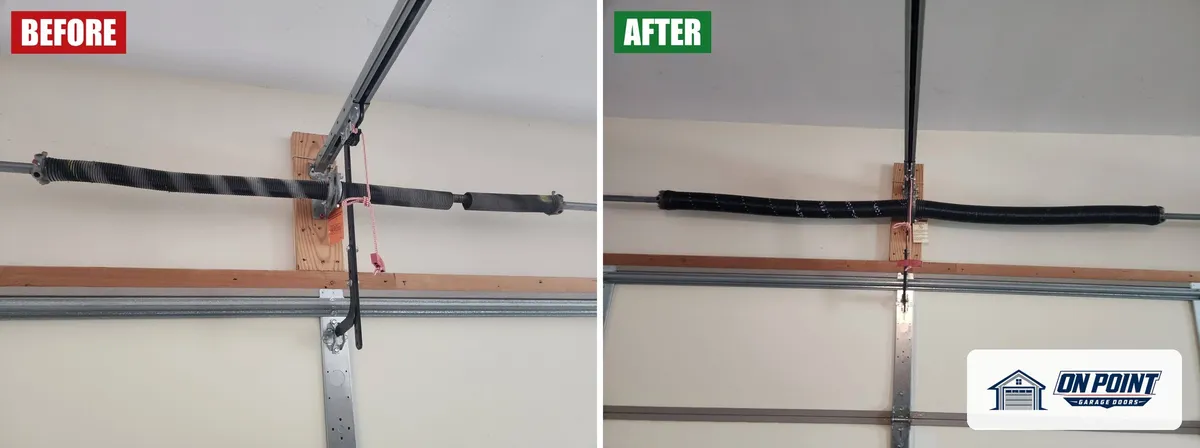
Snapped torsion or extension spring? It gets new high-cycle galvanized springs, changed as a pair so the door stays balanced and the second spring does not fail soon after. Spring replacement details →
Logic boards, belts, gears, photo eyes, capacitors and limit switches; every opener brand is diagnosed at one visit. Opener repair details →
Clopay, Amarr, Wayne Dalton and CHI doors, with help picking a style and a careful, balanced install. New door installation →
Usually like one loud bang, often compared to a gunshot or a heavy book hitting the floor, and it can wake the house at night. After that, the door is very heavy, because the spring was carrying most of its weight. Do not try to lift it; keep it closed and call.
The usual causes are a weak remote battery, an opener without power, or photo eyes knocked out of line. If the wall button works but the remote does not, the problem is in the remote or the receiver. If neither works, the board, a gear or the trolley may have failed. The technician tests each of these.
Yes. We install Clopay, Amarr, Wayne Dalton and CHI doors around the town. The old door is removed and taken away, and new tracks, springs, cables and rollers go in with the new door so everything is matched.
Yes. We repair commercial roll-up steel doors, commercial sectional doors and high-cycle operators for auto shops, warehouses, loading docks and apartment parking garages, and you get a written estimate first.
Commercial doors are often set up with heavier springs and a safety edge along the bottom, and both are tested on every visit along with the operator's limits.
Nearly all of them: LiftMaster, Chamberlain, Genie, Craftsman, Linear, Sommer, Marantec and Wayne Dalton openers, and Clopay, Amarr, Wayne Dalton, CHI, Haas, Raynor and Garaga doors. If your door or opener carries a maker's name, we most likely work on it.
Springs are rated by cycles, one cycle being one trip up and down. A busy household uses up a standard spring in some years. Cold, rust from humid summers and road salt, undersized springs from an earlier install and skipped tune-ups all shorten that life. Both springs are changed together.
The safety rules for openers were written after accidents in which doors closed on people, most often children. Since then, every new household opener has had to include a reverse on contact, photo eyes near the floor and an emergency release. Older openers without these features are worth replacing for that reason alone.
Garage doors are the largest moving object in most homes, and a balanced door with working safety features is far less likely to hurt anyone. A door that slams, drifts down on its own or needs a hard push to move is out of balance and should be looked at before it is used every day.
A door that fails any of these tests is put right before the technician leaves. It is part of every visit, not an extra.
The technician also looks at the springs, cables and bottom brackets on the same visit, because a door that reverses properly but hangs on a frayed cable is still unsafe. You hear about anything worn even if it was not the reason you called.
The town includes many incorporated villages and unincorporated communities, and when people search for garage door repair here, they usually mean their own corner of it, not only the village at the center.
The town stretches from the city line in the west to the Oyster Bay line in the east, and from the middle of the county down to the barrier beaches on the ocean. Housing changes a lot over that distance, from the older village centers to post-war suburbs and the homes on the bays and canals, and the way a garage door wears changes with it.
Door stuck or will not close? Call (929) 429-2429, and urgent visits go ahead of routine work.
Most people describe a sharp bang from the garage, loud enough to hear across the house. The door then feels like dead weight and may not move at all with the opener. Leave it down, keep cars and people clear, and call us.
Start by noting what works. If the wall button runs the door, the remote or its receiver is at fault. If nothing works, the opener may have no power, a failed board, a stripped gear or a broken trolley, or the photo eyes may be blocked. The technician checks all of it on the visit.
Yes, across the whole town and the villages around it. You see samples and styles first, and when the new door goes in, the old one leaves with the crew along with its worn tracks and springs.
Yes. Shops, warehouses and building garages get repairs to rolling steel doors, commercial sectional doors and operators, with a written estimate before work starts.
All the major opener and door makers, from LiftMaster and Genie to Clopay and Raynor. Technicians carry parts for the brands found most often in local garages.
Each spring is made for a certain number of open and close cycles. Once it reaches that number, the steel tires and snaps, often on a cold morning. Rust, salt and a spring too small for the door make it happen sooner. When one spring breaks, its partner is usually close behind, so both are replaced.
One call or a short form books the visit. You get an honest arrival window and a call before the technician heads over, and nobody judges a door they have not seen.
Free estimate, anywhere in the town or the rest of our area.
Describe what is wrong and we will give you an honest arrival time. The visit and the estimate are free anywhere in Nassau.
Easier to explain by phone? Call (929) 429-2429.
Tell us what the door is doing; the estimate is free whatever you decide.