Takes 30 seconds. We call you back to set a time.
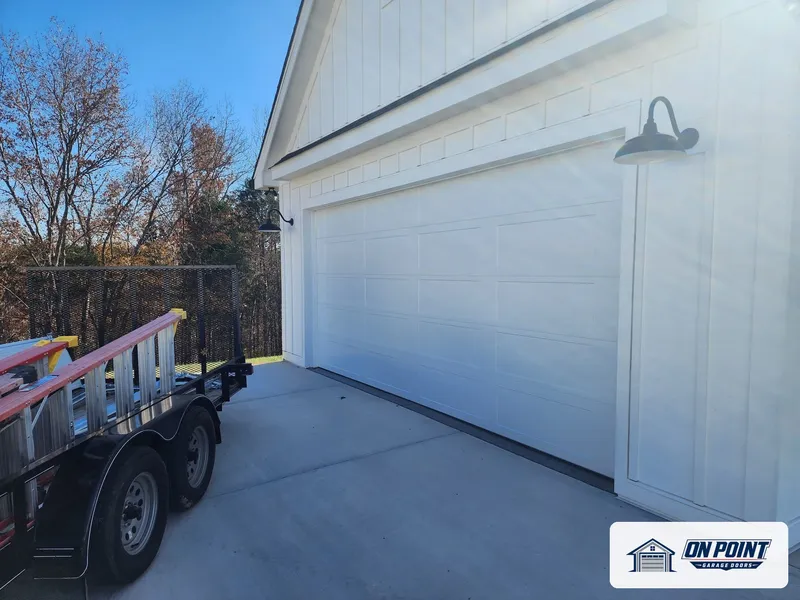
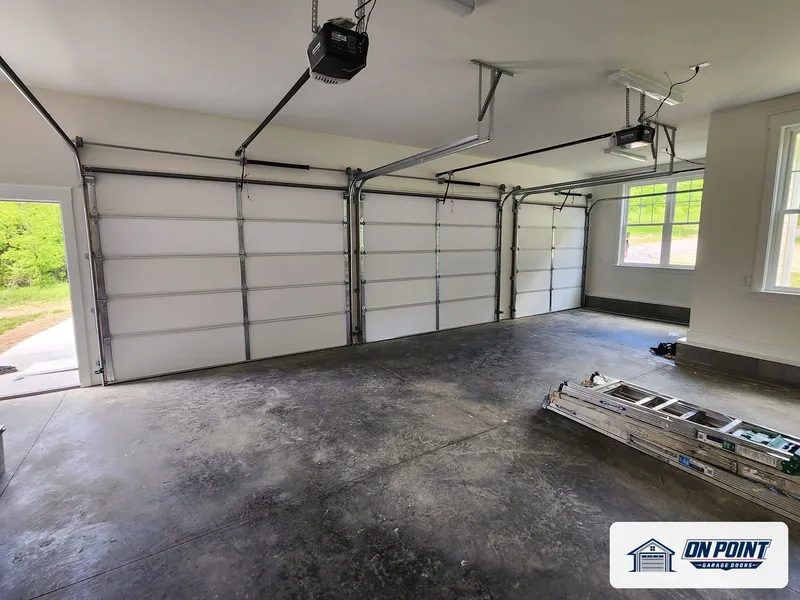
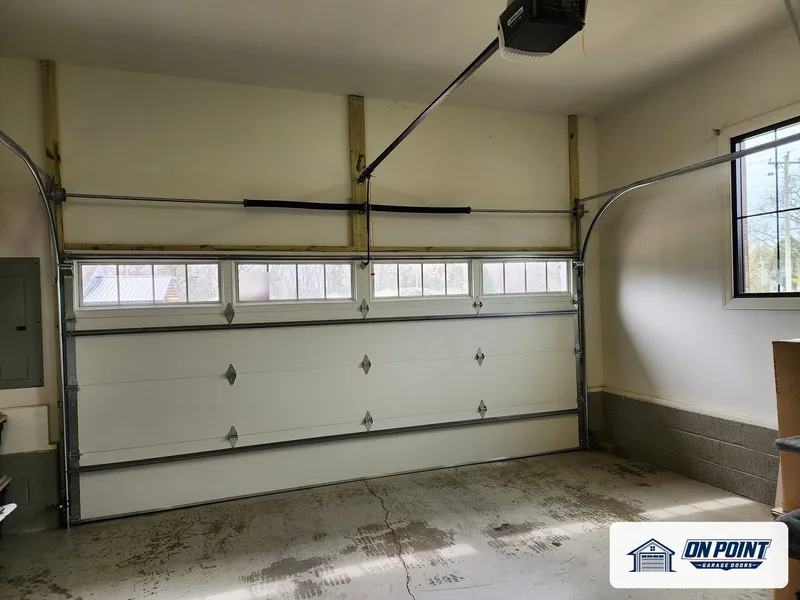
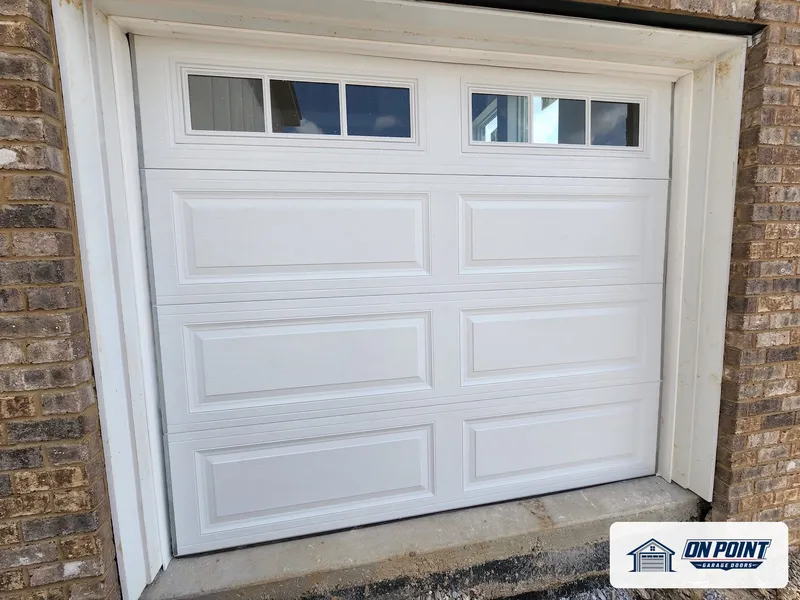
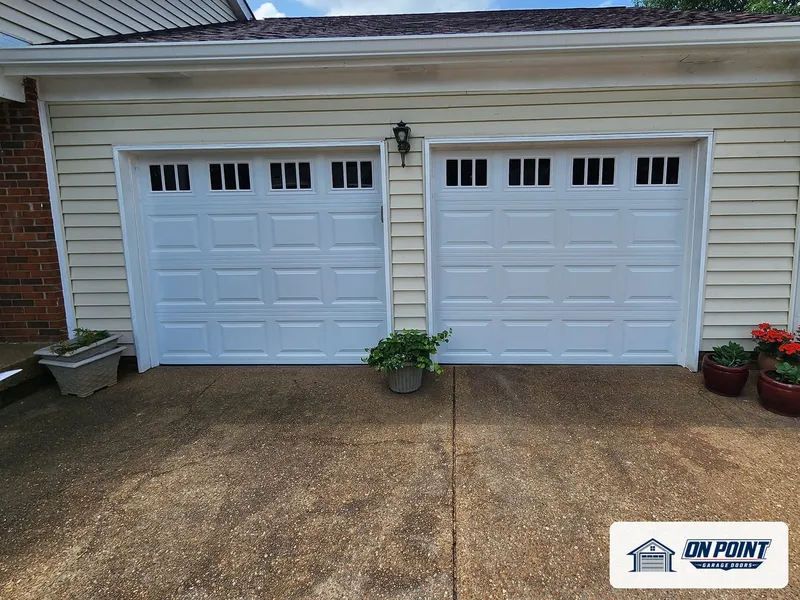
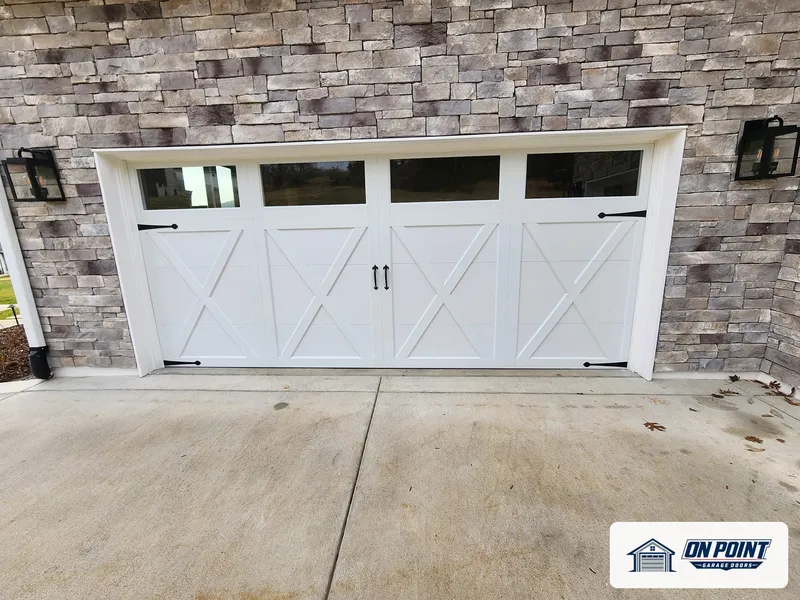
These photos are from our own jobs, with our logo on them.


Garage door repair in Carroll Gardens for the old carriage houses and rear garages behind the brownstones, the new buildings near the canal with residents' parking, and the shops and restaurants with gates along the main streets. Free estimate first.
The row houses here sit far back from the sidewalk behind long front gardens, and garages are rare.
That layout goes back to a surveyor's plan from the middle of the nineteenth century, which gave the numbered Places their unusual depth and left no thought at all for a car.
Where one exists, it is usually an old carriage house or a rear garage reached from a side street, and owners want it to look the part.
Overlay boards, a band of little panes and plain black hinges let a sectional door pass for the swinging pair it replaced on a brownstone side street.
Toward the canal, warehouses have become apartments and new buildings have gone up with garage entrances for residents.
The long cleanup of the canal and the towers rising along its banks bring barges, excavators and trucks, and fine grit from that work settles into guides and roller bearings.
Those doors see heavy traffic all day.
Low blocks near the canal can take water in heavy storms, and garages at street level there need tight bottom seals.
Where street runoff and canal damp linger, corrosion starts at the foot of the rail, the lower hinges and the skin of the last section.
Narrow one-way streets and tight parking mean a car blocking a garage or a gate is a common headache.
The highway trench cuts the western blocks off from the waterfront, so only a few bridges cross it and the route to a side-street garage matters.
The shops, cafes and restaurants on the main streets close up every night with roll-down gates.
Court and Smith Streets carry most of them, with old Italian bakeries and butchers a few doors from new wine bars, and the steel over those fronts spans just as many generations.
A gate that will not lower at closing time is handled as soon as possible.
Rear garages reached from a side street sit far from the house, so a keypad or a phone-connected opener saves a walk around the block in the rain.

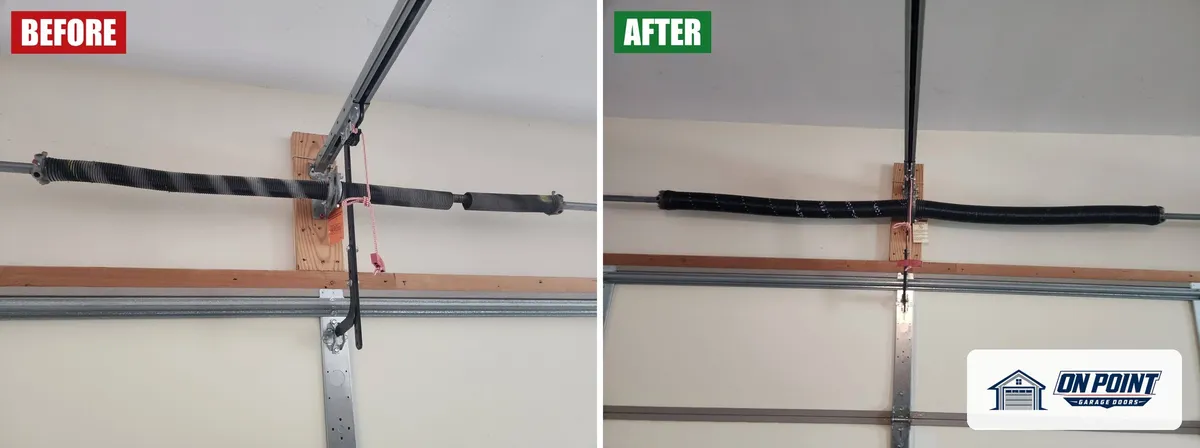
A timber carriage opening, a residents' entrance and a bakery gate call for different parts, so each is examined in place before an estimate is written.
Samples can be held against the brownstone, the ironwork and the painted cornice before a finish is chosen.
A small part of the neighborhood is a landmark district, and a street-facing change on one of those blocks may need review, so it is wise to ask before a custom door is ordered.


Carriage houses. Old timber framing, odd openings and historic looks.
Insulated carriage-style doors are made to size.
A carriage door that has gained weight in your hands points to fading springs, though waterlogged timber can add real pounds of its own.
Building garages. Springs, cables, operators and safety edges under constant use.
Heavy-duty parts keep the entrance running.
Canal-side garages. Storm runoff leaves swollen seals, pitted rail ends and sensor wires with green copper at their splices.
A taller seal and rust-resistant parts go in.
Residents of the converted warehouses near the canal share one entrance, so every fob and remote is tested after the work.
Shop gates. A curtain that climbs crooked, a lock that misses its hole or a motor that groans under the hood each point at a different repair.
The slats, end locks, guides and barrel springs are judged together, since a fault in one soon wears the others.
Gates are rebalanced so they run evenly.
Where a parlor or bedroom was built over the old stable, a foam-core door and good perimeter seals soften the draft coming through the boards.
After a mirror or bumper catches an old door, do not test it with the motor; a cracked timber post can let the whole track shift.
A car turning into a narrow rear garage can scrape a jamb, and the track next to it is inspected too.
On a side street lined with parked cars the turn is tighter still, which is why those scrapes land on the same corner again and again.
Carroll Gardens is inside our Brooklyn coverage, as are the neighboring waterfront blocks, and we serve Queens and Long Island too.
It helps to know if the opening is a former stable, a shared residents' entrance or a storefront, and which street it faces.
A trapped car on a block with no spare parking, or a storefront left unlocked at closing, jumps ahead of planned visits.
When a cloudburst has backed up the sewer on a low block, tell us that water was inside, as it changes what gets inspected first.
Winter. Freezing nights break old springs and stiffen gate locks.
Brick walls around a rear garage hold the cold well into a sunny morning, so a door on the shaded side of the street stays stiff longer.
After a freeze, give a bottom seal stuck to the slab time to free itself before using the opener.
Spring. Storms bring water up on the low blocks by the canal.
The magnolias and other early bloomers in the front gardens shed right after, and wet petals pack neatly into an iron gate guide.
Summer. Sun on the gates and doors dries out seals and slats.
Fall. Leaves from the gardens and street trees fill the tracks and guides.
He studies a few complete trips for sway in the old posts, then moves on to springs, cables, rollers, rail and motor.
In the old carriage houses he also checks the header and the timber posts, since a door can only close as square as its frame.
You get the reasons in ordinary language, with carpentry and door hardware listed separately on the free estimate.
A door clad in real boards is weighed as built, paint layers and all, before springs are selected.
Stable openings seldom match a catalog, so sections and trim for them are measured at several points and made to order.
An obstacle set in the doorway shows that the closing force still sends it back up, which matters beside a busy sidewalk.
Worn parts leave with him.
Last, you operate it from the street and from inside, and he listens for anything rubbing against the timber.
Shop visits can be set outside business times.
He calls ahead.
You decide what is done.
If a smaller repair will keep an old door going for years, he will say so.
Old framing and water near the canal decide what wears first.
A snapped spring means the door has no counterweight; keep it down and call.
Stretch springs left from an earlier conversion get a retaining cable through the coil wherever one is missing.
Lift cables near the canal rust at the bottom and are replaced together.
The grooves of both drums are felt for sharp edges that would saw into a new cable.
Photo eyes are set above where water collects.
Track in carriage houses is anchored into sound timber.
Rusted bottom track is replaced.
A motor is run on its own first, because a binding wooden jamb can imitate a failing opener very convincingly.
Under a parlor floor, belt drive and rubber isolators at the hangers stop the old joists from amplifying the hum.
Describe the symptom, the kind of building and whether a curb cut lets the truck stop by the opening.
Every estimate is free.
That is a question for the city and an architect before it is one for a door company. A curb cut, the zoning, the deep front yards and any landmark review may each rule it out. Where a legal opening already exists, we can measure it and advise on a door, the track and the space an opener needs.
Sometimes. Swing-door operators need a square, solid frame, sound hinges and clear space for the leaves and arms. If the posts have settled or the leaves drag on the sidewalk, that comes first. The other route is a sectional door dressed like the old pair, which lifts inside and stops blocking pedestrians.
Ask for a written look at the lower track, brackets, cables, safety edge, sensor wiring and operator, with photos, and for urgent safety items to be marked apart from upkeep. Drains, pumps and flood barriers belong to other trades, but the door estimate can note where water is clearly reaching the hardware.
It often can. Bent slats, worn guides, dry bearings and a barrel out of level all send noise into the wall. Once those are corrected, a motor with a smooth stop and secure mounting bolts reduces the thump at each end of travel. Some rumble remains with any steel curtain on old brick.
Tell us the cross street, the sweeping days and whether your own driveway apron can take the truck. The technician plans the approach around that and calls on the way. If a neighbor's car blocks the opening, inspection can still begin inside, though long sections and track need a clear path from the street.
Share a few words about the stable door, garage or gate and choose a slot; looking at it is free.
Questions about a carriage house or a shop gate can go to (929) 429-2429.
Describe the opening and what went wrong, and a free estimate is yours to think over.