Takes 30 seconds. We call you back to set a time.
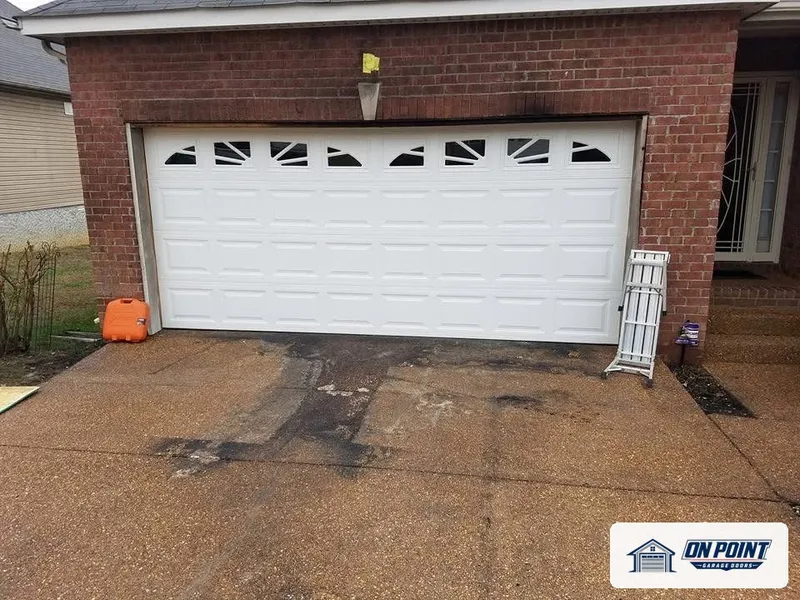
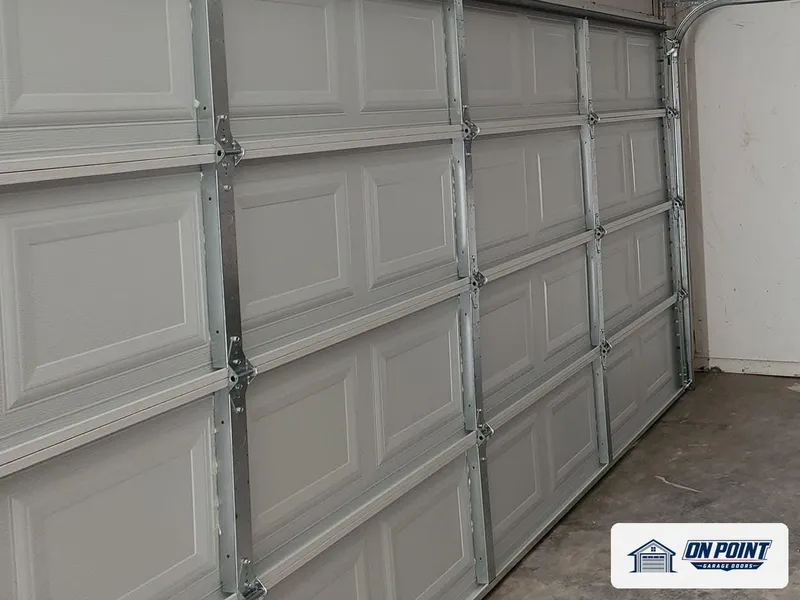
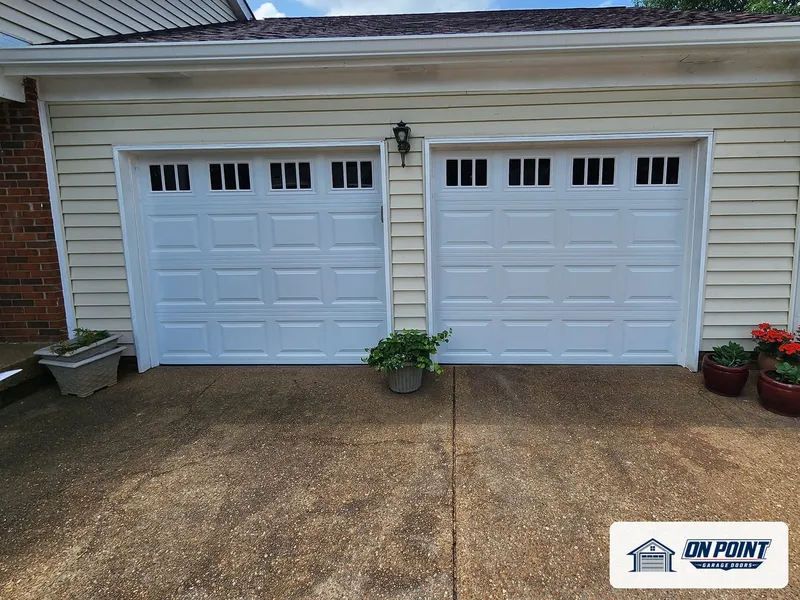
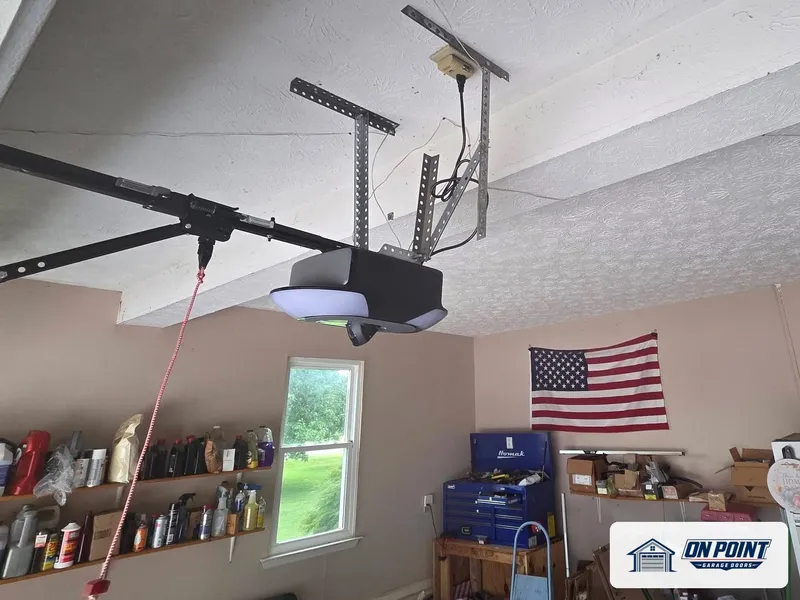
These photos are from our own jobs, with our logo on them.


Garage door repair in Bergen Beach for the newer detached and semi-attached homes with attached garages, the houses on the streets near the marsh and the bay, and the cul-de-sacs off the main avenue. Free estimate first.
Many homes here were built decades after the rest of the borough, with attached one- and two-car garages and standard-size openings.
The land was once an island in the marsh with a small amusement resort on its shore; landfill later joined it to the rest of Brooklyn, and much of the housing followed long after that.
That means modern sectional doors fit easily, and many owners are now on their first or second door.
Raised-panel doors in white or sand suit the newer homes.
Plenty of those original doors are thin, uninsulated steel that has dented and faded over the years.
An insulated door is a worthwhile upgrade on an attached garage, since it keeps the rooms beside and above it warmer and takes the rattle out of the panels.
Streets near the water and the marsh get damp, salty air and strong wind off the bay.
Paerdegat Basin lies on one side and the Mill Basin inlets on the other, so there is open water in more than one direction.
Springs and cables rust faster here, and wide doors bow in gusts.
The riding paths, the marsh trails and the waterfront bring weekend traffic to quiet streets.
There is no subway out here, so households lean on their cars, and a garage door can make several trips before dinner.
Cul-de-sacs mean kids on bikes and scooters near every driveway.
Working photo eyes and a reliable safety reverse matter a great deal.
Some garages now hold a home gym or storage, and boxes near the door can block the sensors.

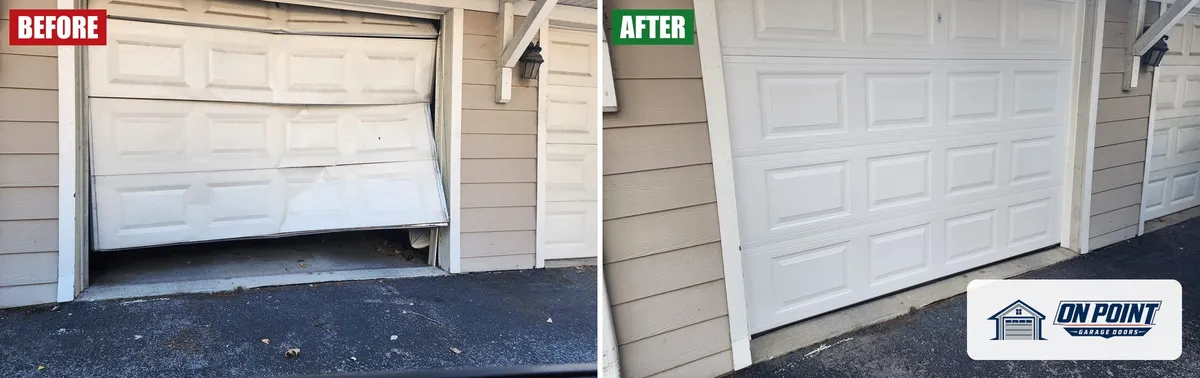
Attached garage on a cul-de-sac or one half of a semi-attached pair, the door is looked over from header to slab before an estimate is written.
Homes built in the same years often got the same builder-grade hardware, so if the springs on both halves of a pair are original, it makes sense to have both doors looked at before one of them gives out.


Original doors. Thin dented panels, worn rollers and springs nearing the end.
On thin steel the top section is often the first to crease, right where the opener arm pulls on it, and a reinforcing strut across that section can stop the fold from growing.
Insulated replacements make the garage and the house more comfortable.
If the opener strains, worn springs are tested before anything else.
Springs and cables. Rust from the bay air and wear from daily use.
Coated springs and galvanized cables last longer here.
Openers. A first-generation chain unit is traded for a quiet belt drive that also works from your phone.
Remotes, keypads and car buttons are paired after the work.
Wide doors. Bowing in the wind and sagging in the middle.
A two-car door that faces open marsh has nothing to break a gust, so its end hinges and track brackets carry that push as well.
Struts keep two-car doors straight.
Insulated doors keep garages beside the kitchen warmer.
If a car swinging around the circle at the end of the block tapped the door, leave it closed until the track and the end hinges have been seen.
A scooter or a bike left under the door can crease the bottom section on the way down, so that section and both photo eyes are looked at on one visit.
Bergen Beach is inside the southern Brooklyn area we serve, down between the basins and the parkway along the shore; Queens and Long Island are covered too.
Your call notes reach the technician first.
A car stuck in the garage before work is treated as urgent.
With no train to fall back on, a family car shut behind a dead door is a real problem, so mention it when you reach us and the visit is moved up.
Winter. Damp cold and wind off the bay break worn springs.
Sea mist and slush blown in from the marsh side can glue the rubber seal to the concrete overnight; give it time to thaw, because an opener that forces it can tear the seal or strip a gear.
Spring. Rain and high tides keep low driveways wet.
Summer. Sun and salt dry the bottom seal and fade dark doors.
Fall. Before storm season, a tune-up checks springs, cables and the opener's battery.
Low streets at this end of the borough have seen storm surge, so anything stored along the garage floor is worth lifting when a coastal flood warning is out.
He watches and listens through several trips of the door, then works along it piece by piece: springs, lift cables, rollers, track, seals and, last of all, the opener.
On the original doors he checks the panel joints for cracks, since thin steel tends to split at the hinges after many years.
He points to the part that failed, says whether salt or plain wear caused it, and puts it in writing on a free estimate.
Springs are chosen for what this door weighs, including the heavier insulated ones.
Standard parts for these doors are on the truck.
He shows the door reversing on an object before he leaves.
Old parts are hauled off.
He stays until both sides rise level and the door settles softly on the seal.
Visits can be planned around school pickups.
He calls ahead.
The choice is yours.
If a smaller fix will keep the door going for years, he tells you so.
Salt air and busy driveways decide what wears first.
Once a spring has parted, the opener and the cables are left holding a load they were never meant for, so keep the door shut and call.
Springs this close to the water are worth a look for rust every season, since pitting on a coil is where a crack can begin.
The lift cables corrode where they meet the bottom corners and are renewed in pairs.
Drums are checked with them.
Photo eyes are set solidly where bikes will not knock them.
Where the sun drops low over the open marsh, glare on one lens can stop a door from closing, and a small shade or a swap of sender and receiver can cure it.
Tracks bumped by cars are straightened before the door runs.
Rusted bottom track is replaced.
The opener's gear, board and sensors get checked so only what failed is changed.
Battery backup is useful through storm outages.
Say whether the door came with the house, whether the garage faces the water, and what the door did the last time it moved.
Every estimate is free.
Yes. Each half has its own opening, springs and track, so one door can be replaced alone. If the pair started out identical and you want them to keep matching, bring the neighbor into the conversation early, because an older panel pattern may no longer be made. The technician measures your opening on its own, since two halves built together can still differ after decades of settling.
A wide steel door flexes most across the middle. Horizontal struts stiffen it, and the hinges, rollers and track brackets have to be sound so the push passes into the frame. The springs are then rechecked, because added steel adds weight. If the sections are already creased or the opening faces straight into the weather, a door built for higher wind loads is the sturdier answer.
Salt water keeps working after the floor dries. The bottom fixtures, the lowest rollers, the foot of each track, the cable ends and the photo eyes with their wiring are the first suspects. An opener outlet or motor that got wet should stay switched off until it has been examined. Nothing on the bottom corners should be unbolted by a homeowner, since those fixtures hold spring tension.
Call, and say that the car is inside. The cause decides the safe route: a dead opener on a balanced door is very different from a broken spring, where the door weighs its full load. The technician checks that before anyone raises it, gets the car out safely, and then shows you what failed. Please do not have several people heave on a door with a parted spring.
When the steel is cracking at the hinge lines, rust has come through the bottom, or sections bend each time the opener starts, parts are being hung on a worn-out body. A solid door with a tired spring or flat rollers is a different case and can keep going. You are shown which situation yours is, with both choices written on the free estimate when both are sensible.
Describe the garage and the trouble, choose a day that works around school and errands, and the estimate is free.
Call us at (929) 429-2429.
Write down what the door does when it runs, or where it stops; you get a free estimate and the decision stays with you.