Takes 30 seconds. We call you back to set a time.
A shed or backyard workshop often starts with a pair of plywood doors on hinges. After a few winters, they sag, stick and let in water, and owners start looking for something that opens easily and closes tight. A small garage door is a good answer. It rolls up out of the way, locks, keeps out rain and mice, and makes it easy to wheel out a mower, a snow blower or a bike. Sheds are lighter buildings than garages, though, so the door has to suit the frame it is mounted on. Free estimate at (929) 429-2429.
By Sean Cohen, owner, On Point Garage Doors · Updated
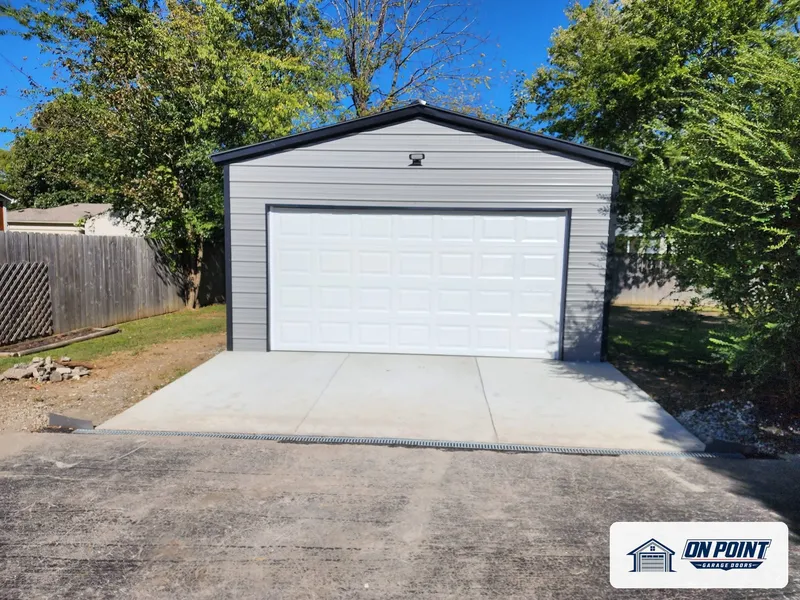
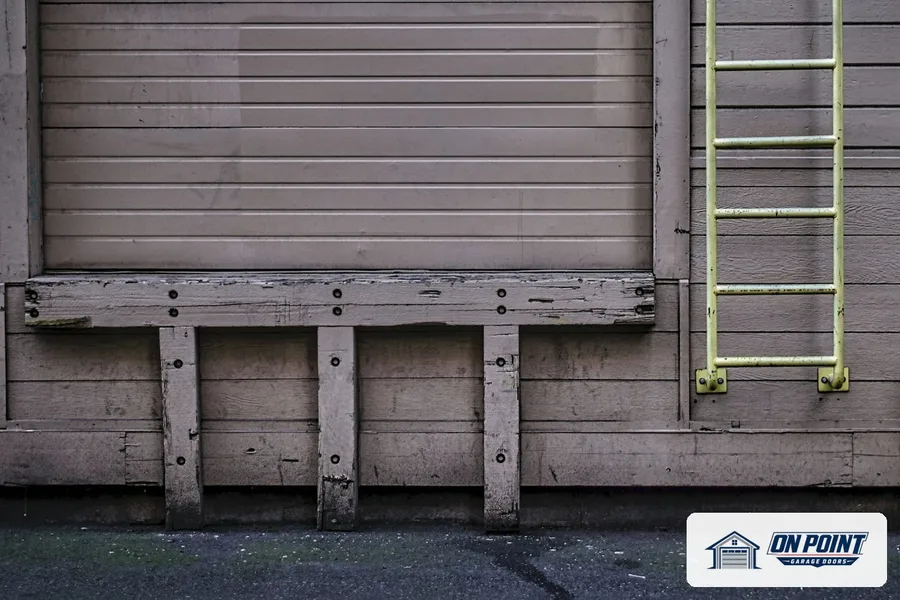
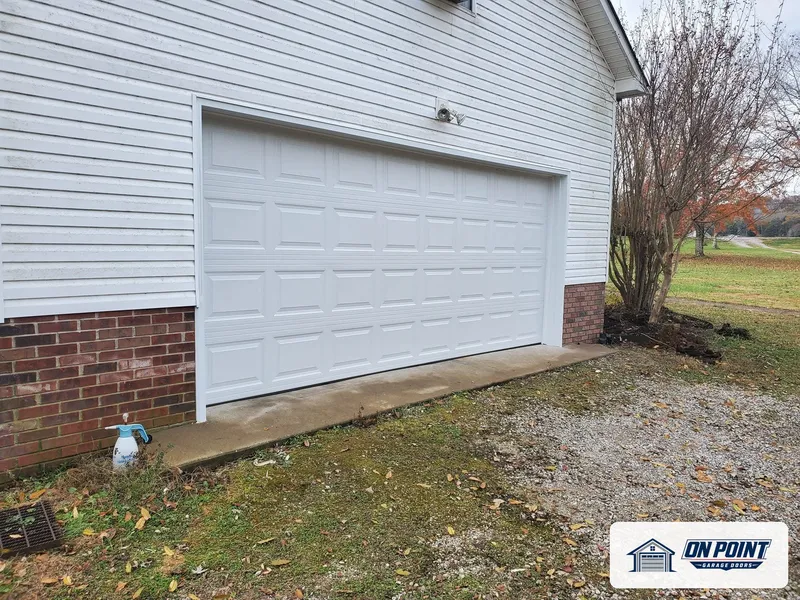
These photos are from our own jobs, with our logo on them.


Most sheds have a low roof and rafters close to the top of the opening. A sectional door needs its track to run back along the ceiling, and there may not be room. A roll-up door coils right above the opening, so the inside of the shed stays clear for shelves and hooks. It is also hard to dent and holds up well to bumps from wheelbarrows and tools.
A garage door is heavier than a pair of plywood doors, and it hangs from the frame around the opening. The header above the door and the posts at each side have to be strong, straight and square. If the frame is soft, rotten or racked out of shape, the door will bind or drop out of line. We look at the framing first and tell you if it needs to be built up by a carpenter before a door goes in.
When a shed becomes a place to work, the door matters more. An insulated sectional door keeps a heated workshop comfortable and cuts noise for the neighbors. A door with a row of windows lets in daylight so you can work without the lights on. A roll-up door is still the tough choice for a shop full of tools and lumber.
Backyard sheds are easy targets because they sit away from the house. A roll-up door can take a slide bolt or a padlock at the bottom. A sectional door can have a side lock or an opener that holds it shut. Keeping the door straight and the bottom tight to the ground also makes it harder to pry.
Many sheds sit on a slab, pavers or a wooden floor that is not quite level. A good bottom seal closes the gap so water, leaves and mice stay out. If the floor slopes, the seal may need help from a threshold strip or a little work on the floor. This is where many old shed doors fail.
If you use the shed every day, an opener is a real comfort, especially with your hands full. It needs a power outlet near the door, which means an electrician if the shed has no power yet. Wall-mounted openers suit sheds with very low ceilings. Roll-up doors can be motorized with operators made for them.
On the South Shore and other places close to the water, salt air works on steel hardware fast. Galvanized parts, a good paint finish and attention to the springs and drum keep a shed door running longer. Doors under trees also collect leaves and moisture along the bottom, so a sturdy seal matters.
Many backyard buildings sit somewhere between a shed and a garage. If yours is big enough for a car, a full sectional door like the one on a house garage may make more sense, and we can show you both before you decide.
The technician measures the opening, looks at the frame, the roof height and the floor, and explains which door will last on your building. You get a free estimate before anything is ordered.
A small roll-up door is the most common choice because it needs almost no ceiling room. A compact sectional door seals better if the shed has room for the track.
Often. The header and side posts must be strong, straight and square, or the door will bind.
Yes, as long as there is power near the door. Wall-mounted openers suit low ceilings.
Yes. We repair bent guides, worn springs in the drum and doors that stick partway.
Yes. We measure and look at the frame before anything is ordered.
Across Brooklyn, Queens and Long Island, tell us what the door is doing and we set a visit that fits your day.
Free estimate, call (929) 429-2429.
Tell us what the door is doing and we will give you an honest arrival time. The estimate is free.
Easier to explain by phone? Call (929) 429-2429.
Tell us what the door is doing. The estimate is free either way.