Serving Brooklyn, Queens and Long Island(929) 429-2429Open six days a weekFree estimateGuaranteed work
On Point Garage Doors
Open 24 hours Sun-Thu, Fri until 5 pm Free estimate Springs, openers, cables We come to you
Emergency?Call nowBook free estimate
New York, NY - open six days a week

Garage door opens by itself? Here is what causes it

Free estimateSame-day serviceCommon parts on board
  • Free estimate
  • Same-day service
  • Common parts on board
Emergency garage door repair★★★★★ 5.0 on Google · 42 reviews

Book your free estimate

Takes 30 seconds. We call you back to set a time.

Or just call (929) 429-2429 and talk it through.

Home › Garage Door Opens by Itself

A garage door that opens or closes without anyone touching it is almost always an opener problem, not a ghost. The usual causes are a remote or keypad button that is stuck, a wall control that is shorting, a neighbor's remote on the same code, or a logic board that is failing. It matters because an open garage is an open door into the house. Free estimate at (929) 429-2429.

By Sean Cohen, owner, On Point Garage Doors · Updated

Real jobs. Real photos.

These photos are from our own jobs, with our logo on them.

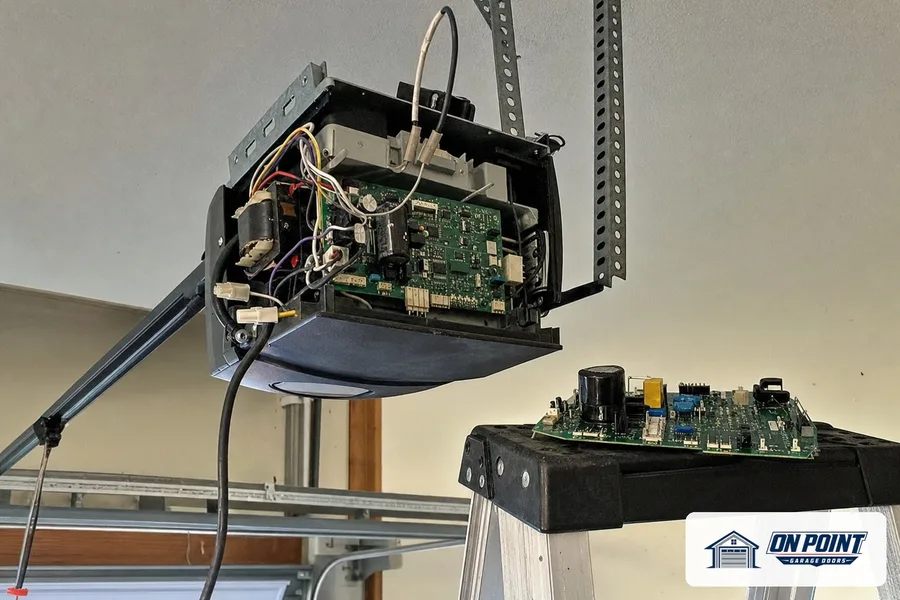
Opener logic board, from one of our jobs
Opener logic board
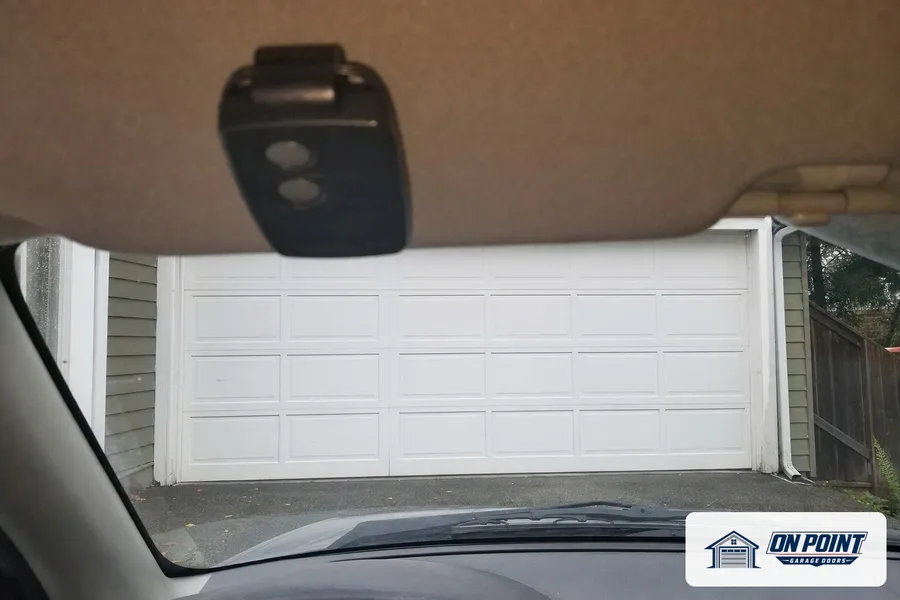
Remote on a car visor, from one of our jobs
Remote on a car visor
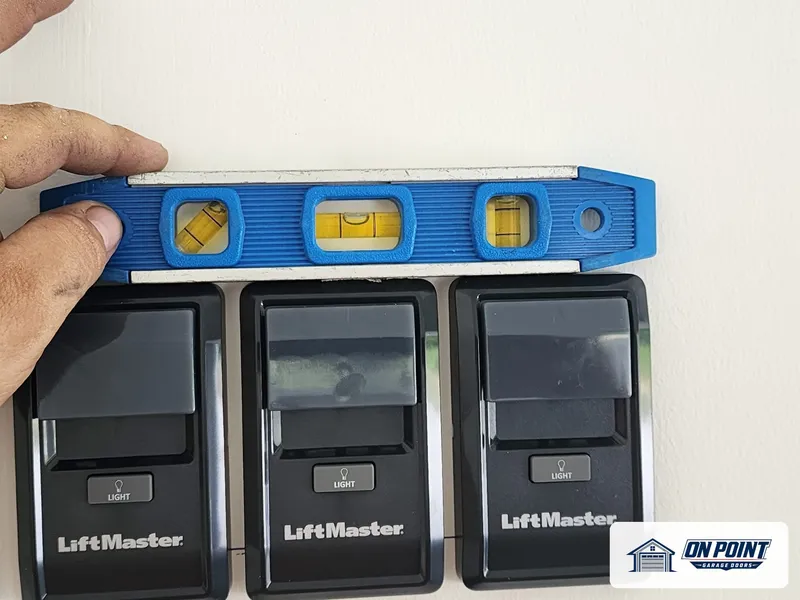
New LiftMaster remotes programmed by On Point Garage Doors
Wall keypad

The usual causes, from most to least common

  1. A stuck remote buttonA remote in a car door pocket, a bag or a drawer can be pressed by something resting on it, and the opener does exactly what it is told.
  2. A shorting wall controlThe button by the door, or the thin wire that runs to it, can short when it is pinched by a staple or damaged by moisture. The opener reads that as a press.
  3. A crossed codeOlder openers with a fixed code can share a signal with a neighbor's remote. Newer rolling-code openers make that very rare, but old units are still out there.
  4. A failing logic boardA board damaged by a power surge or by age can send open and close commands on its own. Storms and outages are a common trigger.
  5. A smart-app or schedule settingPhone apps and connected openers can be set to close at a certain time. A forgotten schedule or a shared account can move the door when nobody expects it.

What to do right now

Keep the door closed and switch the opener off at the outlet or the breaker if it keeps moving. Use the manual lock if your door has one.

Note when it happens: at night, after rain, after a power outage, or when a certain car comes home. That detail tells the technician where to look first.

Do not take the opener apart or splice the wall control wire. The opener and its wiring are best checked with a meter by someone who does it every day.

What the technician checks

If the opener is old and uses a fixed code, you hear whether a modern rolling-code opener makes more sense than repairing it.

Why it is a security problem

An open garage is a way into the house, and an open door overnight invites theft from the garage itself. A door that closes by itself can also come down on a car, a bike or a person if the safety reverse is weak.

That is why a door that moves on its own is treated as urgent, and why the safety reverse is tested on every visit.

Old openers and fixed codes

Openers made before rolling codes became standard used a fixed code set with small switches inside the opener and each remote. Anyone with a remote on the same setting could open the door, and so could a code grabber.

If your opener has those switches, it is worth asking whether a modern opener is the better fix. Modern openers change the code every time a remote is pressed, which closes that gap completely.

When the door also closes by itself

A door that closes on its own is just as much of a concern. Besides a stuck remote or a shorting wall button, some openers have an automatic close timer, and some smart apps can schedule a close.

A door that closes unexpectedly must still reverse when its path is blocked, so the safety sensors and the reverse feature are tested on every visit.

Signs it is the opener, not a remote

Any of these points to the wall control, the wiring or the opener board, and the technician tests each with a meter.

What we see most often in Brooklyn and Queens

In attached homes and two-family houses, several people share the garage, and spare remotes pile up in drawers, cars and coat pockets. A forgotten remote with a button jammed against something is the single most common cause we find.

In older detached garages, the wire from the wall button runs along old walls and ceilings, and a staple or a nail through it can make it short every time the weather turns damp.

Questions we get asked

Can a neighbor's remote open my garage?

On older openers with a fixed code, it can happen. Modern openers change the code every time, so a crossed signal is now rare. Clearing the opener's memory and setting up only your remotes rules it out.

Why does my garage door open after a power outage?

A surge can damage the logic board or leave the opener in a confused state. If the door moves on its own after a storm, have the board and power supply checked.

Is it the remote or the opener?

Taking the batteries out of each remote one by one usually tells you. If the door still moves with every remote disabled, the wall control or the opener itself is the likely cause.

Should I unplug the opener?

If the door keeps moving and you cannot stop it, yes. Then use the door's manual lock or keep it closed until it is checked.

Is the estimate free?

Yes. You hear what is causing it and what the fix involves before any work starts.

Booking takes a minute

Across Brooklyn, Queens and Long Island, tell us what the door is doing and we set a visit that fits your day.

Free estimate, call (929) 429-2429.

Not sure what is wrong? We will come and look

Tell us what the door is doing and we will give you an honest arrival time. The estimate is free.

Easier to explain by phone? Call (929) 429-2429.

Two minutes to a free estimate

Tell us what the door is doing. The estimate is free either way.

Or just call (929) 429-2429 and talk it through.

The other six things that go wrong