Takes 30 seconds. We call you back to set a time.
An outside keypad lets you open the garage with a code: no remote, no key, no fumbling in the rain. When it stops working, people get locked out at the worst moments. Keypads are simple devices, and most failures come from a handful of causes: the battery, the code, the opener's settings or the weather. Free estimate at (929) 429-2429.
By Sean Cohen, owner, On Point Garage Doors · Updated
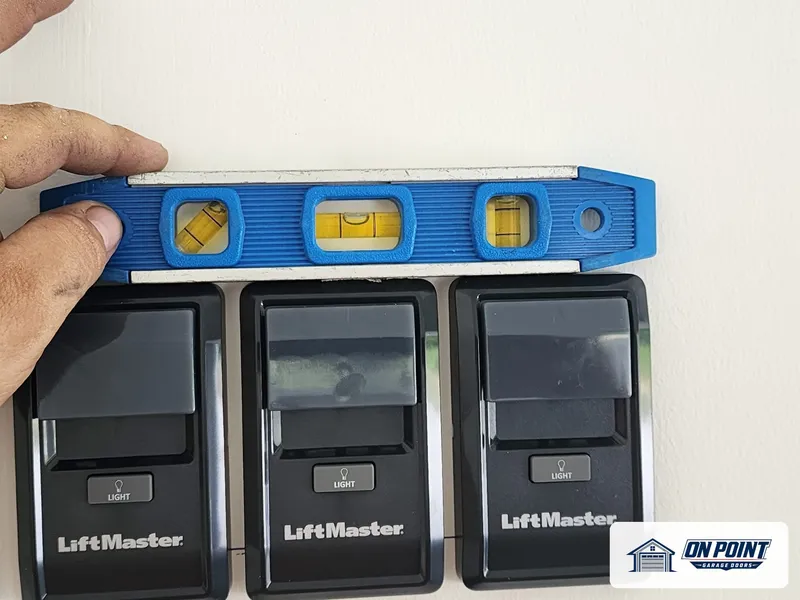
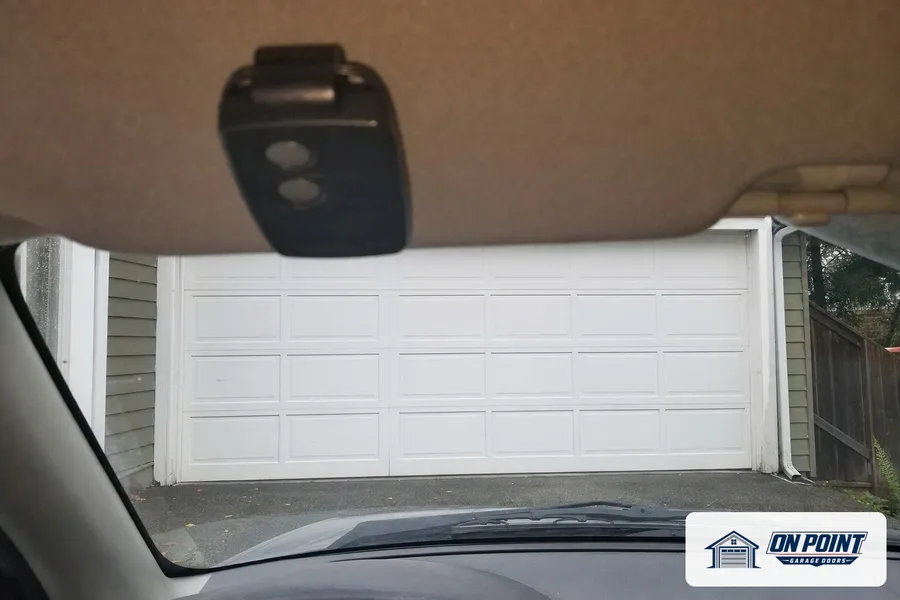
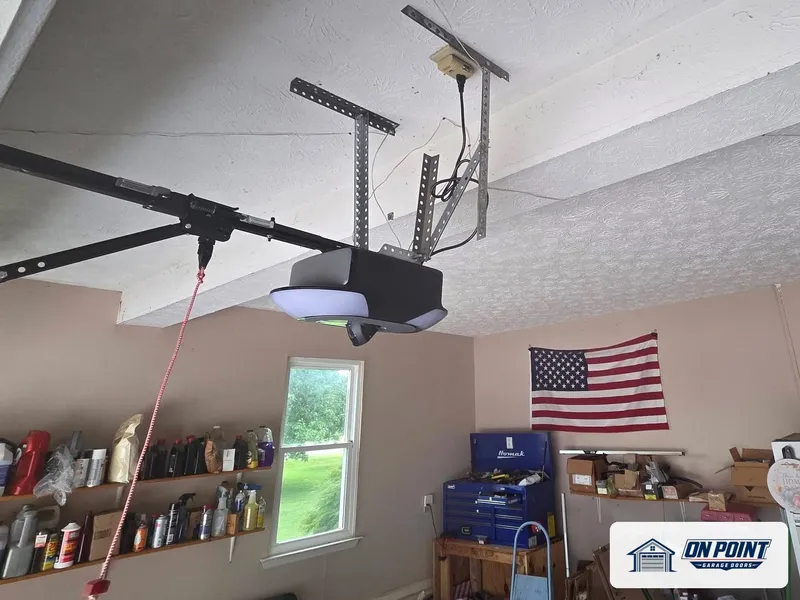
These photos are from our own jobs, with our logo on them.


If the remotes and wall button work but the keypad does not, the opener is fine and the problem is the keypad or its link to the opener. If nothing works, the opener, the power or the door is the more likely cause. That one question narrows it down quickly.
Keypad batteries lose power in the cold, and many keypads start acting up on the first freezing mornings. A keypad that works in the afternoon but not early in the morning is a classic sign of a weak battery.
After years of use, the numbers in your code wear smooth and shiny while the others look new. Anyone can see which keys are used. Changing the code, or replacing a worn keypad, closes that gap. Many newer keypads also hide which keys are pressed.
A code given to a contractor, a babysitter, a tenant or a former partner keeps working until it is changed. Changing it is one of the simplest ways to protect your garage and home. We set a new code during the visit and show you how the keypad works.
Keypads mounted where rain and sun hit them directly wear out faster. Cracked covers, stuck keys and corroded circuits mean replacement. A new keypad matched to your opener, mounted at a comfortable height and in a sheltered spot, works reliably for years.
Some newer keypads also let you open the door with a phone or a fingerprint.
Very old openers may not work with current keypads at all, and some need a small adapter. If your opener is old, has fixed-code remotes or no safety sensors, a new opener with a keypad included is often the better choice. You get a free estimate on both.
If your opener is connected to an app, you may not need the keypad as often, but it is still a good backup when a phone battery dies. Some smart openers let you create codes for guests that expire. We set those up during the visit.
The technician tests the keypad, the remotes and the wall control, checks the opener's receiver and antenna, replaces the keypad battery or the keypad if needed, pairs it with the opener, sets a new code and tests it in front of you. While there, the door's springs, rollers and safety reverse are checked.
A keypad mounted right at the edge of the opening, facing the street, takes rain, snow and sun all day. Mounting it a little inside the jamb or under the eave keeps it drier and makes it last longer. It should be high enough that small children cannot reach it, and low enough that adults can use it without stretching.
The technician picks a spot that is sheltered, comfortable to use and within good range of the opener.
In homes with two or three garage doors, a keypad can be paired with one or more openers. If the keypad opens the wrong door, or both doors at once, the pairing needs to be set up again. Each door is tested so the code opens exactly the one you expect.
When two households share a garage, a keypad saves passing remotes back and forth. Each household can know the code, and it can be changed whenever someone moves out. That is often simpler than keeping track of a drawer full of remotes.
Owners who rent out a basement or a second unit often give tenants a keypad code instead of a remote. Changing the code between tenants keeps access under your control without collecting remotes.
Most often a weak battery, lost pairing, lock mode on the wall control, weather damage or a weak receiver on the opener.
Yes. Cold weakens the battery, so many keypads act up on freezing mornings.
It depends on the keypad and opener. We set a new code during the visit and show you how.
Most current keypads work with most current openers. Very old openers may need an adapter or a new opener.
Yes. You see what is wrong and the options before any work starts.
Across Brooklyn, Queens and Long Island, tell us what the door is doing and we set a visit that fits your day.
Free estimate, call (929) 429-2429.
Tell us what the door is doing and we will give you an honest arrival time. The estimate is free.
Easier to explain by phone? Call (929) 429-2429.
Tell us what the door is doing. The estimate is free either way.