Takes 30 seconds. We call you back to set a time.
Not every big opening gets an overhead door. Warehouses, workshops, older industrial buildings and some large garages use doors that slide sideways along a track above the opening. They suit buildings with low or crowded ceilings, very wide openings and places where an overhead door would block cranes, lights or racking. A sliding door is simple, but it is heavy, and when the track or the rollers wear, it becomes a hard push or comes off its track entirely. This page covers how commercial sliding doors are built, what fails on them and what we look at on a service visit. Free estimate at (929) 429-2429.
By Sean Cohen, owner, On Point Garage Doors · Updated
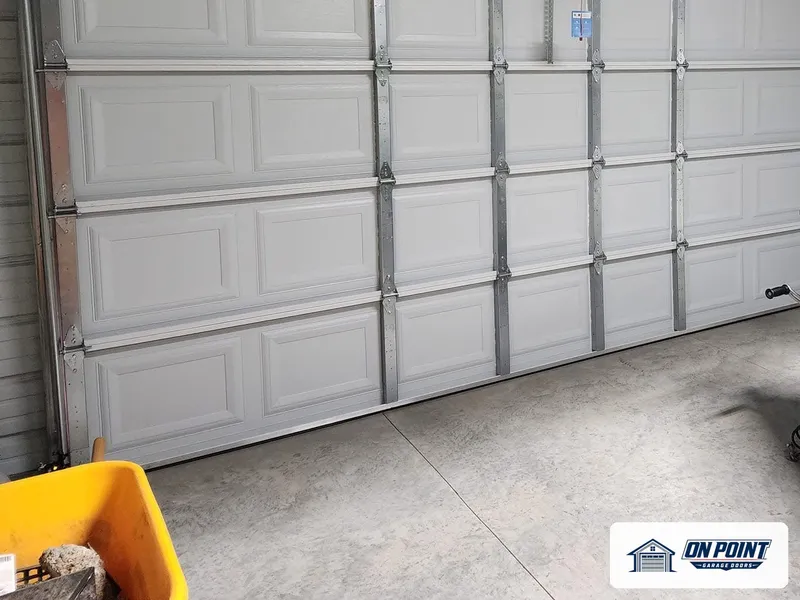
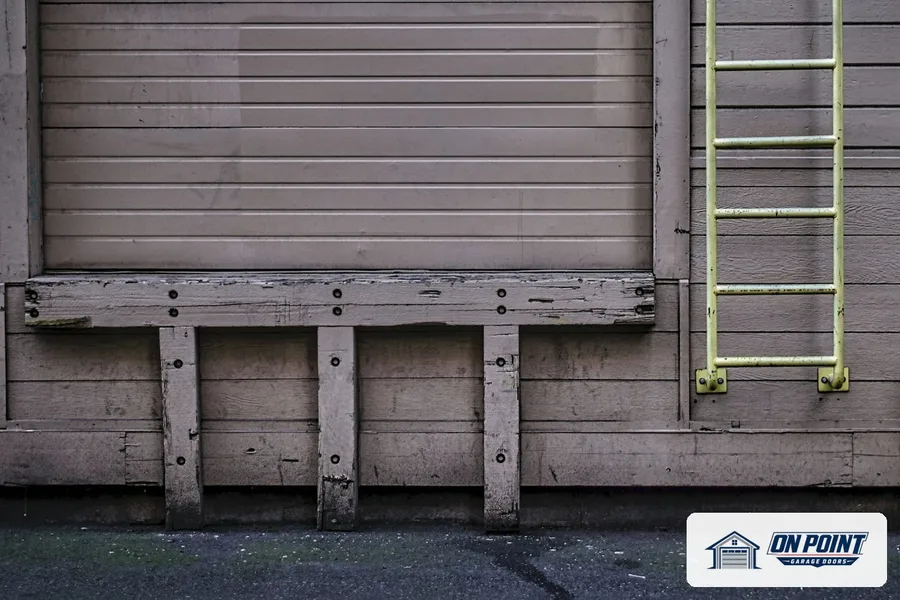
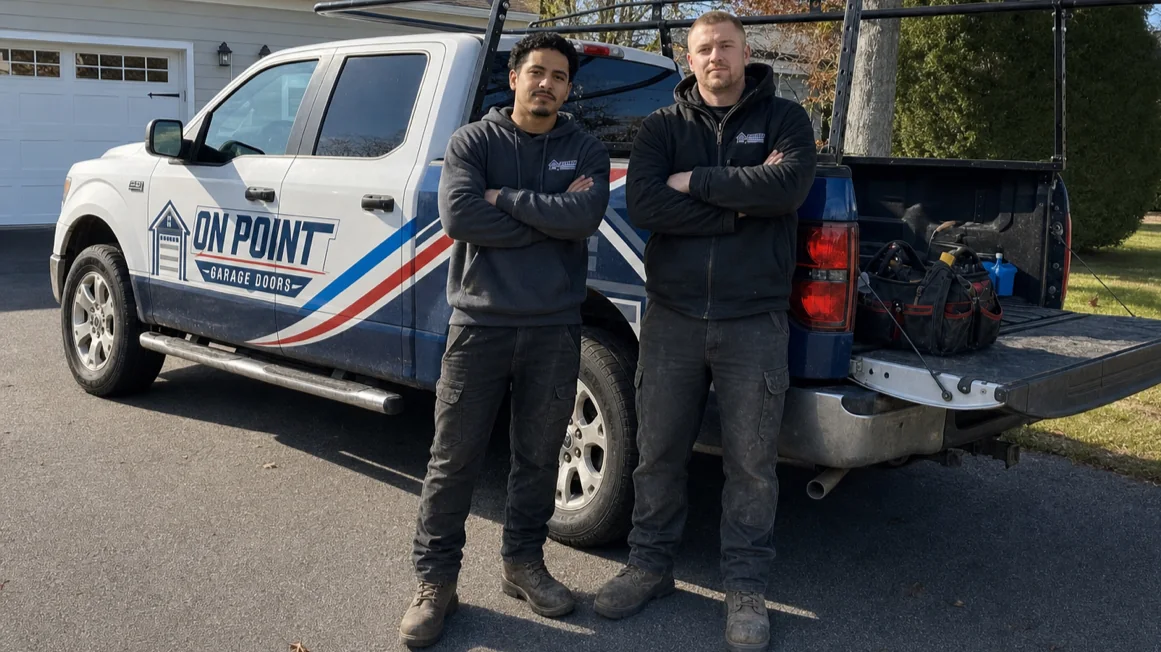
These photos are from our own jobs, with our logo on them.


The weight of a commercial sliding door hangs from trolleys, small wheeled carriages that run inside a steel track bolted above the opening. The bottom of the door does not carry the load. It only rides in floor guides or against guide rollers that keep it from swinging out. Doors can be a single leaf that slides to one side, two leaves that part in the middle, or several leaves that stack behind each other.
Sliding doors work well where the ceiling inside is busy with ducts, sprinkler pipes, lights or a crane rail, because the door never travels overhead. They also suit very wide openings, barns and sheds, and buildings where the door stays open most of the day. They need wall space beside the opening for the door to slide onto, and that wall has to stay clear of racking and stock.
A heavy door that jumps its track is dangerous. It can swing out from the wall or drop at one end. The usual causes are a worn trolley, a bent track after a knock from a truck or a forklift, or a floor guide that is missing so the bottom kicks out. If a door has come off, keep people away from it and do not try to lift it back with a forklift. We secure it, find out why it came off and fix that cause, not only the symptom.
When a door that used to glide now needs two people, the trolleys are usually worn or dirty, the track has sagged between its brackets, or the slab has heaved and the bottom is dragging. Wind adds load on tall exterior doors too. We check each trolley, the track along its whole length and the floor line before replacing parts, because new trolleys in a bent track wear out fast.
Many commercial sliding doors are moved by hand, but busy doors and very heavy ones often get an operator. The operator drives the door with a chain or a gear along the track and stops at set points at each end. A motor on a sliding door needs the same safety devices as one on an overhead door: photo eyes across the opening and sensing edges on the leading edge. We repair existing operators and add new ones to doors that are sound.
Some older industrial and loft buildings have sliding fire doors that hang on a sloped track and close on their own when a link melts in a fire. Those doors are part of the building's fire protection, and changes to them need care. We can look at the track and the hardware and tell you what we see, and the building's fire safety rules decide what can be changed.
A sliding door seals differently from an overhead door. It closes against the wall and the jambs instead of sitting inside the opening, so the seals are along the edges and on the overlap. Old doors leak air along those edges and at the floor. Insulated panels, new edge seals and a better bottom seal can help a heated shop. Tall doors that face the wind need solid guides so they do not rattle or push off the wall in a storm.
Most sliding doors can be kept going for a long time with new trolleys, track sections, guides and seals. A new door makes sense when the leaf itself is rotted, rusted through or bent out of shape, or when the building needs a door that seals much better. We tell you plainly which way we would go and why.
Owners sometimes ask whether to change a sliding door for an overhead sectional or a rolling steel door. It depends on the ceiling, the wall space beside the opening and how often the door runs. Our comparison of sectional and rolling steel doors helps if you are weighing that change, and we can look at the opening and give you the options.
The technician runs the door through its full travel, checks every trolley, the track and its brackets, the floor guides, the stops, the seals, the locks and any operator and safety devices. Small adjustments are done on the spot. You get a written estimate for parts or a new door, and nothing larger is started without your approval.
Usually a worn trolley, a bent track or a missing floor guide. We fix the cause so the door stays on, not only lift it back.
Yes, on a door that is sound and runs freely. The operator comes with photo eyes and edges so the door stops for people and vehicles.
Worn or dirty trolleys, a sagging track or a slab that has heaved are the usual causes. We check all three before suggesting parts.
We can look at the track and hardware and tell you what we see. Changes to a fire door follow the building's fire safety rules.
Yes. We look at the door, the track and how the door is used before recommending anything.
Across Brooklyn, Queens and Long Island, tell us what the door is doing and we set a visit that fits your day.
Free estimate, call (929) 429-2429.
Tell us what the door is doing and we will give you an honest arrival time. The estimate is free.
Easier to explain by phone? Call (929) 429-2429.
Tell us what the door is doing. The estimate is free either way.