Takes 30 seconds. We call you back to set a time.
Most commercial garage doors are one of two kinds. A sectional door is made of wide panels joined by hinges, rolling up and back on tracks into the building, much like a home garage door but heavier. A rolling steel door is a curtain of narrow interlocking slats that coils around a barrel above the opening. Both are common in shops, warehouses, garages and loading docks across Brooklyn, Queens and Long Island. Each one has real strengths, and the right choice depends on the building more than on the door. This page compares them on the points that matter most to a business owner. Free estimate at (929) 429-2429.
By Sean Cohen, owner, On Point Garage Doors · Updated
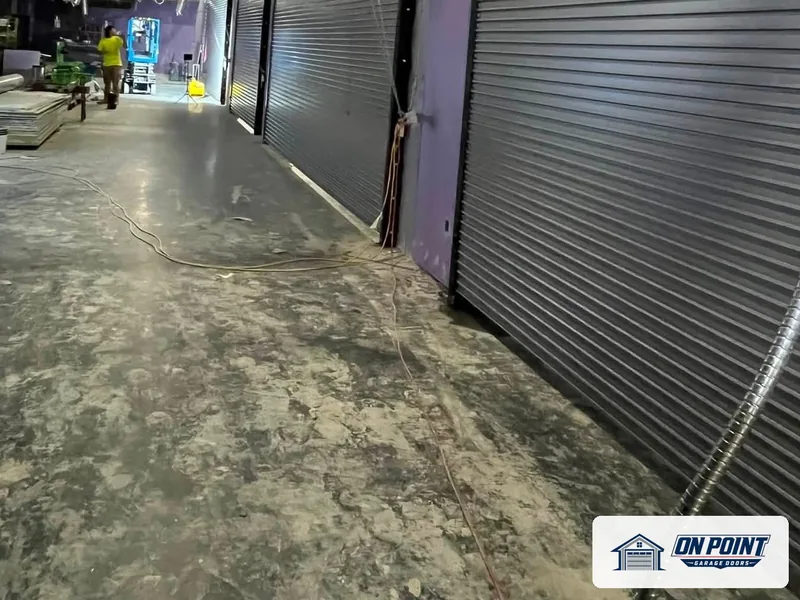
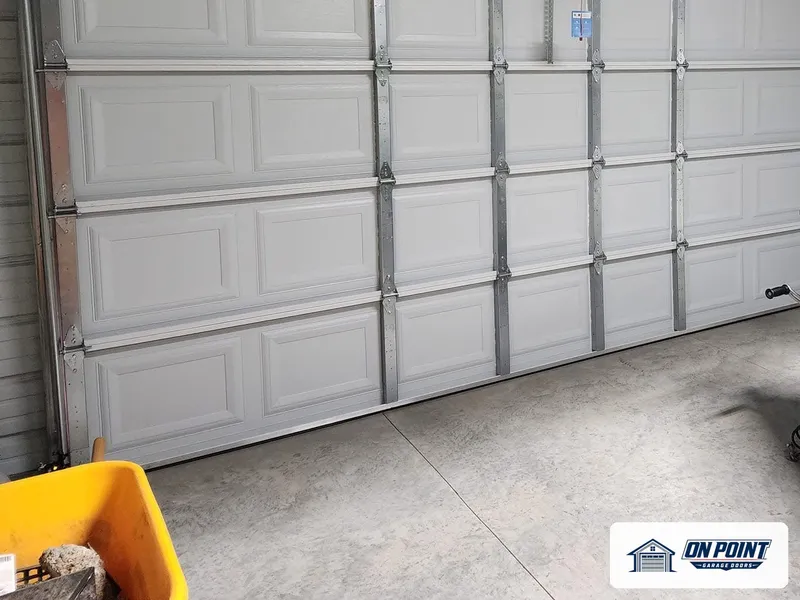
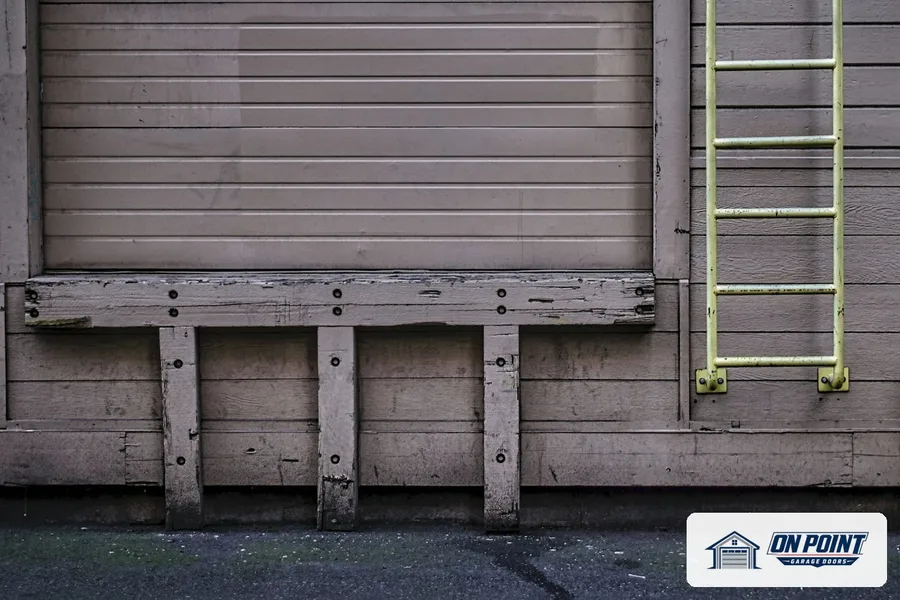
These photos are from our own jobs, with our logo on them.


A sectional door needs headroom above the opening for the springs and the curve of the track, and it needs clear ceiling space behind the opening where the door rests when open. A rolling steel door coils into a hood right above the opening and leaves the ceiling clear. In buildings with low ceilings, overhead cranes, lights, sprinklers, ductwork or storage racks near the door, the rolling door often wins on space alone.
Rolling steel doors are the standard for storefronts and street-facing bays for a reason. The slats lock into guides on both sides and the curtain is hard to pry or bend. Sectional doors can be very strong too, especially in heavier steel, but they have hinges, rollers and panel joints that a rolling curtain does not. For a building that sits closed and empty overnight, many owners prefer the rolling door.
Sectional doors are easier to insulate well. Thick insulated panels with tight joints and perimeter seals keep heat in a showroom, a heated shop or an office bay. Insulated rolling doors exist and are a big step up from a bare curtain, but the many joints between slats limit how tight they get. Where heat or cold matters every day, sectional usually leads. Our page on insulated rolling steel doors covers the options on that side.
A sectional door can carry windows, full-view glass panels and a choice of finishes, so it suits dealerships, restaurants, fire-house style buildings and offices that want light. A rolling curtain is usually solid, with vision slats as the main option. If the door faces customers, that difference can decide the matter.
Both doors can be built for heavy use, but they wear differently. A sectional door spreads its wear across rollers, hinges, cables and springs, which are standard parts and easy to replace. A rolling door concentrates wear in the barrel springs, the curtain and the guides. For doorways that open constantly, the spring choice matters on either type, and a high-cycle spring set pays back in fewer breakdowns.
Near the water in Brooklyn, Queens and the South Shore, wind and salt air are part of the decision. Both door types come in wind-rated versions with stronger guides, struts or windlocks. Rolling doors are compact and tough in storms. Sectional doors stand up well when built with enough struts. Galvanized or coated steel and stainless parts help either door last near salt air.
When a truck or forklift hits a sectional door, the damage is often limited to one or two panels, which can be replaced to match. When a rolling curtain is hit, bent slats can often be swapped out, but a badly kinked curtain or a bent guide can stop the door entirely. Both are repairable. The sectional door tends to be quicker to put back in service after a light strike.
Either door can be motorized. Sectional doors use trolley, jackshaft or side-mount operators. Rolling doors use a hood-mounted operator or a chain hoist for manual use. Both can connect to push buttons, remotes, timers, loop detectors, card readers and access systems. Our page on commercial door openers covers the operator side.
Owners sometimes want to swap a rolling door for a sectional to gain windows and insulation, or swap a sectional for a rolling door to clear the ceiling. Both are possible, but the opening may need new jambs, a new header plate or room for a hood. We measure and check the framing before any door is ordered, so the change does not turn into a surprise.
The technician measures the opening, the headroom, the side room and the ceiling, looks at how the door is used, and talks through both types with you. You get a written estimate for the door and the install before anything is ordered.
A rolling steel door is usually the more secure choice for a street-facing opening, because the curtain locks into both guides and is hard to pry.
An insulated sectional door seals tighter than an insulated rolling door, because it has fewer joints.
A rolling steel door coils above the opening and leaves the ceiling clear, so it often fits where a sectional door cannot.
Often yes, but the opening may need new framing and enough headroom for the tracks. We check that first.
Yes. We measure the opening and talk through both types before anything is ordered.
Across Brooklyn, Queens and Long Island, tell us what the door is doing and we set a visit that fits your day.
Free estimate, call (929) 429-2429.
Tell us what the door is doing and we will give you an honest arrival time. The estimate is free.
Easier to explain by phone? Call (929) 429-2429.
Tell us what the door is doing. The estimate is free either way.