Takes 30 seconds. We call you back to set a time.
Aluminum gates are popular on driveways, walkways and around pools because they are light, they do not rust and they need little upkeep. Those same traits shape how they fail. Aluminum is softer than steel, so a car bumper or a fallen branch bends it more easily. Welded joints can crack, and hinges made for heavier gates can wear the soft frame. This page covers the problems we see on aluminum gates, both manual and automatic, and what can usually be repaired. Free estimate at (929) 429-2429.
By Sean Cohen, owner, On Point Garage Doors · Updated
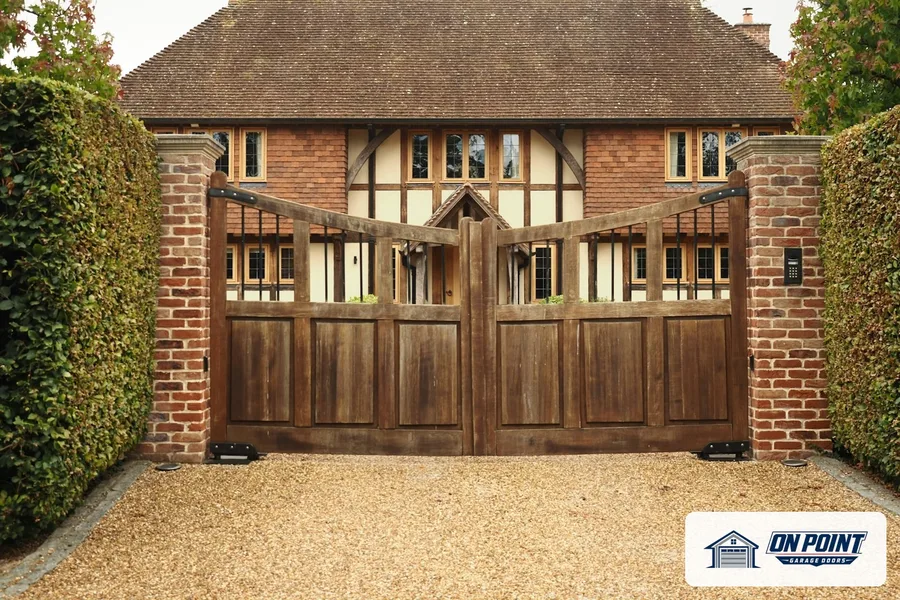
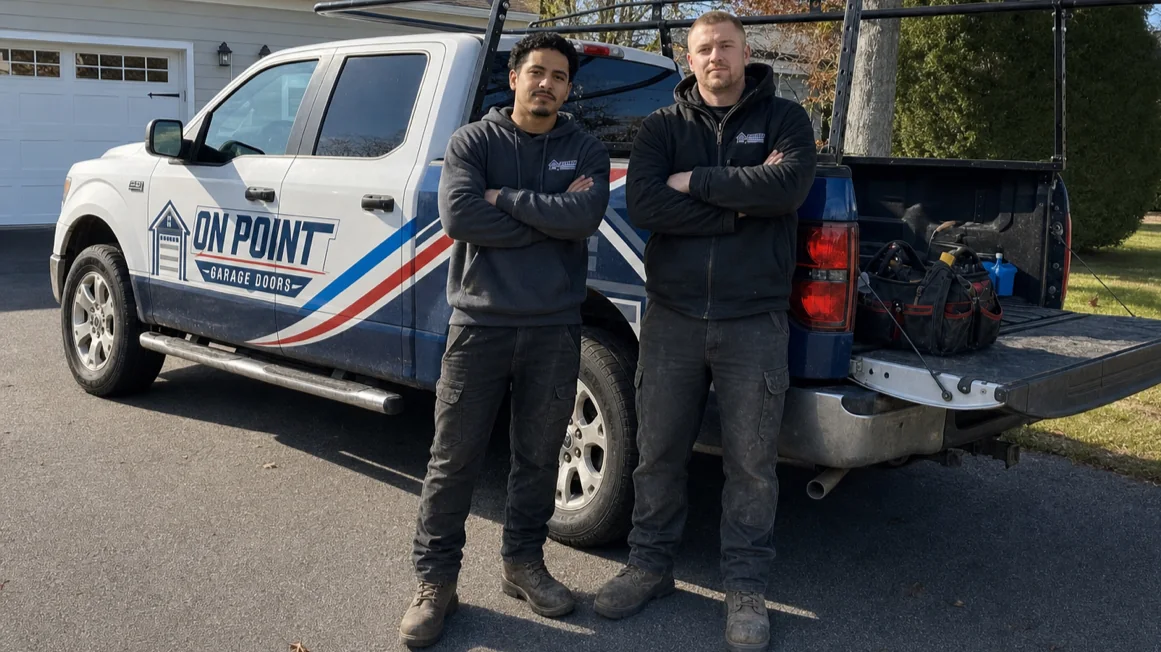
These photos are from our own jobs, with our logo on them.


Aluminum weighs much less than steel, which is easy on hinges, posts and operators. It does not rust the way steel does, so it suits wet and salty air. But it is softer, and it does not spring back after a hit. A dent or bend stays put. Repairs have to respect the metal too, because some fixes that work on steel do not work on aluminum.
Bent pickets are the most common damage. A car backing out, a snow plow, a ball or a branch can push pickets out of line or kink a rail. Single pickets can often be straightened or replaced. A rail that is kinked or a section that is badly twisted usually needs a new piece or a new panel, because bending the same spot back and forth weakens it.
Aluminum gates are usually welded at the corners and where pickets meet the rails. Those welds can crack after a hit, from wind working the gate, or from an operator pushing on one spot. A cracked weld lets the frame rack out of square, so the gate sags and stops latching. Welding aluminum takes equipment set up for it. When a frame has cracked in several places, a new gate is often the sounder choice, and we tell you which way we see it.
Hinges and latches on aluminum gates wear at the mounting holes, because the soft frame gives way before the hardware does. Steel hinges on an aluminum gate near salt air can also cause the metal around the screws to corrode. We use hinges and fasteners suited to aluminum, reinforce worn mounting points where we can, and reset the latch once the gate hangs true.
Aluminum does not rust, but it does oxidize. Near the bays and the ocean you may see white, chalky spots where the coating has chipped. That is mostly cosmetic, but it tends to start at scratches, cut ends and around screws. Touching up chips and keeping dissimilar metals apart slows it down. Hardware made of the wrong metal is often where trouble starts.
Light gates still sag. The post leans, the hinges wear or the frame racks after a cracked weld. Wide aluminum driveway gates also flex more than steel ones, so the latch end can drop. We check the post and its footing first, then the hinges and frame, and add bracing where the gate needs it.
Aluminum is a common choice for automatic gates because a light gate is easy on the operator and its battery. The flip side is that a light gate is moved around by the wind, and gusts can trip the operator's obstruction sensing. The arm or rack has to be mounted on solid parts of the frame, not thin pickets, or it will pull out. We look at how the operator is attached and whether the frame needs a reinforced spot.
Many aluminum gates are made in sections or panels, so a badly damaged part can sometimes be replaced while the rest of the gate stays. Matching the style and color matters, and older gates can be hard to match. We tell you plainly whether a repair will look right and hold up, or whether a new gate is the better use of your money.
Smaller aluminum gates around pools and walkways often have self-closing hinges and latches that must close on their own. When the gate sags or the hinge spring weakens, the gate may stop closing fully. We can rehang the gate and check that it swings shut and latches, and the local pool rules decide what the latch has to do.
The technician checks the gate, posts, hinges, latch, welds, finish and any operator and safety devices. You get a written estimate for the work and any parts, and nothing is started without your approval.
Single pickets often can. A kinked rail or a badly twisted section usually needs a new piece, because aluminum weakens when it is bent back and forth.
That is oxidation where the coating has chipped, often near the water. It is mostly cosmetic but should be touched up so it does not spread.
Yes. Aluminum gates suit operators well. The arm or rack has to be mounted on solid parts of the frame, not thin pickets.
Aluminum needs welding set up for it. When a frame has cracked in several places, a new section or gate is often the better answer, and we tell you which.
Yes. We look at the gate and the damage before you decide anything.
Across Brooklyn, Queens and Long Island, tell us what the door is doing and we set a visit that fits your day.
Free estimate, call (929) 429-2429.
Tell us what the door is doing and we will give you an honest arrival time. The estimate is free.
Easier to explain by phone? Call (929) 429-2429.
Tell us what the door is doing. The estimate is free either way.