On Point Garage Doors repairs garage doors across Newark, from attached rowhouse garages near downtown to detached garages behind older homes, with a free estimate before work begins.
Tell us what the door is doing. The estimate is free either way.
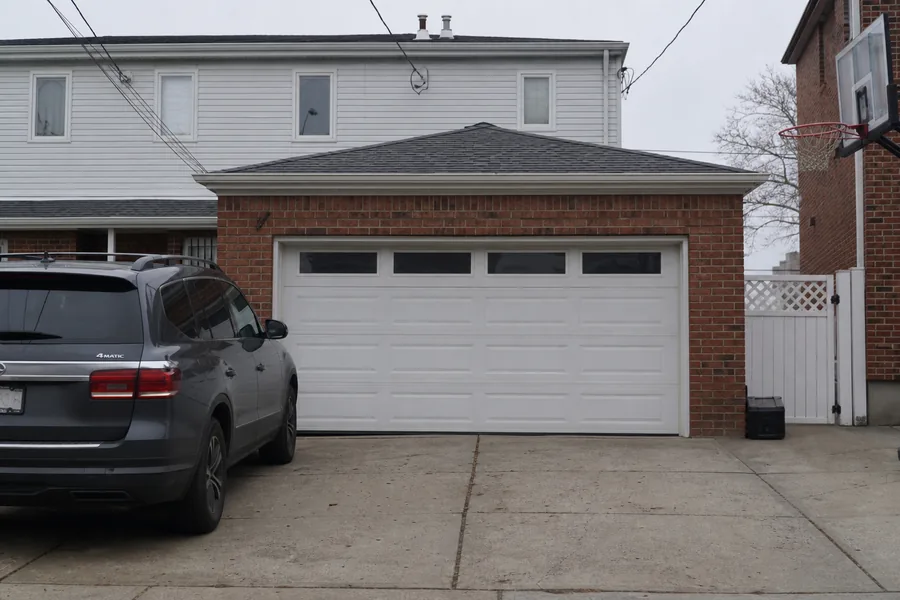
The city is a patchwork of very different neighborhoods, and the garages change with them. Across the North Ward, Forest Hill and the Ironbound you find both kinds: doors built into attached rowhouses, tight to the street and to their neighbors, and detached single-car garages at the end of a driveway. The trade is the same in both places, but the door, the access and the likely failure are not.
Telling us roughly where the house is and what kind of garage it has helps more than any part name. It tells the technician what the door is likely to be and what to bring.

Each visit starts with a look at the whole door and a free estimate, then the repair itself: springs that have snapped, openers that grind or stall, cables and rollers worn thin, a door hanging out of its track, an urgent problem, or a new door altogether.


An attached rowhouse garage usually has a door that opens straight onto the sidewalk or a short apron, with living space right above it. Noise carries into the house, headroom can be tight, and a door stuck open is a security problem for the whole home.
A detached single-car garage sits out back, often with a door and opener that have been there a long time. These doors face the weather on every side, and their springs, cables and bottom seals tend to show it.
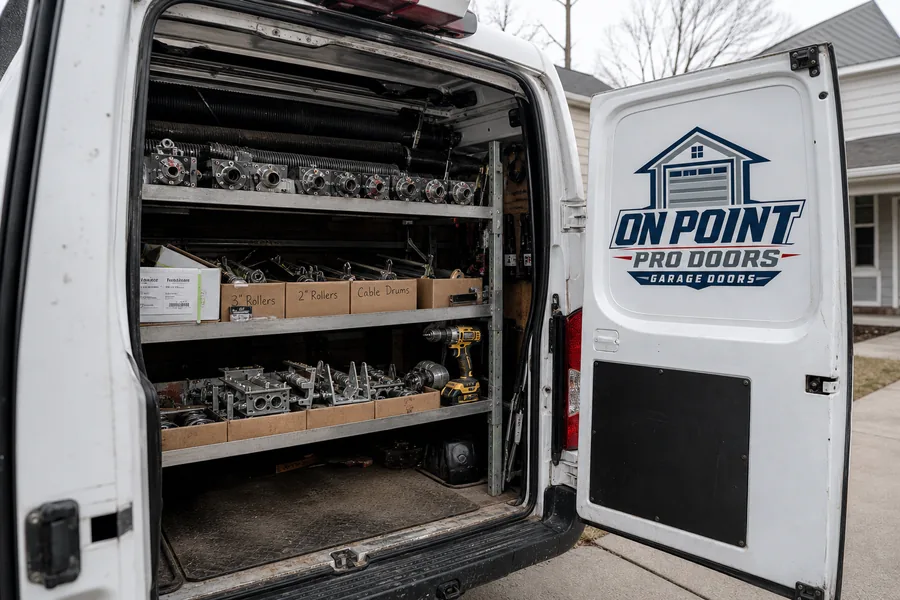
Cold winters and humid summers wear on both kinds of door: springs tire, cables fray and rollers flatten. The technician carries the common parts for both, so most repairs are finished on the first visit.
Around downtown and east toward the Ironbound, streets are narrow, parking is scarce and garages sit shoulder to shoulder. A visit there is planned around where the truck can stop and how long the door will stand open, because an open garage on a busy block is an open house.
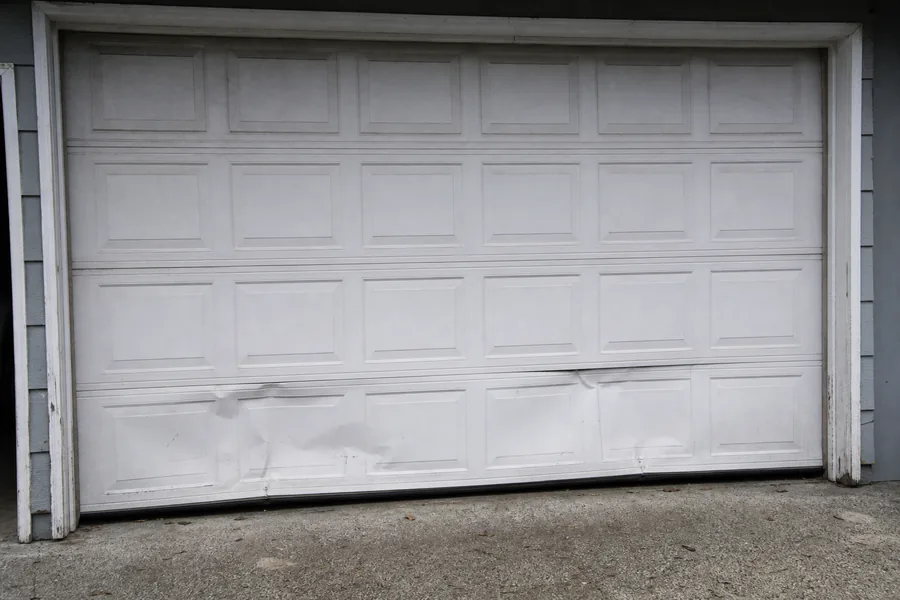
Doors on these blocks take more knocks too. Bumpers clip tracks, deliveries lean against doors, and a door that has been hit once tends to bind or jump its track later.
Homes near Penn Station and the blocks around it are well within the area we cover, and so are the quieter residential streets further out.
The North Ward and Forest Hill, with Branch Brook Park running alongside, have plenty of older homes with garages to match. The doors there are often wood or older steel, sometimes heavier than the springs on them were sized for, and the openers have usually been running for many years.
Doors like these reward a careful look. A worn spring on a heavy wood door strains the opener, and an opener swapped without fixing the balance wears out again. The technician sets the balance first, then deals with the opener.
Landlords with two- and three-family houses get the same care: the door is fixed, each household's remote is set up, and the owner hears exactly what was done.
Genie, LiftMaster, Marantec, Chamberlain, Craftsman, Linear, Clopay, Amarr and Wayne Dalton all come through, along with plenty of unbranded hardware. If the label is unreadable, describe the opener and the technician will work it out.
Fall. The right time for a tune-up. Cables are checked for rust, spring balance is tested, worn rollers are swapped and the safety reverse is confirmed before the cold arrives.
Summer. Heat and humidity age the rubber seal along the bottom of the door and can make wood panels swell and stick. A cracked seal lets water and pests in, and a new one closes the gap.
Winter. Cold stiffens springs and makes the plastic gears in older openers brittle, so the first run on a frozen morning is when things break. A door stuck to icy ground should be left alone until a technician frees it.
Yes. When a door or opener has had its day, the technician says so, explains what a repair would and wouldn't fix, and leaves the decision with you, along with a free estimate.
Often, yes. Many older openers can be kept going with a new drive gear, logic board or pair of sensors. When parts are no longer made for a model, the technician tells you and explains the options.
Yes. Handheld remotes, wall keypads and the openers built into most cars can all be paired during the visit. Remotes that went missing can be cleared from the opener's memory at the same time.
A belt drive runs quietly, which matters when a bedroom sits above or beside the garage, as it often does in attached rowhouses. A chain drive is louder but tough, and suits a detached garage out back. The technician walks you through both with the free estimate.
Most failures come down to wear plus weather. The parts that move every day, and the parts that sit in water and salt, are the ones that go.
Knowing which of these it is before the visit means the right parts are on the truck, which is why the questions on the call matter.
Springs. The most replaced part on any door. Every open and close uses up a little of a spring's life, and a door used several times a day by a busy household gets there sooner. When one snaps, the pair is replaced and the door balanced.
Cables. They wear where they meet the bottom of the door, especially when the springs are out of balance or only one spring was ever replaced. Cables are always replaced as a pair.
Sensors. The two small sensors near the floor watch the doorway. If one is knocked, blocked or dirty, the door refuses to close or reverses. The technician finds the cause and resets them.
Tracks. A bumped track or a snapped cable can let a roller jump out, leaving the door hanging crooked. Don't run it; it can come down. The technician secures the door, then straightens or replaces the track.
Openers. Older chain-drive openers often grind before they quit, which is the drive gear wearing out inside. The gear can usually be replaced, and when the opener is past saving, the technician explains the alternatives.

Everything below starts with a free estimate, on attached and detached garages alike, and every repair is tested before the technician leaves.
That depends on the schedule and the part of the city. When you call (929) 429-2429 you get an honest arrival window, and an urgent problem, like a door stuck open or a car shut in, is booked with that in mind.
Always. The full door gets a look, you hear what failed and why, and the free estimate comes before any work. Nothing happens without your yes.
Yes. Tenants can call to report a problem, and the owner can approve the work. Each household's remote is set up before the technician leaves.
We cover every ward, from Vailsburg and Ivy Hill in the west to the Ironbound in the east, and from the North Ward and Forest Hill down through the Central Ward, Clinton Hill and Weequahic. Neighboring towns in Essex County are covered too; tell us where the door is when you call.
Whatever the street, each visit opens with a look at the door and an explanation of the problem, then a free estimate.
An opener doing the springs' job. A wood door had springs too light for it, so the opener strained on every lift. Springs matched to the door's real weight fixed the balance and spared the opener.
Doors for a new build. A builder needed doors for a new home. The openings were measured, insulated steel doors were ordered and hung, springs were set to the door weight, and the openers were set up to run from the owners' phones.
A cable that let go. Early one morning a lift cable snapped as the door rose, and the door tilted in its opening. The door was secured, both cables were replaced and the door was set level again.
A door that kept reversing. The door turned around just before closing, again and again. A ball had knocked one sensor crooked, so it lost sight of its partner. The bracket was secured, the sensors were set and the door was tested through several closings.
It sounds different. New grinding, popping or squealing usually means worn rollers, a tired spring, or a gear inside the opener on its way out.
It moves unevenly. A door that rises crooked, jerks or leaves a gap on one side often has a fraying cable or a weak spring. Stop using it and call before it jumps the track.
The opener labors. If the opener slows down, strains or stops partway, the springs may no longer be carrying the weight, and the opener is doing work it was never built for.
One call books an arrival window, and the technician calls ahead before setting off. You don't need the names of the parts; say what the door is doing.
If a car is shut in or the door won't close for the night, say that first; it changes how the visit is planned.
The estimate is free, anywhere in the city or the towns around it.
Say what happened and whether the garage is attached or out back, and we'll give you a realistic arrival window. The estimate is free.
Want to describe it by voice? Call (929) 429-2429.
Describe the door in a sentence or two. The estimate is free either way.