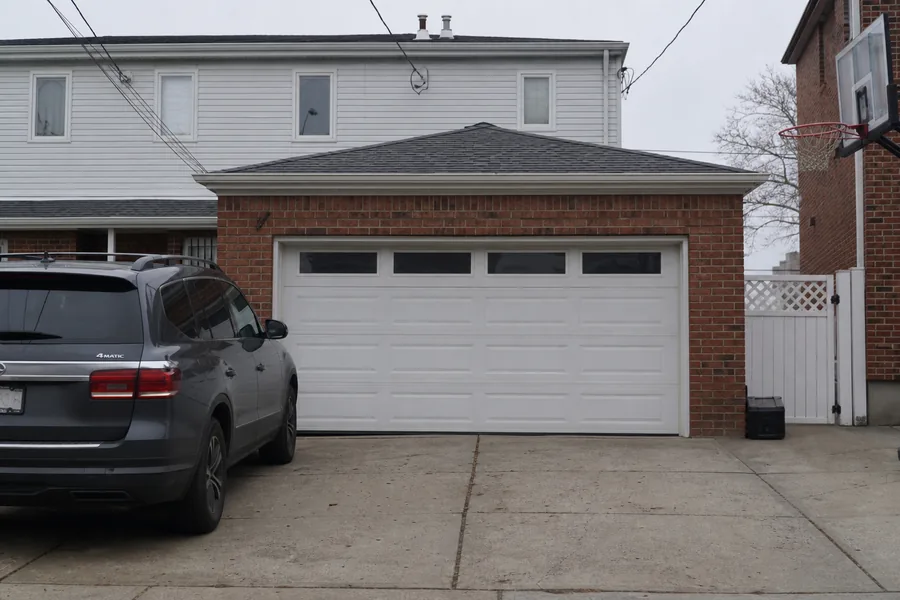
Shared parking garages, hotel valet bays, building service entrances and the townhouse and brownstone garages in between, with a free estimate before any work.
Tell us what the door is doing. The estimate is free either way.
Garage doors in Manhattan are mostly commercial: parking garages under apartment and condo buildings, hotel valet bays, fleet and delivery doors along the FDR Drive and around Hudson Yards, restaurant trash-room roll-ups and the gates at parking facilities. The residential work is concentrated in the townhouses of the Upper East and Upper West Sides, the brownstones of Harlem and Washington Heights, and the condo parking garages downtown in Tribeca, SoHo and Battery Park City. Roll-up steel doors, sectionals, security gates and high-cycle openers are all part of the job.
For a building, the first call usually comes from the super or the managing agent, and the useful details are the kind of door, the make of the operator and how the technician gets in. For a townhouse it's the door itself: whether it's a sectional or a one-piece, what sits above the garage, and whether there's room on the ceiling for an opener.
ZIP codes we serve: 10001, 10002, 10003, 10004, 10005, 10006, 10007, 10009, 10010, 10011, 10012, 10013, 10014, 10016, 10017, 10018, 10019, 10020, 10021, 10022, 10023, 10024, 10025, 10026, 10027, 10028, 10029, 10030, 10031, 10032, 10033, 10034, 10035, 10036, 10037, 10038, 10039, 10040, 10044, 10128.

The repairs break down into six jobs, and each one has its own page:


Cables carry the door up and down alongside the springs, and the street is hard on them. Where a garage opens straight onto the sidewalk, winter slush and road salt reach the cable ends and the bottom brackets first. A cable that frays on one side lets that side of the door drop, so the pair is replaced together and the door rebalanced.
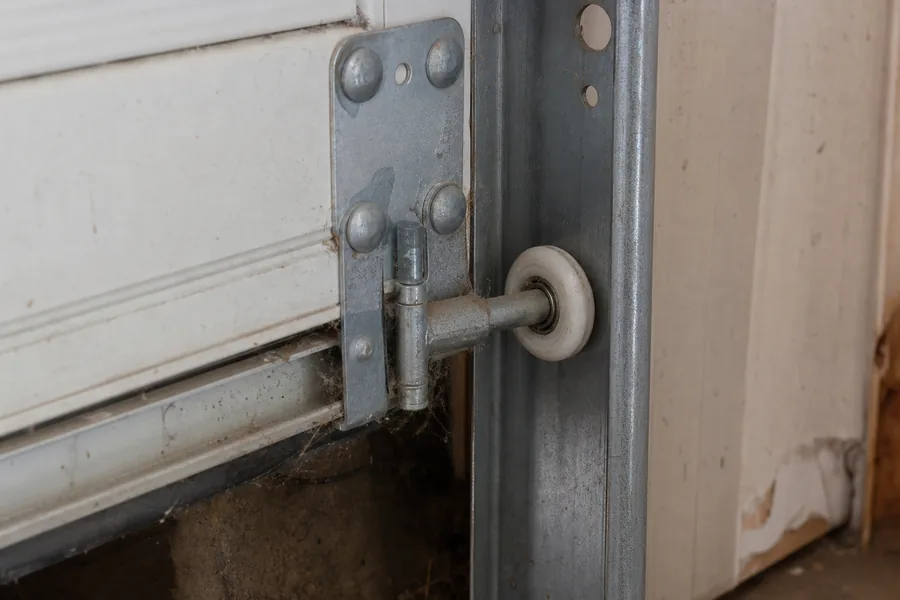
Off-track doors often start with a knock: in a tight garage, a car pulling in close or a delivery cart can clip the bottom section and push a roller out of its track. A door like that can come down, so it's left alone until a technician has supported it, and the track is checked for bends before the door runs again.
Openers on townhouse garages are often older chain drives that grind before they give out, which is the drive gear wearing away inside the head. When the gear is the only problem, it's replaced; when the motor is done, a belt-drive LiftMaster runs far quieter, which matters where there's a bedroom over the garage.
Springs break more than any other part on a house door. On a townhouse door that's used many times a day, a pair can wear out far sooner than the same springs on a door that opens once, and they usually go with a bang. Both are replaced together and sized to the door.
Calls come from the Upper East and Upper West Sides, Harlem, Washington Heights and Inwood, Chelsea, SoHo, Tribeca, the East and West Villages, Murray Hill, Midtown, the Financial District and Battery Park City. Not on the list? Call anyway.
Downtown, much of the work is under condo buildings, with ramps, loop detectors and shared doors; uptown, more of it is brownstone and townhouse garages on residential blocks. Either way the visit starts with the same questions: what the door is doing, what kind of door it is and how the truck gets close.
Four kinds of garage account for most of the work here, and each one wears out in its own way. The suburban tract garage is the exception, not the rule. Here's what each of them is like before anything goes wrong.
Parking garages under condo towers. One shared door serves the whole building, so it opens and closes all day, every day, on a heavy commercial operator built for that kind of traffic. Everything about it wears faster than a house door: the operator's logic board, the safety sensors, the loop detectors set into the ramp, the drive chain.
Pre-war brownstones. A garage cut into the ground floor of an old house rarely has much space above the door, and some are reached down a narrow alley. A standard opener hanging from a ceiling rail often has nowhere to go.
Townhouse curb-cut garages. The door opens straight onto the street, so it takes the slush, the salt and the splash from passing traffic all winter. The damage starts low, at the bottom brackets, the cable drums and the bottom section, and works its way up.
Service entrances on doorman buildings. Behind the lobby, the service entrance takes deliveries, contractors, move-ins and trash, usually through a rolling steel door with an operator. It's used constantly and noticed only when it stops.
The trouble usually starts with the parts that react to traffic. Sensors and loop detectors are triggered over and over, and the logic boards behind them give out; brake dust coats the sensor lenses until they stop seeing the beam; loop detectors fail under the constant weight of cars; drive chains stretch until there's no adjustment left. The operators themselves, LiftMaster's commercial line, Manaras and GTO among them, are built for the work but still need parts far sooner than any house door would.
The warning signs are a door that hesitates before opening for a car, reverses when nothing is in the way, or opens on its own at night. Those usually point to a sensor, a loop detector or a logic board, and they're far easier to deal with before the door stops altogether.
Low ceilings cause most of the problems here. An opener squeezed onto a ceiling rail that's too short for it strains, stops the door short of fully open or catches the top section, and a door forced into a low opening without the right track rubs and binds. In the narrow alleys behind some brownstones there's little room overhead or to one side, which limits where an opener can go.
The warning signs are an opener that strains or quits before the door is fully open, a top section that scrapes the header, or a door that rubs on its way up. Each points to an opener or track that doesn't suit the space, rather than a part that has simply worn out.
Salt is the enemy. The city's trucks spread it all winter, passing traffic throws salty slush against the door, and the water soaks into the cable drums. Cables on these doors corrode from the inside out, where nobody can see it, and then snap under load without warning. Bottom brackets rust through, and the bottom section rots or rusts where the slush sits.
The warning signs are rust streaks on the bottom section, a cable that looks rough or has broken strands near the drum, a bottom bracket flaking at the corner, or a door that closes crooked. Any one of them is worth a call before the cable lets go.
Service entrances behind doorman buildings on Park, Madison, Fifth and Central Park West are usually rolling steel doors, not sectionals, and they fail differently. The spring lives inside a barrel at the top rather than on a torsion bar, a damaged door means bent slats rather than a cracked panel, and the drums and cables carry a heavy curtain of steel every time the door goes up.
The warning signs are a rolling door that's harder to raise than it used to be, one that drops faster than it should, or slats that catch in the guides. A rolling door that won't stay up has a spring problem and shouldn't be used until it's been looked at.
Every neighborhood is covered, from the southern tip of the island up to Inwood, east side and west. The ZIP list includes Roosevelt Island, which is reached by its own bridge from Queens.
Parking is often the hardest part of a visit here. Tell us whether there's a loading zone, a building dock or a garage the truck can pull into, and whether the super needs notice, and the visit is planned around it.
For a building, a name and number for the super or the managing agent helps; for a townhouse, just say whether there's somewhere for the truck to stop close to the door.
Townhouse and brownstone owners, for springs, cables, openers that suit a low ceiling, and new doors.
Condo boards and garage operators, for the high-cycle operators, sensors and loop detectors that keep a shared garage moving.
Building managers and supers, for service entrances, loading docks and the rolling steel doors behind them.
Restaurants, hotels and fleets, for trash-room roll-ups, valet bay doors and the delivery doors along the FDR Drive and around Hudson Yards.
A door that refuses to close is usually doing its job. The safety sensors near the floor have seen something in the opening, a bag, a bike wheel, a film of brake dust on a lens, or one sensor has been knocked out of line, and the opener sends the door back up rather than risk closing on it.
Holding the button down to force the door shut overrides the very thing that protects whoever is under it, so don't; call instead.
The fix is to find what the sensors are reacting to and correct it, never to bypass them. In a shared garage with constant traffic, the cause can also be a sensor that has worn out or a logic board that has failed after being triggered so many times; the technician tests each before replacing anything.
Sensors that have faded or been knocked about for years are replaced as a pair, and the new pair is lined up and tested with the door running before the technician leaves.
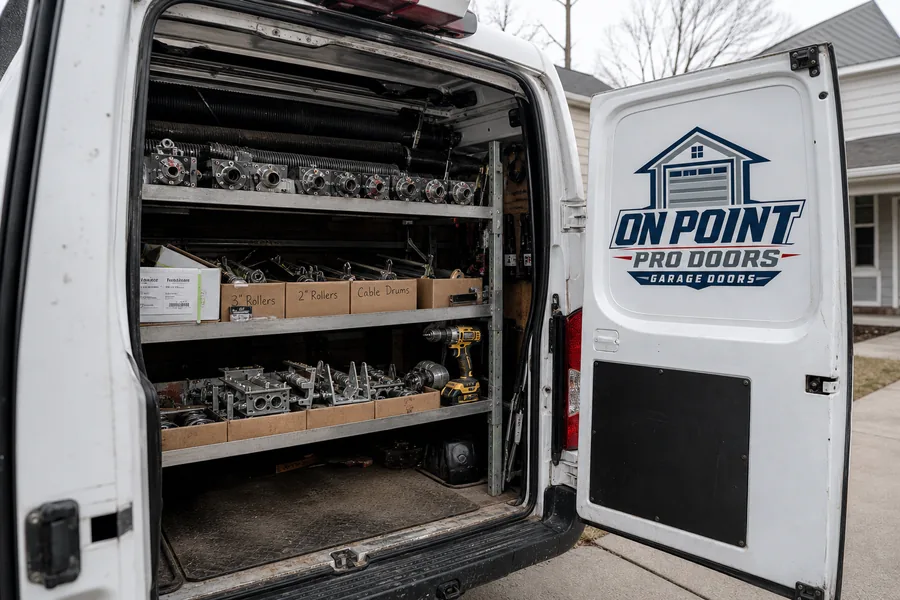
Springs, cables, rollers, hinges and the openers that come up most travel on the truck, along with the commercial sensors and logic boards that shared garages go through. That's why many repairs here are finished at the first visit rather than after a parts order.
A snapped torsion or extension spring is replaced as a matched pair, sized to the door, and the door balanced before it goes back on the opener. Spring replacement details →
Drive gears, belts, logic boards, capacitors and sensors are tested one at a time before anything is swapped, whatever the brand. Opener repair details →
Doors from Amarr, CHI, Clopay and Wayne Dalton, chosen with you at a design consultation and installed complete. New door installation →
Knowing which of the four you have tells the technician what to bring and who to talk to before setting out. A shared garage needs the super in the loop, a brownstone needs the ceiling measured, a curb-cut door needs galvanized parts and a service entrance needs rolling-door parts. Here's how each job goes.
The visit is arranged with the super or the garage operator, around the hours when residents come and go. The technician tests the operator's sensors, loop detectors and logic board one by one, cleans the brake dust off the sensors as part of the check, and replaces the failed part from the truck: replacement logic boards, commercial sensors, loop detectors and drive chain are carried for exactly this work. The door is then run with a car over the loop and a test through the beam before the garage goes back to normal. If the operator itself is at the end of its life, you'll hear that, along with the options, before anything is ordered.
On a low-ceiling brownstone garage, the answer is usually a LiftMaster jackshaft opener: it mounts on the wall beside the door and turns the torsion bar directly, so the ceiling stays clear for the door itself. Where an alley is too narrow even for that, a side-mounted unit sits beside the door instead of above it, and some garages can keep a conventional opener with a low-headroom track conversion. The technician measures first and tells you which your garage actually needs; the jackshaft opener is carried on the truck.
On a curb-cut door, worn cables are replaced with galvanized aircraft cable, the rusted bottom brackets are swapped as a set, and the springs are set to the door's weight again so the new cables aren't fighting an unbalanced door. If the bottom section has rotted or rusted through, you'll hear whether it can be replaced on its own. The new cables are seated on the drums at the same tension on both sides, and the door is run through its full travel by hand before the opener is reconnected.
Rolling doors need their own parts: spring barrels instead of torsion bars, slats instead of panels, and drums and cables sized for a heavy steel curtain. The work is arranged with the building's super or property manager and the management office before anyone arrives, and scheduled around move-ins and move-outs so the service entrance is out of use for as little time as possible. If the spring barrel has lost tension, it's adjusted or the spring replaced, and the operator's limits are set so the curtain stops where it should at the top and the bottom.
Yes. Tell us how the garage or service entrance is used and when it's quietest, and the visit is planned with the super or the management office around move-ins, deliveries and resident traffic. A door stuck open overnight is treated as urgent, because an open garage or service entrance leaves the whole building exposed.
Yes. The operators that run shared garages, including LiftMaster's commercial models, Manaras and GTO, are repaired on site, and their logic boards, sensors and loop detectors are replaced when they fail. If an operator has to be replaced, the new one is chosen to suit the door's size and the garage's traffic.
Usually, yes. Bent or cracked slats can be replaced without a new curtain where the door allows it, and the spring barrel, drums and cables are checked while the technician is there. If the curtain is too far gone, you'll hear that before any work is approved.
In a busy garage the safety sensors and loop detectors are triggered constantly, and brake dust coats the lenses until they stop reading the beam properly. A dirty, worn or misaligned sensor, or a loop detector that has failed, makes the door misbehave. The technician tests each one to find which it is. A failed loop detector can leave the door refusing to open for cars or closing while one is still under it, so it's tested with a car over the loop.
Yes: trash-room roll-ups, valet bay doors, security gates and the operators that run them. Tell us how the door is used and when it can be out of service, and the visit is planned around that. Trash-room doors take a beating from carts, so their bottom bars and guides are checked on every visit.
Yes. The estimate is free, and it can be written up for the board or the management office before any work is approved.
UL 325 is the safety standard that garage door openers are built to, and it exists because closing doors have hurt children. Whatever the visit was for, the opener is tested against it before the technician leaves:
A door that fails any of the three is put right before the technician leaves, even if the call was about something else. If it's the sensors keeping the door from closing, whatever they're reacting to gets fixed; they're never bypassed.
Yes. A quieter belt-drive opener and nylon rollers make a real difference when there's a bedroom over the garage, and the door's balance is checked so the opener isn't straining every time it runs.
Radio interference from the buildings around you can do it, and so can a failing receiver in the opener or a remote that has partly lost its pairing. The technician checks the receiver and the remotes, then reprograms or replaces whatever is at fault.
Yes. The opening is measured, the door is chosen with you at a design consultation from Amarr, CHI, Clopay or Wayne Dalton, and it goes in with new springs and track. The old door is taken away. An insulated door is worth considering when the garage shares a wall or a ceiling with living space.
No. Once strands start breaking, the rest can go at any time, and when a cable snaps one side of the door drops. Stop using it and call; the cables are changed as a pair and the door rebalanced before it runs again.
On openers: Genie, LiftMaster, Chamberlain, Marantec, Craftsman, Sommer and Linear, plus the commercial operators found in shared garages. On doors: Wayne Dalton, Clopay, Haas, Amarr, CHI, Garaga and Raynor. If yours isn't on the list, describe it on the call.
The door pulls unevenly, because the new spring is stronger than the tired one next to it, and the old one usually breaks soon after anyway. Replacing both keeps the door balanced and spares the opener from working harder than it should.
Calling first saves a wasted trip: say what kind of building it is and how the garage is reached, and the technician arrives with the right parts and a way in.
Free estimate on every door, from a brownstone garage to a building's service entrance, before any work is agreed.
Tell us about the door and the building, and you'll get an honest idea of when someone can be there. The visit and the estimate come free.
Prefer to explain the building first? Call (929) 429-2429.
Tell us what the door is doing. The estimate is free either way.