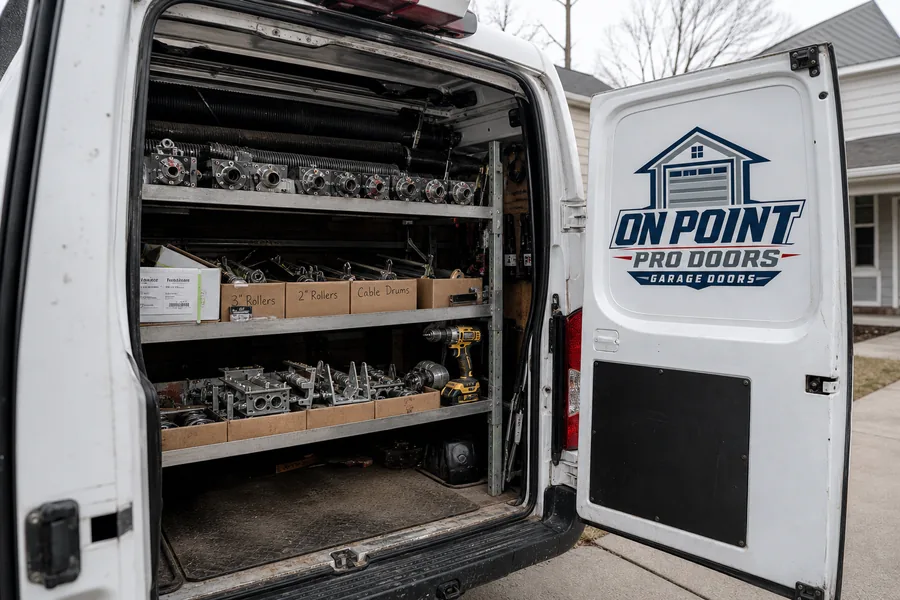
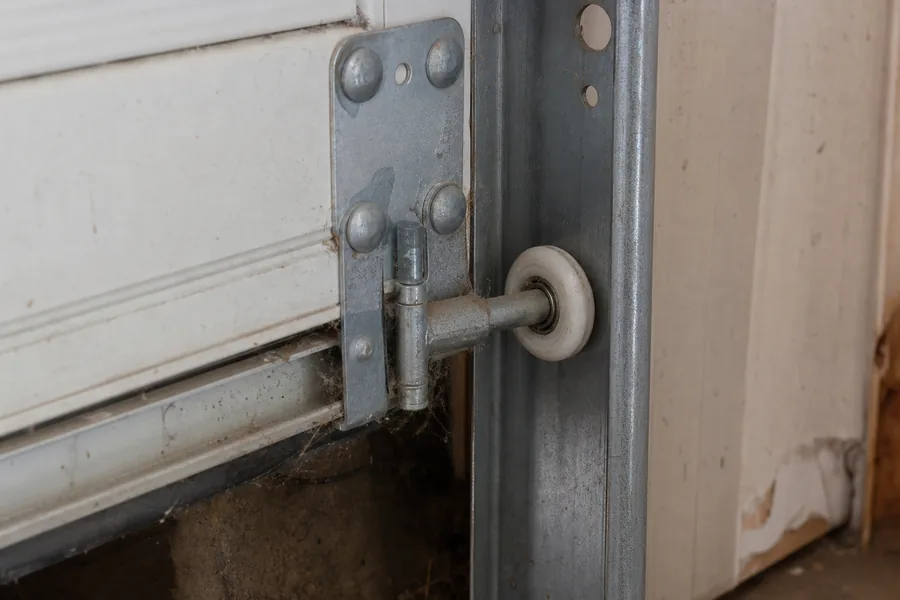
On Point Garage Doors repairs garage doors across Jersey City, from the row-house garages up in the Heights to the parking entrances of the towers by the water, with a free estimate before any work starts.
Tell us what the door is doing. The estimate is free either way.
Few places pack so many kinds of garage door into one map. A converted brownstone may have a single narrow door opening onto the sidewalk, a townhouse row may share a driveway with a dozen identical doors, and a newer tower may run one heavy door for a whole building's cars. Springs, openers, cables and tracks fail on all of them, just not in the same way.
In the Heights and on the older downtown blocks, many garages were cut into row houses long after the houses were built. The opening is narrow, the ceiling is low and the door often meets the sidewalk directly, so there is no room for a standard track and opener. Low-headroom track kits and openers that mount beside the door instead of above it are often the way to make those doors work properly.
The first question on every call is what kind of building the door belongs to. It decides which parts come on the visit, who needs to be told before the door is worked on, and whether the job is a quick repair or a door that has to be measured and ordered.
A good description on the call usually means the repair is done in one trip. If something has to be ordered, the opening is closed up securely until the part comes in.

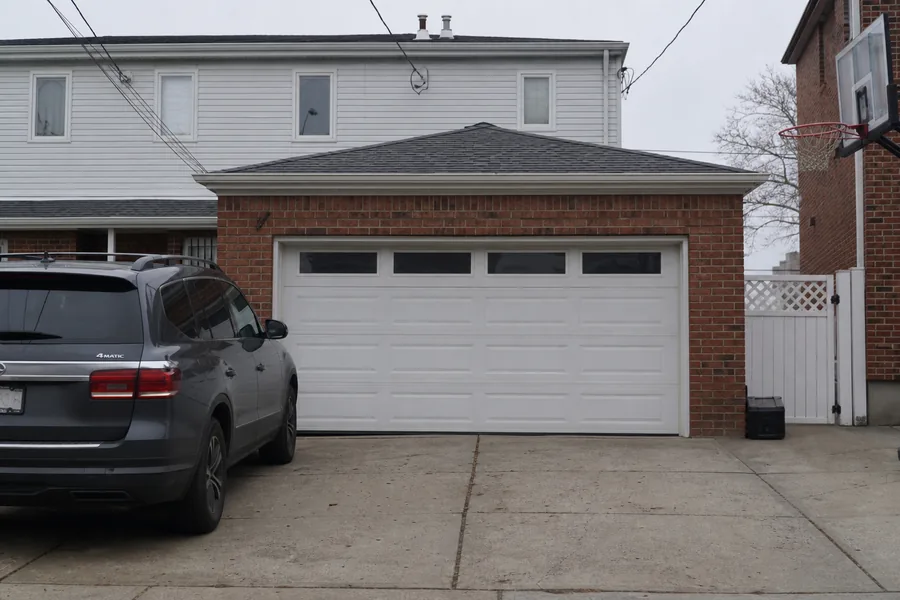
Springs, openers, cables and rollers, doors off their tracks, urgent repairs and new doors, with the common parts for the doors around here already on board.


Springs break more than anything else. A torsion spring is wound tight and gives out with a bang, usually on a cold morning or after years of daily use. The door then carries its full weight and the opener can't lift it. New springs are sized to the door, both sides are done together, and the door is balanced before it goes back into service.
Cables do the lifting alongside the springs and wear fastest near the floor, where winter salt and standing water eat at them. When one frays, the door starts to hang unevenly. Both cables are replaced together, and the door is reset so it runs level.
A door out of its track is usually the result of a bumper, a broken cable or a worn roller. It can come down without warning, so stop using it, keep everyone away from it and call. The technician secures the door, straightens or replaces the track and swaps any damaged rollers.
Old openers announce the end with grinding, slowing down or stopping halfway. Often the drive gear inside has worn out and the opener can be saved; sometimes the opener has simply done its time. You get the honest answer and choose.
A door stuck open overnight, a car trapped inside, a building entrance that won't close: tell us on the call, and the visit is planned around making the opening secure first.
If the door is stuck open, the first job on arrival is closing and securing it. If a car is shut in, the first job is getting the door open safely. Either way, the full repair follows once the opening is under control, and you hear what was found before anything else is done.
The safety test. Before the technician leaves, the door's safety reverse is tested both ways, on contact and when the sensor beam is broken, whether or not that was the reason for the call.
The right questions up front. What is the door doing, did you hear a bang or grinding, and what does the opener label say? Those answers decide which parts travel with the technician, so the repair can be finished on the first visit.
Winter. Cold mornings are hard on springs and on the plastic gears inside older openers. Snow pushed against a door can freeze the bottom seal to the driveway, and an opener forcing a frozen door is how gears strip.
Spring. Springs weakened over the winter tend to break when the weather turns. A door that feels heavier than it used to is telling you something.
Summer. Heat and humidity wear out rubber seals and can swell wood doors so they bind in the frame.
Fall. A good time for a tune-up before the cold: cables, springs, rollers and the safety reverse are all checked in one visit.
LiftMaster, Chamberlain, Genie, Craftsman, Linear, Wayne Dalton and the other common names are all serviced, along with older openers that have outlived their manufacturer's catalog.
Doors with no visible brand are no problem either. The technician identifies the hardware on the visit and works with standard parts that suit most residential doors.
Downtown, Journal Square, the Heights, Greenville, Bergen-Lafayette, the waterfront and everything in between. If you are near the city line in a neighboring town, call and ask.
Every part of the city brings its own access puzzle, from narrow side streets to buildings where the garage is reached through a shared entrance. We plan the visit around the building, not just the broken part.
Along the waterfront in Newport and the newer towers, one entrance door may serve every resident's car, so it opens and closes far more often than a house door does. Springs and openers on those doors wear on a different schedule, and a door that stops affects the whole building. A regular tune-up on a busy door is how the surprise breakdowns get caught early.
A heavy door wearing out its opener. A wood carriage-house door had springs too weak for its weight, so the opener was doing the lifting. New springs sized to the door took the strain off, and the opener ran smoothly again.
A door frozen to the ground. On a cold morning the bottom seal froze to the concrete and the opener stripped its gear trying to lift the door. The gear was replaced and the seal and door bottom were checked so it would not happen again.
Buildings with a shared garage door need repairs that fit around residents. We coordinate with the manager or super, keep the entrance usable as much as we can, and test the door with residents' remotes before leaving.
After the work, the manager hears what was replaced, what is wearing and what to keep an eye on, in plain words. For busy entrances, a regular tune-up can be scheduled so the door is looked at before the cold sets in rather than after it fails.
Yes. Building entrances often use heavier doors and openers made for frequent use. Tell us about the door and who manages the building, and the visit is arranged with them. Call (929) 429-2429.
Resist forcing it. If a spring has gone, the door is carrying its whole weight and can drop when lifted. Call (929) 429-2429, mention the car, and getting it out becomes the first job of the visit.
When the door has two, yes. They have lifted the same door the same number of times, so the survivor is rarely far behind. Installing a matched pair keeps the door balanced and saves a second visit.
Yes. Some doors, often Wayne Dalton models, keep the springs inside a tube on the shaft. They need parts made for that system, and the technician brings them.
Once a year for a typical home door, more often for a door that runs all day. A tune-up catches worn rollers, tired springs and loose hinges before they fail.
We replace both. The cables wear together, and replacing only one leaves the door unbalanced and the other cable close to failing.
Yes. Handheld remotes, a keypad by the door or the buttons built into your car can all be paired on the visit, and in a building each resident can have their own.
The door can still be opened by hand once the opener is released, and some openers have a battery backup. Ask the technician to show you how your door works so you are ready for the next outage.
Yes. Bayonne to the south, Hoboken and Union City to the north and the rest of Hudson County are covered as well; give us the address when you call.
No. A door that stalls midway usually has a failed spring or cable, and pushing it can bring it down. Leave it, keep people and cars out from under it, and call; securing it is the first thing the technician does.
A broken torsion spring usually shows a clear split in the coil above the door, and most people remember a sharp crack from the garage shortly before the door stopped working. Tell us what you saw and heard, and matching springs come on the truck.
Call and you get a window for the visit, then a call from the technician once they are on the way. Plain words are fine; you don't need to know what the parts are called.
If you manage a building, mention it when you call; the visit can be set for a time that suits the residents, and the super can be told when the technician is on the way.
Nothing is touched until you approve the free estimate.
Share what's wrong and whether the door belongs to a house, a townhouse row or a building, and we'll be straight with you about timing. The estimate is free.
Questions before booking? Call (929) 429-2429.
A sentence or two about the door is enough. The estimate is free either way.