Repairs and new doors across the borough's mix of detached homes, row houses and apartment parking garages. The estimate is free and comes before any work.
Tell us what the door is doing. The estimate is free either way.
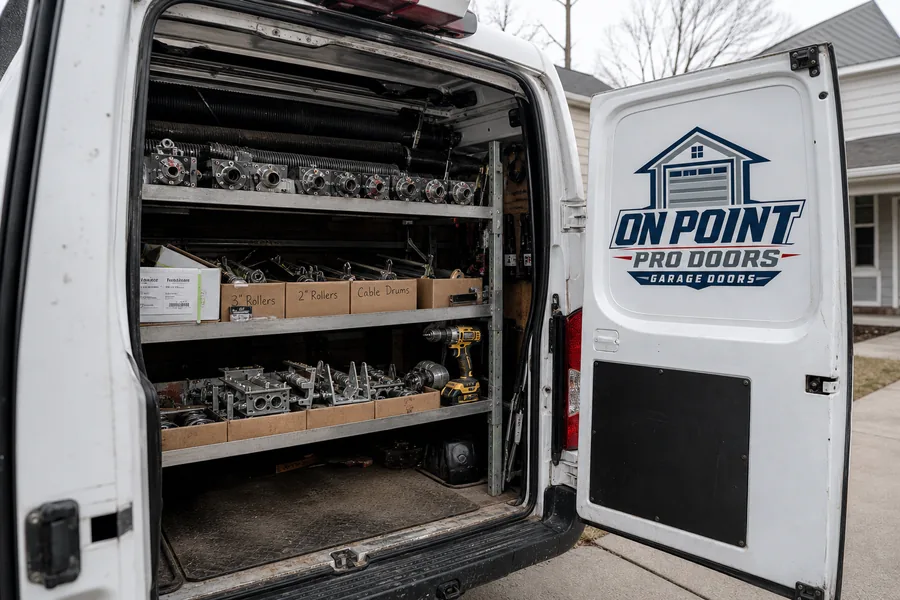
Springs, cables, rollers, hinges and the openers we see most travel on the truck, so a repair rarely waits on a parts order. The technician looks at the whole door, not only the part that made the noise, and tells you what it needs before starting.
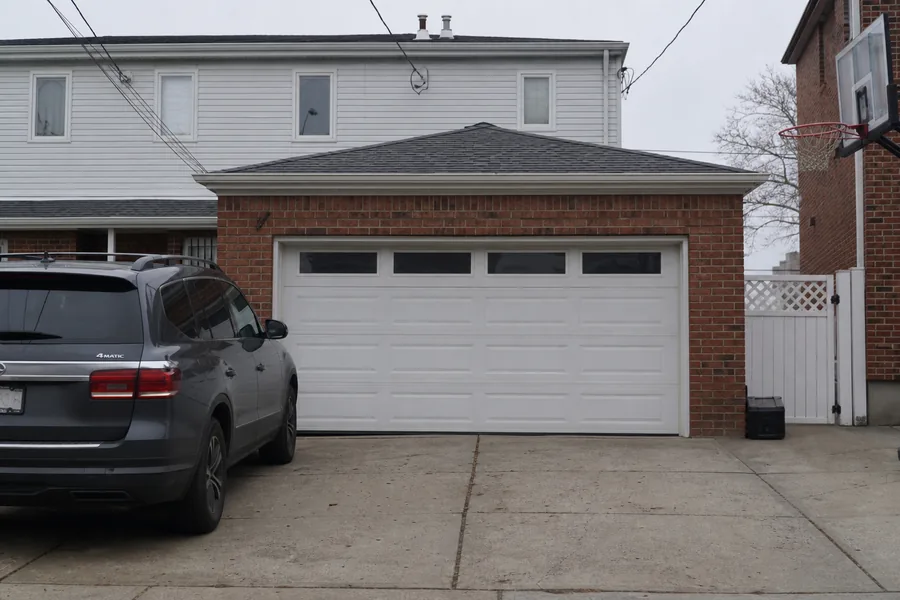
Doors here range from single garages behind row houses to shared garages under co-op buildings and the roll-up doors on commercial blocks, so the first question on a call is what kind of door it is. That decides which parts come along and how the visit is arranged.
A torsion or extension spring that has snapped leaves the door too heavy to lift. Springs are replaced as a matched pair so the door stays balanced. Spring replacement details →
Logic boards, belts, drive gears, safety sensors and capacitors: the fault is found before anything is replaced. Opener repair details →
Snapped or frayed lift cables, drum re-spooling, balanced re-tensioning. Cable failures often follow spring breaks.
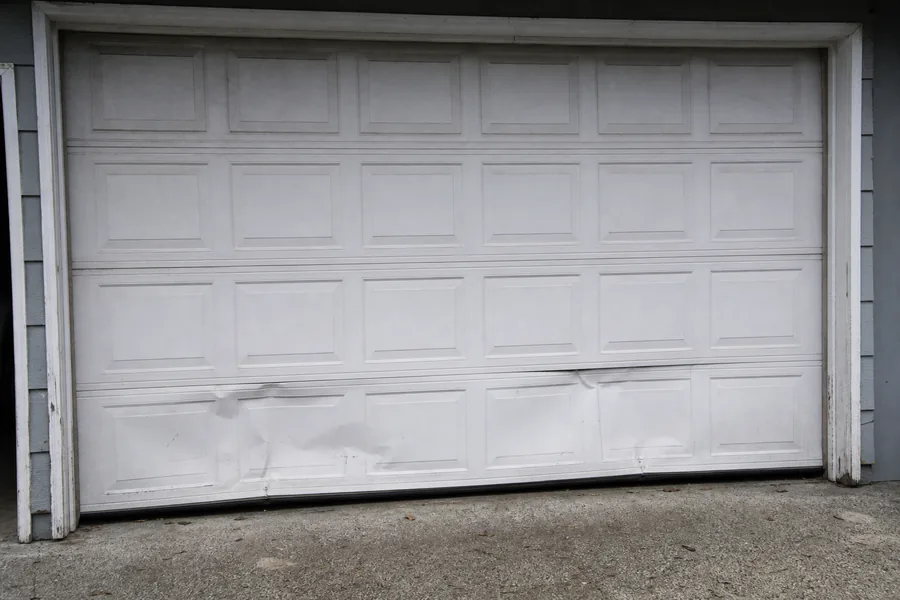
Door out of its track? A bent track, a damaged roller or a bump from a car: the door is made safe, the track set straight and the door rebalanced.
A full look at spring tension, cable wear, rollers and hinges, and the opener's force and safety reverse, before a small problem becomes a big one.
Clopay, Amarr, Wayne Dalton and CHI doors, measured to the opening and installed complete, with the old door taken away. New door installation →

Each has its own page with the details that matter, and the parts for the doors common in this part of the city are on the truck.


The Bronx is heavily residential with a mix of apartment buildings, row houses, and detached homes - most concentrated garage door work happens in Riverdale's detached single-family homes, the Throgs Neck and Pelham Bay waterfront neighborhoods (where salt air corrosion accelerates spring and cable wear), Co-op City's apartment parking garages, and the row-house garages across Morris Park and Westchester Square. We also service commercial garage doors throughout the Hunts Point industrial corridor and the Bronx Terminal Market area.
Working here has shown us patterns. Opener failures bunch up in the summer heat, when capacitors give out, and a cable failure often follows a spring failure, because a door left out of balance overloads the cable that's left carrying it.
Weather plays its part as well. The freeze-thaw months crack springs that were already tired, and the wind and salt on the waterfront blocks reach the bottom brackets and the cable drums before anything else.
The truck carries torsion springs in the common wire sizes and lengths, extension springs for older one-piece doors, the LiftMaster, Chamberlain and Genie motors and logic boards we see most, and a full stock of cables and rollers.
ZIP codes we serve: 10451, 10452, 10453, 10454, 10455, 10456, 10457, 10458, 10459, 10460, 10461, 10462, 10463, 10464, 10465, 10466, 10467, 10468, 10469, 10470, 10471, 10472, 10473, 10474, 10475.

Openers are built to the UL 325 safety standard, which requires a closing door to reverse when it meets an obstacle and when the safety beam is broken. Those protections exist because doors have hurt children, and every visit ends with them tested, whatever the call was about.
If the door fails either test, it isn't left that way. A door that won't close is often the safety beam doing its job: something is in the way or one sensor has been knocked out of line. The fix is to correct the cause, never to bypass the sensors.
The failures here follow the housing: mid-century concrete-frame attached garages, springs that crack through the freeze-thaw months, salt corrosion on the waterfront and on City Island, and the stamped-metal Wayne Dalton retrofits in the Co-op City garages.
Torsion springs are the part we replace most. Every open and close uses up part of a spring's life, so a door that runs many times a day wears its springs out years sooner than one that opens once. Salt air near the water speeds it up, because rust starts between the coils and the spring breaks at its weakest point. When one spring of a pair breaks, the other is usually close behind, which is why both are replaced at once.
Lift cables come next. They carry the door along both sides and fray where they wrap the drums, faster when a spring is undersized or when only one of a pair was ever replaced. Cables are replaced in pairs and the door is rebalanced at the same visit.
Safety sensors are behind most openers that refuse to close. The two eyes at the bottom of the tracks have to see each other, and sun in a lens, a web across it or a knock from a mower or a trash can is enough to make the door reverse. The technician finds which it is and sets the pair true.
An off-track door has a roller out of its track, often after a bump from a car or a broken cable. A door in that state can fall, so leave it where it stopped and keep the car clear until it has been supported and set back in the track. The technician supports the door, sets it back in the track, replaces the roller or cable that let go and runs the door through its full travel before reconnecting the opener.
Openers wear out eventually, and older chain-drive units usually grind for a while before they quit, which is the drive gear stripping inside the head. The gear, the board and the motor are checked before a new opener is recommended, and belt-drive LiftMaster models are the ones we install most often here.
Garage door service across the borough, including these neighborhoods:
A single loud bang from the garage, often mistaken for something falling. Afterward the door feels very heavy, because the spring was carrying most of its weight. Don't try to lift it by hand; call (929) 429-2429 and the door is made safe first.
Not always. A dead remote, a tripped outlet, a blocked safety sensor and a failed logic board can all look the same from the driveway. Tell us what the door does when the wall button is pressed, and the technician confirms the cause before replacing anything.
Yes. Clopay, Amarr, Wayne Dalton and CHI doors, measured to the opening, with the old door taken away. The estimate is free.
Yes: roll-up steel doors, commercial sectionals and high-cycle operators at shops, warehouses and fleet yards, including the industrial blocks around Hunts Point.
Openers from LiftMaster, Chamberlain, Genie, Craftsman, Linear, Marantec and Sommer; doors from Clopay, Amarr, Raynor, Wayne Dalton, CHI, Haas and Garaga. Parts for the common ones are on the truck.
Springs wear out with use. Each open and close takes some of their life, and cold snaps, rust and springs that were undersized to begin with all bring the end closer. Both springs are replaced together so the door stays balanced.
Before any visit ends, the opener's safety systems are tested against the UL 325 standard, whatever the original call was about:
Any check the door fails is fixed before the technician goes. If the sensors are what's stopping it from closing, the cause gets corrected; the sensors are never bypassed.
Call and describe the door, and you'll be told honestly when a technician can be there. A door stuck open or a car trapped inside goes ahead of routine work.
Grinding, popping or a door that suddenly feels heavy usually means a part is wearing out. Stop running it and call; a worn roller or a frayed cable is a small repair if it's caught before it fails.
Usually the safety sensors: something in the beam, sun in a lens, or one sensor knocked out of line. Sometimes it's the opener's force setting, or a door that has become too heavy. The technician checks all three before changing anything.
Often, yes. Many door models still have replacement sections available, and if yours doesn't, you'll hear that before any work starts.
Yes. Shared parking garages, co-op garages and building service doors, with the visit arranged through the super or the management office.
Yes. If an opener can be repaired, that is the recommendation; if it's worn out, it's replaced with one suited to the door, usually a belt drive for quiet.
Yes. The technician shows you what has failed and what the fix involves, gives you the estimate, and waits for your say before starting.
Describe the door when you call and the technician sets out with the right parts, with a heads-up to you before arriving. Diagnosis happens at the door, never over the phone.
The estimate is free wherever in the borough the door is.
Explain the problem in a sentence or two and you'll hear when a technician can realistically be there. Both the look at the door and the estimate are free.
Prefer to talk it through? Call (929) 429-2429.
Tell us what the door is doing. The estimate is free either way.