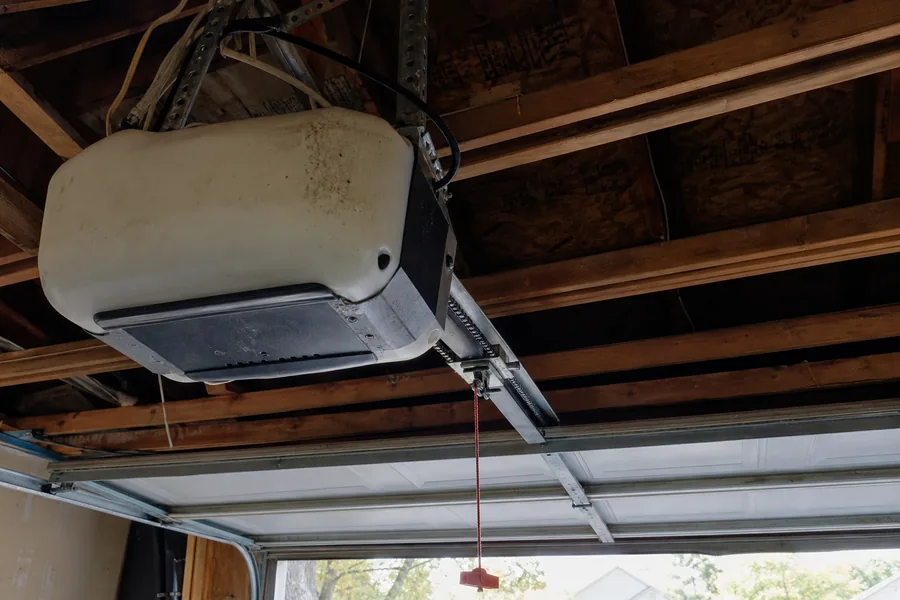
Genie openers are everywhere in Queens and on Long Island, and when one stops it's nearly always one of five things.
Tell us what the door is doing. The estimate is free either way.
Genie has been sold through the big-box stores around New York for decades, so it's the opener a lot of homeowners installed themselves and the one that came with the house for everyone else. That is good news for repair: the models repeat, the failure points repeat, and the parts are on the shelf.
The model matters more than the badge. A screw-drive Genie from the 2000s and a current belt-drive behave differently when they fail, and the technician will ask what the unit does and what it sounds like before loading up.

If the label has faded, a photo of the motor housing and the rail is enough for the technician to bring the right parts.


Five things, in roughly the order we get called about them.

A Genie that is under fifteen years old and stopped for one reason is nearly always worth repairing. The exceptions are a cracked housing, a board for a model Genie no longer supports, or an opener that has been struggling to lift a door with a tired spring for months, because that wears the drive.
If it's the door that's heavy rather than the opener that's weak, fixing the opener alone buys you a few weeks. The technician checks the door balance first, every time, because an opener is only meant to guide a door, not to lift it.
If the door has stopped part-way and the opener is straining, pull the plug rather than pressing the button again. An opener asked to drag a door with a broken spring burns out its gear in a handful of tries, and that turns a spring visit into two.
Around Queens and Nassau County the three we meet week in, week out are the older screw-drive units, the belt drives that came with a lot of new construction after 2015, and the current models with battery backup. The screw-drives are the noisy ones and the ones with the carriage problem. The belt drives are quiet and mostly give trouble through the sensors or a board after a storm.
If yours is older than any of those, it may still be repairable; some 1990s Genies are still running on Long Island. The technician will say on site whether parts exist for it, and if they don't, a belt-drive replacement goes in the same afternoon.
Genie parts are hard to get. The common ones aren't. Sensors, carriages, boards and remotes for the models we see most are stocked.
A flashing light means the opener is dead. It nearly always means the sensors, and the fix is a short visit.
It's better to replace than repair. Sometimes. On a unit that is otherwise sound and simply has one failed part, it's not, and we'll say which on site.
Yes. We service all Genie models throughout NYC, Long Island, and New Jersey. Our technicians carry common Genie parts and can usually complete repairs in one visit. Call (929) 429-2429.
For Intellicode systems: press and hold the PROG button on the motor unit for 3 seconds until the LED blinks. Then press and hold your remote button until the opener lights flash twice. Your remote is now programmed. For older non-Intellicode systems the process differs by model — call (929) 429-2429 for same-day reprogramming.
Genie is owned by Overhead Door Corporation, a subsidiary of Sanwa Holdings. Genie openers are manufactured in the United States and have been sold under the Genie brand since 1954. They are separate from LiftMaster and Chamberlain, which are owned by Chamberlain Group.
A humming Genie that doesn't run is usually a failed capacitor or a stripped screw drive carriage (for screw drive models). It can also indicate a broken spring replacement making the door too heavy to lift. We diagnose and repair all Genie drive types same day. Call (929) 429-2429.
Genie is one of the most common garage door brands across our service area. Manufactured by Overhead Door Corporation, Genie units have a strong reputation for durability when serviced correctly, and our technicians have factory-equivalent training on every Genie model in residential service today. Whether you have a SilentMax 1200 or a Wall Mount 6172H unit, we carry the parts and we know the failure patterns.
1. Diagnostic. Our tech reads the model and serial number, checks the logic board with a multimeter, tests safety reverse and photo eyes, and inspects the rail, trolley, and drive system. For Genie specifically, we know the diagnostic codes — the wall-console blink patterns, the LED sequences, the audible beeps — so we identify the failure mode in 5-10 minutes instead of guessing.
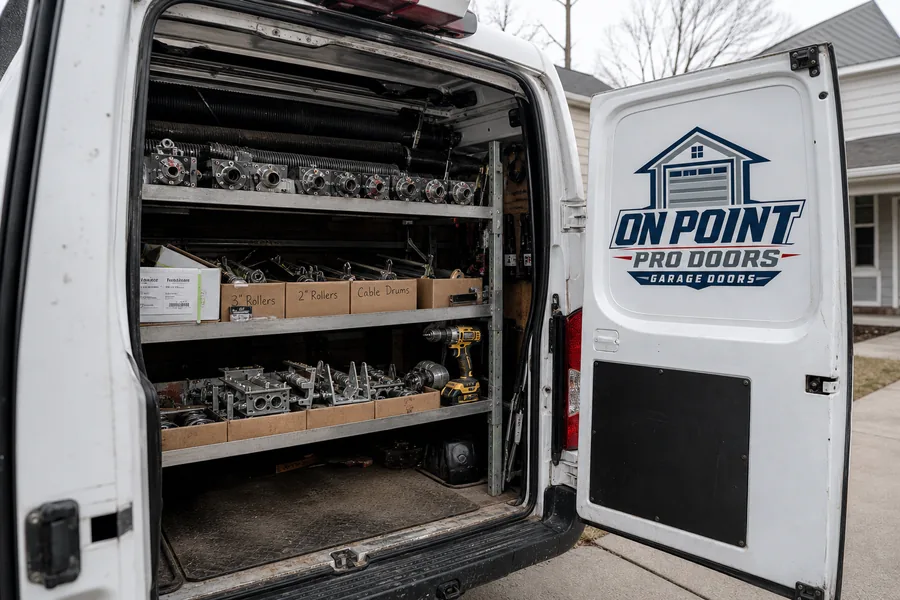
3. Repair on first visit. Our trucks carry the most-common Genie parts — boards, sprockets, gears, belts, sensors, transmitters, and receivers. About 9 out of 10 Genie repairs we do are done on the first visit without ordering parts.
Genie units typically last 12-18 years in residential use. Here is how we advise customers:
Most Genie repairs are 30-60 minutes on-site. Full opener replacement is 90-120 minutes including remote programming and safety reverse calibration.
Yes — the most common Genie parts (logic boards, sprockets, drive gears, belt segments, sensors, remotes) are stocked. For unusual or older models we may need to source the part, in which case we order it the same day and return for the install.
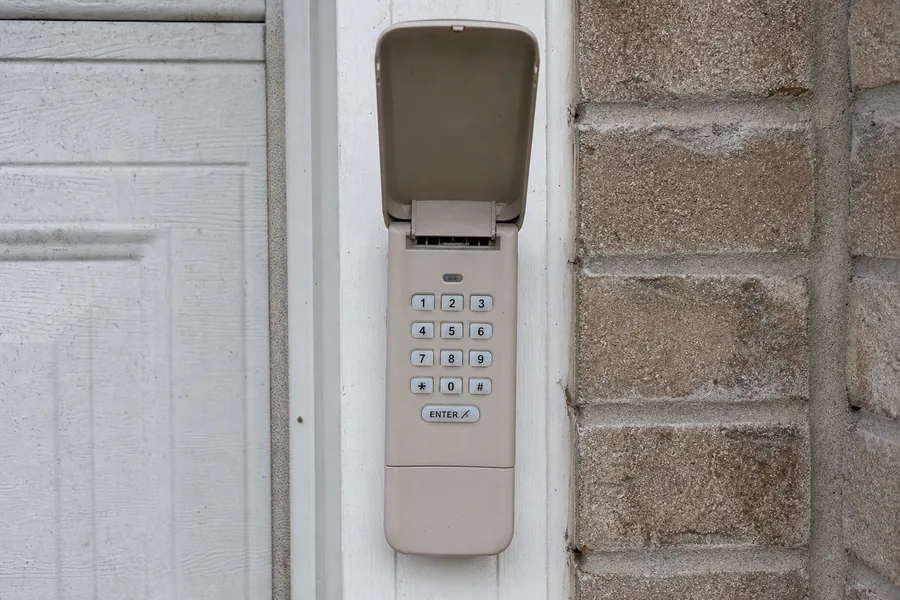
Most modern Genie openers can pair with the original remote if it uses the same frequency family. If not, we include new remotes and program them on-site. Keypad reprogramming and HomeLink (vehicle) pairing is included.
Three usual culprits: rolling code mismatch (older receivers can't pair with newer remotes), failing receiver chip on the logic board, or the learn-button is stuck/dead. We diagnose in 10 minutes and either reprogram or replace the receiver/board.
Many homeowners delay garage door repair hoping the issue will resolve itself or get easier to fix later. Here's what actually happens when you delay common repairs:
If you manage a portfolio of rental properties, condo buildings, or commercial accounts in this area, we offer specialized terms designed for high-volume, multi-unit work:
For commercial accounts (loading docks, roll-up gates, high-cycle openers), we maintain separate stock of commercial-rated parts and dispatch with two-tech response on emergency calls.
Genie doors and openers have specific failure modes our technicians see weekly across NYC, Long Island, and northern New Jersey. Knowing the pattern shortens the diagnosis from a 45-minute teardown to a 5-minute visual confirmation, and lets us stock the right replacement parts on the truck before we knock on your door.
The most-common Genie symptoms we receive calls for: opener LED diagnostic codes (count the blinks — every Genie model encodes a different fault into the blink pattern), trolley/carriage detachment from the chain or belt (audible "thunk" then door drops), gear-sprocket stripping inside the head unit (grinding noise on the open cycle, motor runs but door doesn't move), photo-eye misalignment from the LED-receiver pair (door reverses immediately on close attempt), force-limit auto-shutoff when the spring system is out of balance (door stops 6 inches off floor and reverses), and remote-pairing loss after a power-cycle event.
The structural side of Genie doors — torsion springs, lift cables, rollers, hinges, panel sections — fails on the same physics-driven timeline as any brand: 10,000 cycles of factory torsion springs, 6–10 years of cable life, 8–12 years of nylon/steel rollers depending on grade. The Genie hardware spec is generally midrange-to-premium and we stock cycle-life-upgraded replacements (25K and 50K springs, 13-ball-bearing nylon rollers, 7-strand galvanized cables) that outlast the factory specs.

Genie has built more than 30 opener models across screw-drive, chain-drive, and belt-drive lines since the late 1980s. Most "Genie garage door opener repair" calls fall into one of six common failures, and the fix depends on the specific model. Our technicians stock circuit boards, drive gears, motor capacitors, safety-beam sensors (Safe-T-Beams), and remote receivers for the current Genie lineup — most repairs finish in one visit.
Same-day Genie repair across NYC five boroughs, Long Island (Nassau, Suffolk), Westchester, and Northern New Jersey. Most repairs a free estimate all-in. Call (929) 429-2429 for same-day dispatch.
Yes. Screw-drive units from the 2000s are still common around Queens and Nassau County, and the carriage and drive parts for them are standard stock.
Almost always the safety sensors at the bottom of the track. They've been knocked out of line or something is blocking them. It's a short visit.
That's the remote or the receiver, not the door. New remotes pair in minutes, and if the receiver board has gone it can be replaced without changing the opener.
Yes, on any Genie with a working learn button. Bring up what you'd like on the call and the technician brings it.
Free, across Kings County and the towns around it. The visit tells you what has failed and what it takes to put right, and no is a complete answer.
More often than not. A garage that won't shut is one of the calls the schedule keeps room for.
Around Brooklyn, Queens and Hudson County, one call gets you a two-hour slot and a heads-up call before the technician sets off. We don't buy leads and nobody on a phone judges a door they can't see.
Free estimate. Throughout New York and Nassau County, Jersey City, Hoboken, Yonkers, Westchester, Hudson County.
Describe the fault and we'll give you an honest arrival time. The visit and the estimate is free, anywhere in Kings County.
Easier to explain by phone? Call (929) 429-2429.
Tell us what the door is doing. The estimate is free either way.