A door that starts down, stops and goes back up is the most common call we get, and most of the causes are small. One of them isn't.
Tell us what the door is doing. The estimate is free either way.
Watch what it does when you press the button. Starts down and reverses before the floor, with the opener light flashing: that's the safety sensors, nine calls out of ten. Reverses the moment it touches the floor: the travel limit or the force setting has drifted. Won't move at all, or moves a few inches and stops with a bang: stop pressing, that's the spring.
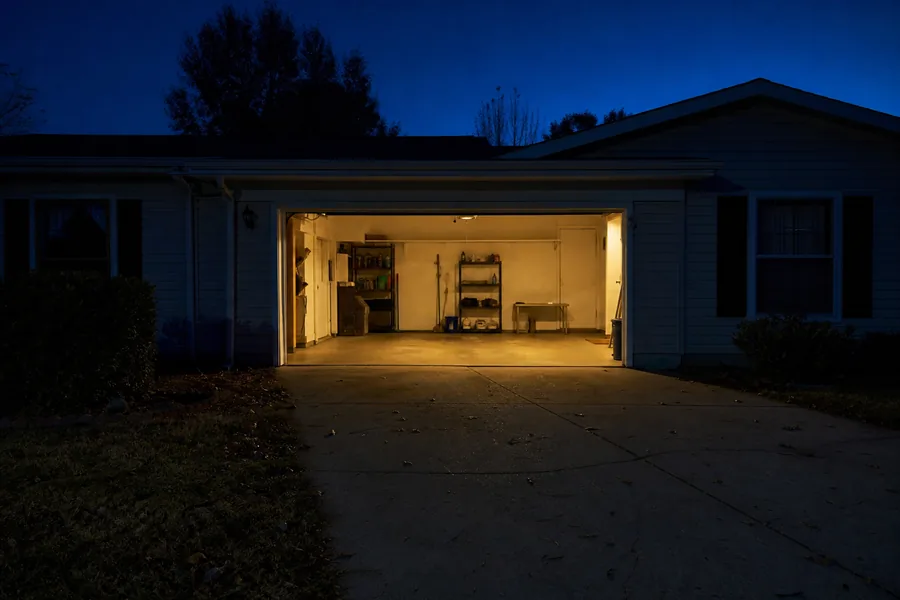
Around Brooklyn and Queens a door standing open overnight is a security problem before it's a repair problem, which is why this is one of the calls the schedule keeps room for.


None of this involves touching the spring, the cables or the opener's insides.

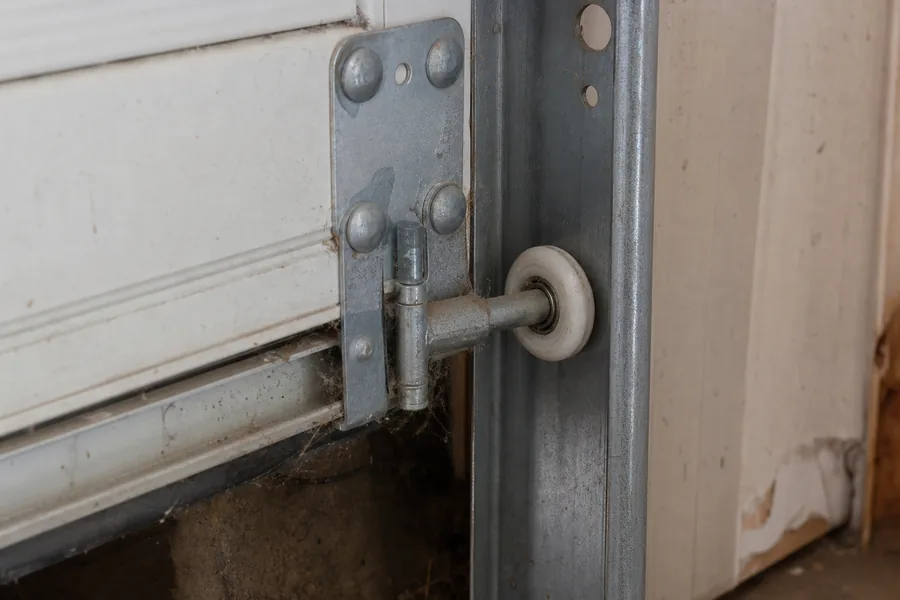
A door that closes most of the way and then jams at the same spot every time is usually a roller riding badly or a track that has been knocked in. It's common in narrow Brooklyn garages where a car mirror clips the track on the way in.
This one is worth a visit sooner rather than later. A door that binds keeps loading the opener and the cables, and what starts as one roller becomes a cable off its drum a few weeks on.
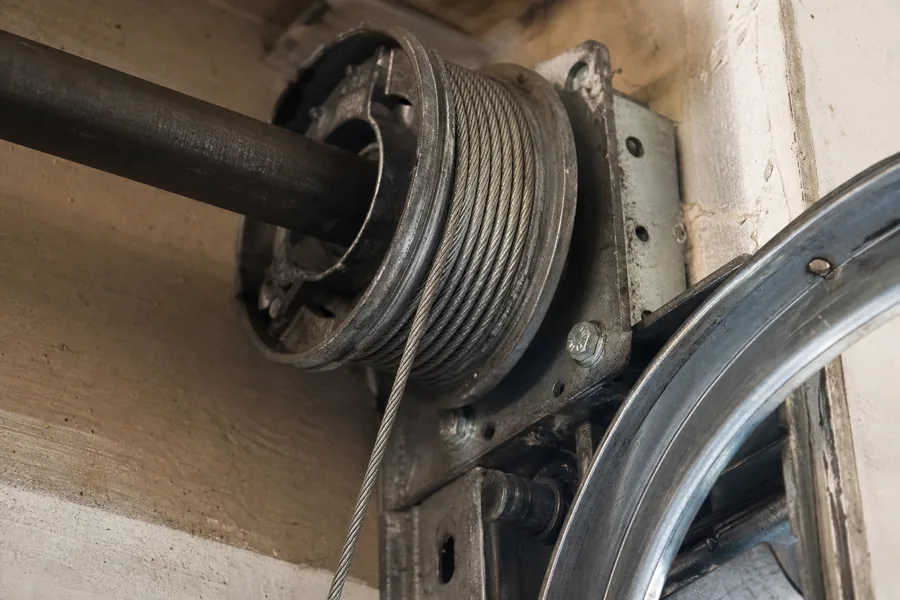
A broken torsion spring is still a loaded spring. The intact half holds its tension, and there's very little holding it there. If the door is suddenly heavy or you can see a gap in the spring above the opening, don't lift it, don't run the opener, and don't let anyone stand under it. That's the whole safety brief, and it's the one part of this page that isn't a small job.
Every January the 'won't close' calls double across Brooklyn and Queens, and it isn't the openers. Cold stiffens the door: the lubricant thickens, the rubber bottom seal freezes to the slab, and a door that was slightly out of balance in October is now heavy enough that the opener's force setting trips and reverses it. Snow and grit in the track do the rest.
The fix is usually small: clear the track, free the seal, and have the balance and the force setting checked once. A door that has been through one winter like that without attention is the door that breaks a spring in February.
The opener is broken. Usually the opener is doing exactly what it should: refusing to close on something it thinks is in the way. Fix the sensor or the setting and the opener is fine.
You need a new door. Almost never for a door that won't close. Doors are replaced for rot and impact damage, not for a sensor.
Wait until morning. Hold the wall button to close it tonight. If that doesn't work, call; an open garage overnight in the city is worth an evening visit.
That's the safety sensors, almost every time. Check nothing is in front of them; if they're clean and it still reverses, one has been knocked out of line and it's a short visit.
Usually by holding the wall button down until it's shut. If the door won't close that way either, the manual release cord lets you close it by hand, but only if the door lifts easily. A heavy door means the spring, and that stays where it is.
The opener is reversing on contact with the floor. The travel or force setting needs adjusting, which is done on the visit and is not a sign the opener is finished.
A roller or a section of track. Stop using it and call; it gets worse the longer it binds.
Free, across Kings County and the towns around it. No is a complete answer.
A door that won't close is one of the calls we keep room for. Call and we'll tell you the slot right away.
Around Brooklyn, Queens and Hudson County, one call gets you a two-hour slot and a heads-up call before the technician sets off. We don't buy leads and nobody on a phone judges a door they can't see.
Free estimate. Throughout New York and Nassau County, Jersey City, Hoboken, Yonkers, Westchester, Hudson County.
Describe the fault and we'll give you an honest arrival time. The visit and the estimate is free, anywhere in Kings County.
Easier to explain by phone? Call (929) 429-2429.
Tell us what the door is doing. The estimate is free either way.