LiftMaster is the opener professionals put in, which is why the one in your garage has probably run for years without a thought. When it stops, the causes are few.
Tell us what the door is doing. The estimate is free either way.
LiftMaster is Chamberlain's professional line, sold through installers rather than the big-box aisle, so the units we meet were usually installed properly to begin with. They run long and quiet, and a LiftMaster that has stopped after ten or fifteen years has normally stopped for one reason.
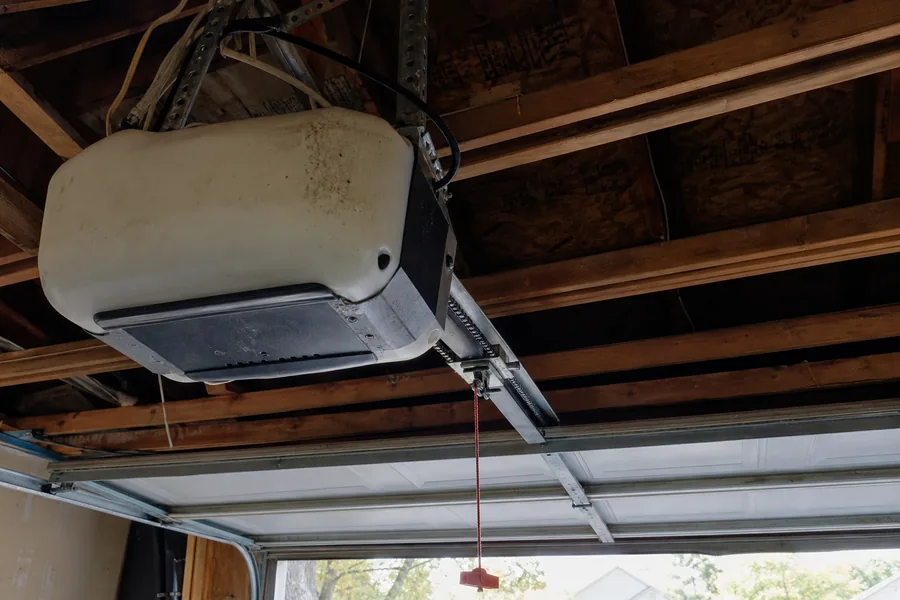
The range is wide. Ceiling-mounted belt and chain drives, the wall-mount jackshaft units that sit beside the door in garages with no headroom, and the newer Wi-Fi models. The technician asks which before setting off.

None of this has to be worked out before you call. A photo of the housing does it.


In roughly the order we see it.

The newer LiftMaster units connect to the myQ app, and a good share of the calls on them aren't mechanical at all: the opener has dropped off the Wi-Fi, the app is showing the door open when it's closed, or a phone was replaced and the pairing went with it.
We sort the mechanical side and get the unit talking to the app again while we're there. If the router has moved or the signal doesn't reach the garage, we'll tell you that plainly rather than blame the opener.
If the door has stopped part-way and the opener is straining, pull the plug rather than trying again. An opener dragging a door with a broken spring wears its gear in a handful of tries, and that turns one visit into two.
LiftMaster has changed its remote coding three times. The color of the learn button on the motor housing tells the technician which generation you have, and whether your existing remotes and keypad can stay. Purple, red and orange buttons are the older generations; yellow is Security+ 2.0, the current one. A remote from one generation won't pair with an opener from another, which is why a new opener sometimes means new remotes and a repair usually doesn't.
Tell us the button color when you book, or send a photo of the housing, and the right remotes come with the technician.
Only a LiftMaster dealer can work on it. Not for repair. The parts that fail are standard and stocked.
Chain drives are obsolete. They're louder, not worse. A chain-drive LiftMaster with a new gear has years left in it.
If the remote died the opener is finished. The remote and the receiver are the smallest parts on the unit, and replacing them changes nothing else.
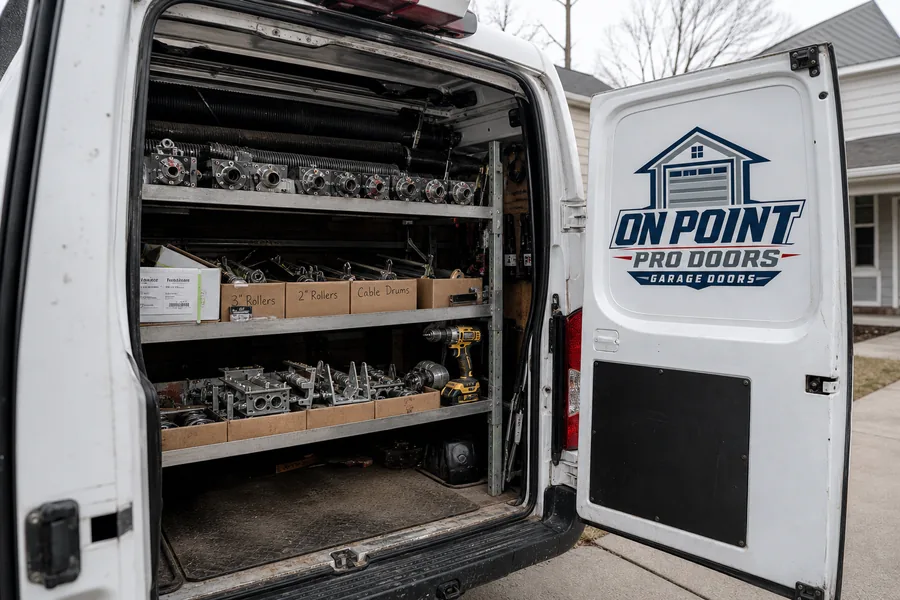
We provide complete garage door repair and installation throughout Brooklyn, Queens, Long Island & NJ. Every service truck rolls fully stocked with springs, cables, rollers, hinges, and the most-installed opener motors — that means most repairs in Brooklyn, Queens, Long Island & NJ are completed on the first visit, no parts-ordering delays, no return trips.
Snapped torsion or extension spring? Same-day replacement with high-cycle galvanized springs. We always replace pairs to keep the door balanced and prevent the second spring from failing within months. Spring replacement details →
Logic boards, drive belts, motor gears, photo-eye safety sensors, capacitors, limit switches — we diagnose every opener brand on a single visit. Opener repair details →
Clopay, Amarr, Wayne Dalton, CHI — full design consultation, permit handling where required, complete installation in a single day for most Brooklyn, Queens, Long Island & NJ homes. New door installation →
LiftMaster is the most-installed residential opener brand in the NYC metro — owned by The Chamberlain Group, it powers a majority of the door openers we encounter on service calls. Common LiftMaster models we repair include the 8500W (jackshaft wall-mount popular in Brooklyn brownstones with low headroom), 8550W and 8160W (whisper-quiet belt-drive units common in Long Island attached garages), the older 3280 and 3585 chain-drive workhorses still running in Brooklyn and Queens after 15+ years, and commercial-grade LiftMaster Elite units used in apartment building parking garages across Manhattan and Queens.
Working in Brooklyn, Queens, Long Island & NJ for years has shown us a few patterns. Spring failures cluster in winter when cold weather makes already-fatigued metal brittle — a spring with 9,500 cycles on its 10,000-cycle rating may quietly survive August but snap on a 20-degree January morning. Opener failures cluster in summer when capacitors break down in the heat. Cable failures follow spring failures by 30–90 days when the imbalanced door over-stresses the remaining cables.
LiftMaster is one of the most common garage door brands across our service area. Manufactured by Chamberlain Group, LiftMaster units have a strong reputation for durability when serviced correctly, and our technicians have factory-equivalent training on every LiftMaster model in residential service today. Whether you have a 8500W jackshaft or a LJ8950W jackshaft unit, we carry the parts and we know the failure patterns.
1. Diagnostic. Our tech reads the model and serial number, checks the logic board with a multimeter, tests safety reverse and photo eyes, and inspects the rail, trolley, and drive system. For LiftMaster specifically, we know the diagnostic codes — the wall-console blink patterns, the LED sequences, the audible beeps — so we identify the failure mode in 5-10 minutes instead of guessing.
3. Repair on first visit. Our trucks carry the most-common LiftMaster parts — boards, sprockets, gears, belts, sensors, transmitters, and receivers. About 9 out of 10 LiftMaster repairs we do are done on the first visit without ordering parts.
LiftMaster units typically last 12-18 years in residential use. Here is how we advise customers:
Most LiftMaster repairs are 30-60 minutes on-site. Full opener replacement is 90-120 minutes including remote programming and safety reverse calibration.
Yes — the most common LiftMaster parts (logic boards, sprockets, drive gears, belt segments, sensors, remotes) are stocked. For unusual or older models we may need to source the part, in which case we order it the same day and return for the install.
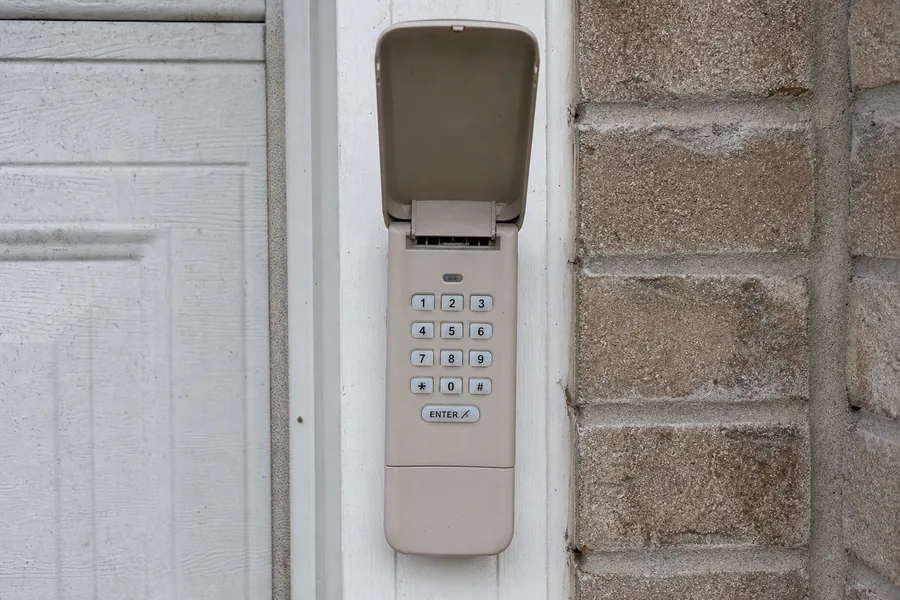
Most modern LiftMaster openers can pair with the original remote if it uses the same frequency family. If not, we include new remotes and program them on-site. Keypad reprogramming and HomeLink (vehicle) pairing is included.
Three usual culprits: rolling code mismatch (older receivers can't pair with newer remotes), failing receiver chip on the logic board, or the learn-button is stuck/dead. We diagnose in 10 minutes and either reprogram or replace the receiver/board.
Liftmaster doors and openers have specific failure modes our technicians see weekly across NYC, Long Island, and northern New Jersey. Knowing the pattern shortens the diagnosis from a 45-minute teardown to a 5-minute visual confirmation, and lets us stock the right replacement parts on the truck before we knock on your door.
The most-common Liftmaster symptoms we receive calls for: opener LED diagnostic codes (count the blinks — every Liftmaster model encodes a different fault into the blink pattern), trolley/carriage detachment from the chain or belt (audible "thunk" then door drops), gear-sprocket stripping inside the head unit (grinding noise on the open cycle, motor runs but door doesn't move), photo-eye misalignment from the LED-receiver pair (door reverses immediately on close attempt), force-limit auto-shutoff when the spring system is out of balance (door stops 6 inches off floor and reverses), and remote-pairing loss after a power-cycle event.
The structural side of Liftmaster doors — torsion springs, lift cables, rollers, hinges, panel sections — fails on the same physics-driven timeline as any brand: 10,000 cycles of factory torsion springs, 6–10 years of cable life, 8–12 years of nylon/steel rollers depending on grade. The Liftmaster hardware spec is generally midrange-to-premium and we stock cycle-life-upgraded replacements (25K and 50K springs, 13-ball-bearing nylon rollers, 7-strand galvanized cables) that outlast the factory specs.
Yes. They're common in Brooklyn garages with low ceilings, and they fail in the same few ways the ceiling units do.
On an older unit that's usually the gear or the capacitor. Either way, leave it and call; running it again wears the drive.
That's the receiver or the logic board taking a surge. Both are replaceable on the common models without changing the opener.
On any myQ-capable model, yes. If the garage is out of Wi-Fi range we'll tell you, because no setting fixes that.
Low sun on the sensors does this on west-facing garages in the late afternoon: the lens reads the glare as an obstruction. A small hood over the lens or a slight change of angle fixes it, and it's a common call in Nassau County in summer.
Yes. The technician reads the model off the housing and checks how it was set up. A unit installed on an unbalanced door gets the door balanced first, or the same fault comes straight back.
Free, across Kings County and the towns around it. The visit tells you what has failed and what it takes to put right, and no is a complete answer.
More often than not. A garage that won't shut is one of the calls the schedule keeps room for.
Around Brooklyn, Queens and Hudson County, one call gets you a two-hour slot and a heads-up call before the technician sets off. We don't buy leads and nobody on a phone judges a door they can't see.
Free estimate. Throughout New York and Nassau County, Jersey City, Hoboken, Yonkers, Westchester, Hudson County.
Describe the fault and we'll give you an honest arrival time. The visit and the estimate is free, anywhere in Kings County.
Easier to explain by phone? Call (929) 429-2429.
Tell us what the door is doing. The estimate is free either way.