
Garage Door Tune-Up in St. George, Staten Island
Local garage door tune-up across St. George and surrounding Staten Island blocks.
Garage Door Tune-Up: How We Handle It in St. George
Garage door problems in St. George are predictable once you've worked the area as long as we have. Same brands, same failure modes, same seasonal patterns — and we plan around all of it. St. George is one of Staten Island's most active neighborhoods, and our trucks roll through here every single day. We have technicians who know every street between Bay Street and Richmond Terrace, and we know the housing stock — the older 7-foot doors on pre-war properties, the modern 8-foot insulated doors on newer construction, the converted carriage houses, and the brownstone basement garages. The local climate is coastal exposure with salt air that accelerates corrosion on springs, cables, and unprotected hinges, and that affects garage doors in St. George homes in predictable ways.
St. George is in ZIP 10301. Our trucks are stocked specifically for the residential mix here — torsion springs in 8 IPPT calibrations, lift cables in 3 gauges, full sets of nylon rollers, photo-eye sensor pairs, the 10 most common LiftMaster and Chamberlain logic boards, and the parts inventory specific to brands we see in Staten Island most: LiftMaster, Chamberlain, Genie, Clopay.
Streets & Landmarks We Cover in St. George
We service every block of St. George. The streets and landmarks we know best:
Key streets and corridors: Bay Street, Staten Island Ferry, Richmond Terrace.
St. George sits inside ZIP 10301 and is part of the Staten Island borough of Richmond County. Average response time during business hours is under 60 minutes, and many calls land within 30-45 minutes when the closest truck is already routing through Staten Island. We don't dispatch from a contact center far from the neighborhood — our crew is local and our routes are built around Staten Island traffic patterns.
If you live near any of these streets, we are constantly in your area for routine service calls and emergency dispatch. Same-day appointments fill quickly during weekday peak hours; emergency dispatch (door stuck open, car trapped, spring snapped) is prioritized any time of day.
What to Expect When We Arrive in St. George
1. Safety Reverse Calibration on Every Job. Federal UL 325 safety standard requires every residential opener to reverse on contact and reverse when the photo-eye beam is broken. We test both before we leave — every job, every time, even if you didn't call about safety.
2. Truck-Stocked Inventory. Every truck carries: torsion springs in the eight most common IPPT calibrations, lift cables in three gauges, full sets of nylon rollers, photo-eye sensor pairs, the ten most common LiftMaster and Chamberlain logic boards, weather seal in 16-foot rolls, and a complete bottom seal retainer kit. Result: 92% first-visit completion rate.
3. Route Density. We run multiple trucks across Staten Island every day. The dispatch radius from the closest truck is short, which is why our typical response time in St. George is under 60 minutes during business hours — even at peak demand windows.
4. Follow-Up Check-In. For new opener installs we follow up at 30 days to confirm everything is still operating cleanly. If anything is off, we come back free.
5. Cleanup. Old springs, old cables, old opener heads, packing material — we haul it out on the truck. The garage stays cleaner when we leave than when we arrived.
How NYC Weather Affects Your St. George Door
Winter (December-March). Cold snaps cause spring stack stiffness and brittle plastic gears. Early-morning hits on the opener are the riskiest moment. We see a spike in spring breakage and gear-strip calls between January 5 and February 28.
Fall (September-November). Falling leaves clog tracks. Inspect rollers for any leaf debris that can cause the door to bind. Photo eyes should be wiped clean. Recheck weatherstripping before snow arrives.
Summer (June-August). Heat softens lubricants and accelerates rubber seal deterioration. A seal that lasted 6 winters can fail in one humid summer. Inspect bottom seal in July and replace before it crumbles.
St. George Garage Door Brand Coverage
- Genie — SilentMax 1200, ChainDrive 750, StealthDrive Connect 7155D, Wall Mount 6172H. Common issues: intellicode receiver replacement; blue dot beam misalignment; helical screw drive lubrication.
- LiftMaster — 8500W jackshaft, 8550WLB belt drive, 8160W chain drive, 3585 commercial. Common issues: logic board failure on 5+ year units; MyQ Wi-Fi pairing problems; rail belt fraying.
- Craftsman — 1/2 HP chain drive, 3/4 HP belt drive. Common issues: discontinued parts on pre-2014 units; obsolete logic boards.
What Goes Wrong with Garage Doors in St. George
- Opener drive gear stripping. The plastic main gear inside chain-drive openers wears down after years of cycles. Replacing the gear is $190-$240; doing it before complete failure prevents collateral damage to the motor.
- Sticking or binding panels. Wood doors and steel doors can warp or develop hinge play. We tighten hinge hardware, lubricate the pivot pins, and adjust track spacing if needed.
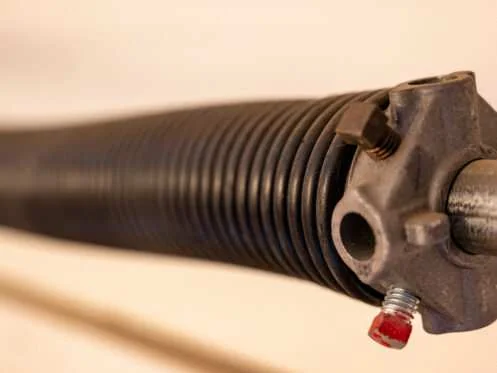
- Broken torsion springs. The single most common emergency call. Springs fatigue from cycle count — a daily-use door at 10,000 cycles is right at the average lifetime mark. We bring matched IPPT (inches per pound per turn) springs sized to your specific door, calibrate, and balance-test.
- Noisy chain drive openers. An old chain drive opener with stretched chain and worn sprocket wakes up the whole house. Tightening the chain is a temporary fix; the real solution is sprocket and chain replacement or upgrade to belt drive.
- Off-track door. A jumped roller, bent track, or impact damage can pull the door out of alignment. We dispatch two technicians, reset the door to the rail, inspect for hidden bent track, and replace damaged rollers.
- Photo-eye misalignment and safety reverse failure. Federal UL 325 standard requires safety reverse. A door that won't close is almost always a photo eye issue — leaf, spider web, sun glare, or one eye knocked out of plumb.
St. George Garage Door Service FAQ
What should I do right now if my spring just broke?
Do not try to operate the door. A broken spring means the opener is fighting dead weight and can strip its gears or bend the rail. If a car is trapped inside and you must exit, do not manually lift the door past chest height — the cables are no longer guiding it and a panel can drop unexpectedly. Call us immediately and we will dispatch.
Can you work on doors with TorqueMaster springs?
Yes — TorqueMaster is a Wayne Dalton-specific spring system housed inside a tube above the door. Replacement requires the matching brand-specific spring assembly, not a standard torsion spring. We carry the calibrations in stock.
My door reverses just before closing — why?
Almost always a photo-eye issue: a leaf, spider web, sun glare, or one eye knocked out of plumb. We clean, realign, and test. If photo eyes check out, the next suspect is the close-force setting on the opener — it may need recalibration.
Do you offer warranties?
Yes — 1 year parts and labor on standard springs, 3 years on high-cycle springs, 5 years on LiftMaster motors, 1 year on new openers, 90 days on most repair labor. Written warranty provided on the invoice.
What if I just need a new remote programmed?
$89-$139 depending on opener brand and number of remotes. We program OEM and aftermarket remotes, set up keypads, and pair HomeLink in your vehicle.
Will my opener still work after a power outage?
Yes — pull the red emergency-release cord to disengage the opener trolley from the rail, then lift the door manually. To reset, lower the door, pull the cord toward the door (not the motor), and run the opener once.
Why is my garage door so loud all of a sudden?
Three usual culprits: rollers wearing out (steel rollers grind as they age), hinges drying out (lubrication gone), or springs starting to fatigue. A tune-up usually solves all three for $129-$179. If the noise started after a specific event (storm, slammed shut), there may be a track issue we should inspect.
Reserve Service in St. George
Submit the form and we'll confirm quickly.
RESERVE NOW
Request goes directly to our schedule.
What Customers Say
Real verified reviews on Thumbtack and Facebook from homeowners across our service area. We have a 4.9 / 5 average across 287+ reviews and counting:
"Spring snapped at 8 AM and they were at my house in Nassau before 10. Explained everything and the door is quiet again. Up-front quote, no surprises."
Mike R. · Garden City, NY
"Opener was struggling and the door kept reversing. Quick fix plus safety check. No pressure, just straight answers. Highly recommend."
Sara K. · Hoboken, NJ
"They replaced rollers and adjusted the tracks. Night and day difference — way smoother and quieter. Done in under an hour."
Anthony D. · Massapequa, NY
"Same-day install on a new opener. Clean work, walked me through the keypad and remotes, and hauled everything out. A+ from start to finish."
Jenna P. · Jersey City, NJ
Garage Door Safety — UL 325 Standard and Why It Matters
Federal UL 325 is the safety standard governing residential garage door openers. It exists because in the early 1990s, multiple children died in garage door accidents — doors closing on small bodies, doors falling because of broken safety systems. Every modern opener is required to meet UL 325, and we test compliance on every single job:
- Photo-eye reverse. The two photo-eye sensors near the floor must reverse the door if their beam is broken during closing. We test by walking through the beam path during a closing cycle. If it doesn't reverse instantly, we troubleshoot.
- Contact reverse. The door must reverse on physical contact with an obstacle. We test by placing a 2x4 block flat on the ground in the door path. The door must reverse upward within 2 seconds of contact.
- Force calibration. The opener's down-force setting controls how much resistance triggers a reverse. Set too high, the door can crush an obstacle before reversing. We calibrate per UL 325 using a force gauge.
- Manual release reachable. The red emergency-release cord must be accessible from inside the garage and rated to allow manual disengagement during a power outage.
If your door fails any of these tests, we don't leave until it's fixed — even if you didn't call us about safety. This is non-negotiable. Most "won't close" calls actually trace to a photo-eye misalignment which is a safety system catching a real problem; bypassing it is illegal under UL 325.