
Garage Door Opener Repair in Manhattan Valley, Manhattan
Local garage door opener repair across Manhattan Valley and surrounding Manhattan blocks.
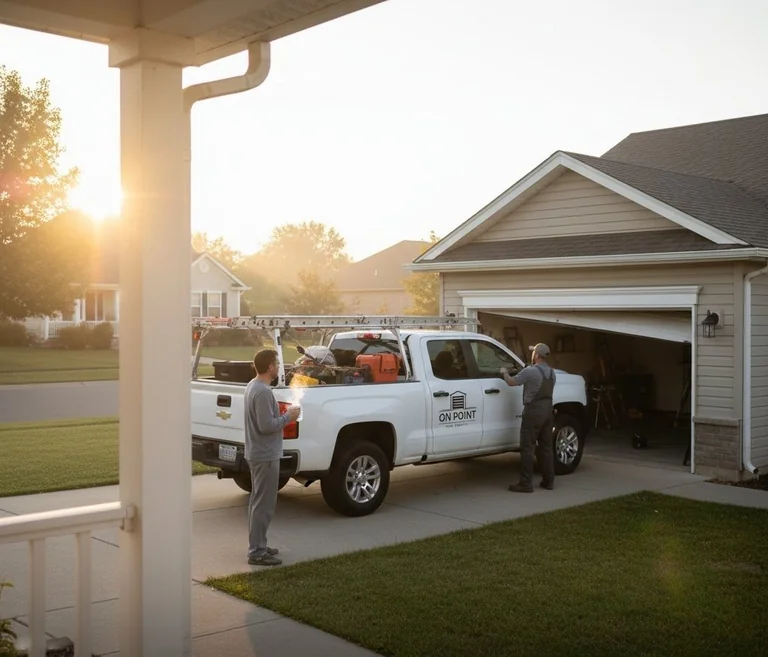
Local Garage Door Opener Repair Across Manhattan Valley
Whether you're in a brownstone, a single-family in Manhattan Valley, or a commercial building, our crew has worked your block before. We know the door types, the access constraints, and the weather realities. Manhattan Valley is one of Manhattan's most active neighborhoods, and our trucks roll through here every single day. We have technicians who know every street between Columbus Avenue and Central Park West, and we know the housing stock — the older 7-foot doors on pre-war properties, the modern 8-foot insulated doors on newer construction, the converted carriage houses, and the brownstone basement garages. The local climate is urban climate with salt-air corrosion from the Hudson and East Rivers, and that affects garage doors in Manhattan Valley homes in predictable ways.
Manhattan Valley is in ZIP 10025. Our trucks are stocked specifically for the residential mix here — torsion springs in 8 IPPT calibrations, lift cables in 3 gauges, full sets of nylon rollers, photo-eye sensor pairs, the 10 most common LiftMaster and Chamberlain logic boards, and the parts inventory specific to brands we see in Manhattan most: LiftMaster jackshaft, Chamberlain wall-mount, Genie SilentMax.
Common Garage Door Opener Repair Issues in Manhattan Valley Homes
- Worn rollers and noisy operation. Steel rollers wear and start grinding. Replacing all 10 rollers with 13-ball-bearing nylon rollers transforms a loud door into a quiet one.
- Remote and keypad failure. Dead remote batteries, water-damaged keypads, or rolling-code mismatches between old and new remotes. We diagnose, reprogram, or replace.
- Opener motor and logic board failure. Most residential openers run 12-18 years before the logic board or motor gives up. We service every major brand and keep common boards in stock for first-visit repair.
- Broken torsion springs. The single most common emergency call. Springs fatigue from cycle count — a daily-use door at 10,000 cycles is right at the average lifetime mark. We bring matched IPPT (inches per pound per turn) springs sized to your specific door, calibrate, and balance-test.
- Photo-eye misalignment and safety reverse failure. Federal UL 325 standard requires safety reverse. A door that won't close is almost always a photo eye issue — leaf, spider web, sun glare, or one eye knocked out of plumb.
Manhattan Valley Service Calls This Year
The remote that won't program. Customer in Manhattan Valley bought a non-OEM clicker from Amazon. It pairs to the opener but only works from 5 feet away. Cheap clicker has a weak transmitter. We swap to a real LiftMaster Security+ 2.0 remote, pair on-site, range hits 35 feet. $89, ten minutes.
The misaligned photo-eye fix. Customer in Manhattan Valley called because the door kept reversing right before closing. On arrival we found the right-side photo-eye knocked out of plumb by 4 degrees — a kid had hit it with a basketball weeks earlier. Realigned, tightened the bracket, tested with multiple closing cycles. $79 service charge, problem solved.
The new construction install. Builder in Manhattan Valley needed three garage doors installed in a new tri-level. We measured rough openings, ordered insulated steel doors, installed tracks, hung panels, set torsion springs to door weight, and synced LiftMaster jackshaft openers to MyQ. $4,800 fully installed for all three doors, completed in one day.
The wood-door tune-up. Customer in Manhattan Valley has a 22-year-old wood overlay door with original springs. Annual tune-up: lubrication, hinge tightening, spring inspection, photo-eye test. We caught one cable starting to fray and replaced it before failure. Customer paid $179 for tune-up plus $190 for the cable, saving an emergency call later.
Manhattan Valley Garage Door Brand Coverage
- Genie — SilentMax 1200, ChainDrive 750, StealthDrive Connect 7155D, Wall Mount 6172H. Common issues: intellicode receiver replacement; blue dot beam misalignment; helical screw drive lubrication.
- Craftsman — 1/2 HP chain drive, 3/4 HP belt drive. Common issues: discontinued parts on pre-2014 units; obsolete logic boards.
- Wayne Dalton — ProDrive belt, TorqueMaster spring system, 9100 series steel. Common issues: TorqueMaster sleeve replacement; panel hinge crack; quiet operator gear failure.
- LiftMaster — 8500W jackshaft, 8550WLB belt drive, 8160W chain drive, 3585 commercial. Common issues: logic board failure on 5+ year units; MyQ Wi-Fi pairing problems; rail belt fraying.
- Chamberlain — B970 belt drive, B6753T smart, B1381 jackshaft. Common issues: MyQ disconnect after firmware updates; sprocket wear at 8-year mark; wall console blink codes.
Our Manhattan Valley Service Workflow
1. Route Density. We run multiple trucks across Manhattan every day. The dispatch radius from the closest truck is short, which is why our typical response time in Manhattan Valley is under 60 minutes during business hours — even at peak demand windows.
2. Truck-Stocked Inventory. Every truck carries: torsion springs in the eight most common IPPT calibrations, lift cables in three gauges, full sets of nylon rollers, photo-eye sensor pairs, the ten most common LiftMaster and Chamberlain logic boards, weather seal in 16-foot rolls, and a complete bottom seal retainer kit. Result: 92% first-visit completion rate.
3. Phone Diagnostic Before Dispatch. When you call we ask three questions: what is the door doing right now, did you hear a loud bang or grinding sound, and what brand is the opener if you can read the label. From those answers we predict the failure mode and dispatch the right truck with the right parts.
4. Up-Front Pricing Before Any Work. We diagnose, then we quote. You approve the price in writing before any tool comes out of the truck. No surprises, no scope creep, no "while I'm here" upsells.
Why a Local Crew Beats a National Chain in Manhattan Valley
National garage door franchises route your call to a contact center far from Manhattan Valley. They quote a flat rate, send the closest available tech regardless of training, and reschedule when something complicated comes up. Our crew has been to Manhattan Valley thousands of times. We know which streets have access constraints, which buildings have older 7-foot doors versus modern 8-foot standard, and which seasonal patterns drive which failure types.
When you call us, you're not getting routed to a contact center. You're getting a dispatcher who can pull up your address on a route map and dispatch the closest of our trucks — usually under 60 minutes during business hours. We carry insurance certificates for property managers and HOAs in Manhattan Valley who require proof for work-order approval, file W-9s on request, and accept ACH for commercial accounts.
Daily Routes Through Manhattan Valley
We service every block of Manhattan Valley. The streets and landmarks we know best:
Key streets and corridors: Columbus Avenue, Amsterdam Avenue, Central Park West.
Manhattan Valley sits inside ZIP 10025 and is part of the Manhattan borough of New York County. Average response time during business hours is under 60 minutes, and many calls land within 30-45 minutes when the closest truck is already routing through Manhattan. We don't dispatch from a contact center far from the neighborhood — our crew is local and our routes are built around Manhattan traffic patterns.
If you live near any of these streets, we are constantly in your area for routine service calls and emergency dispatch. Same-day appointments fill quickly during weekday peak hours; emergency dispatch (door stuck open, car trapped, spring snapped) is prioritized any time of day.
FAQ — Garage Door Opener Repair in Manhattan Valley
How fast can you get a technician to Manhattan Valley?
During business hours we are typically on-site within 60 minutes for emergency calls in Manhattan Valley. For scheduled appointments we offer two-hour windows starting at 8 AM. After-hours dispatch is available for true emergencies — door stuck open, car trapped inside, broken spring blocking exit.
Are you licensed and insured to work in Manhattan Valley?
Yes — fully licensed and insured for residential and commercial garage door work across all of NY. Insurance certificates available on request for property managers and HOAs.
Do you offer financing for big jobs?
Yes — instant approval at the truck for jobs over $1,000 through our financing partner. 12-month no-interest options available.
What should I do right now if my spring just broke?
Do not try to operate the door. A broken spring means the opener is fighting dead weight and can strip its gears or bend the rail. If a car is trapped inside and you must exit, do not manually lift the door past chest height — the cables are no longer guiding it and a panel can drop unexpectedly. Call us immediately and we will dispatch.
Can I just replace one cable instead of both?
No, and any technician offering to do that is cutting corners. Cables are matched pairs — when one fails the other is right behind it. Replacing only one means another emergency call within 6-12 months. We always replace both sides.
Reserve Service in Manhattan Valley
Submit the form and we'll confirm quickly.
RESERVE NOW
Request goes directly to our schedule.
Inside Our Trucks — Why First-Visit Completion Hits 92%
National-franchise techs roll up to your house, do the diagnostic, then need to go order parts. We don't. Each of our service trucks is a rolling inventory built around the failure patterns we see across NYC, Long Island, and New Jersey:
- Torsion springs in 8 IPPT calibrations covering 95% of residential door weights from 130 lb to 320 lb
- Extension springs in 4 stretch ratings for older 7-foot doors
- Lift cables in 3 gauges (1/8", 5/32", 3/16") rated for door weights up to 400 lb
- Full sets of 13-ball-bearing nylon rollers (10 per door) for noise reduction upgrades
- 10 most common LiftMaster, Chamberlain, Genie logic boards including pre-2018 generation
- Photo-eye sensor pairs (LiftMaster, Chamberlain, Genie) including the green/red Sears-spec pairs for Craftsman openers
- Remote transmitters: Security+ 2.0, Genie Intellicode, Chamberlain Smart, Wayne Dalton, Marantec, Linear Megacode
- 16-foot rolls of EPDM bottom seal in 3 widths plus retainer track and end caps
- Replacement hinges (#1 through #5), bottom brackets, top brackets, jamb hardware, drum cones
- Winding bars in matched pairs, calibrated tension gauges, fish tape, multimeter, RF signal analyzer
That inventory is the reason 92% of jobs are completed on the first visit without ordering parts. The remaining 8% are usually obsolete pre-2010 units where a part has to be sourced from a regional distributor — we order same-day and return within 24-48 hours.
Garage Door Safety — UL 325 Standard and Why It Matters
Federal UL 325 is the safety standard governing residential garage door openers. It exists because in the early 1990s, multiple children died in garage door accidents — doors closing on small bodies, doors falling because of broken safety systems. Every modern opener is required to meet UL 325, and we test compliance on every single job:
- Photo-eye reverse. The two photo-eye sensors near the floor must reverse the door if their beam is broken during closing. We test by walking through the beam path during a closing cycle. If it doesn't reverse instantly, we troubleshoot.
- Contact reverse. The door must reverse on physical contact with an obstacle. We test by placing a 2x4 block flat on the ground in the door path. The door must reverse upward within 2 seconds of contact.
- Force calibration. The opener's down-force setting controls how much resistance triggers a reverse. Set too high, the door can crush an obstacle before reversing. We calibrate per UL 325 using a force gauge.
- Manual release reachable. The red emergency-release cord must be accessible from inside the garage and rated to allow manual disengagement during a power outage.
If your door fails any of these tests, we don't leave until it's fixed — even if you didn't call us about safety. This is non-negotiable. Most "won't close" calls actually trace to a photo-eye misalignment which is a safety system catching a real problem; bypassing it is illegal under UL 325.