
Commercial Garage Door Repair in Cresskill, NJ
Roll-ups, dock doors, and high-cycle commercial gates. Serving Cresskill and surrounding neighborhoods.
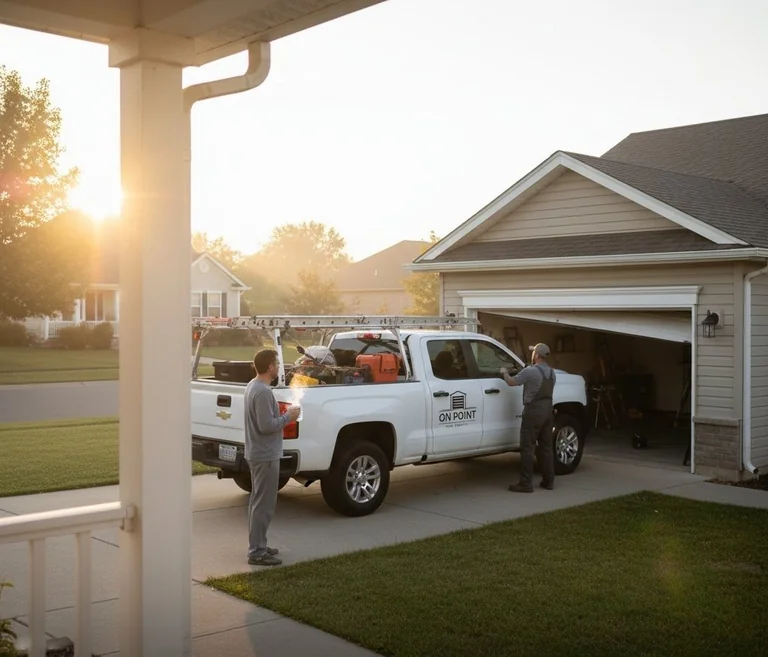
Commercial Repair in Cresskill, NJ — Local Crew, Real Routes, Same Day
When your garage door fails in Cresskill, you need a technician who already knows the neighborhoods, the housing stock, and the typical issues homeowners face here. Cresskill sits about 8 miles from Midtown Manhattan, putting us inside our core same-day response zone. Local climate is coastal and inland four-season — heavy snow and salt-air corrosion near the shore, and that affects garage doors in predictable ways — frozen weatherstripping in winter, swollen wood panels in summer, salt-corroded springs in coastal pockets, and rust at the bottom seal where snow piles against the door.
If you are near Cresskill Plaza, you are squarely inside our daily service zone — we are there constantly.
Commercial Repair Across Cresskill
Commercial Repair service in Cresskill runs across every neighborhood, from central Cresskill to central Cresskill. We have multiple trucks rotating through Bergen County, NJ every day so dispatch radius is short.
Cresskill has its own quirks for garage door work. The local climate, the housing stock, and the seasonal failure patterns all factor into how we diagnose and fix. We are not a national franchise dispatching from a call center — we are a local crew with local routes and local truck inventory tuned to NJ weather and NJ housing.
Failure Patterns We See Across Cresskill
- Photo-eye misalignment and safety reverse failure. Federal UL 325 standard requires safety reverse. A door that won't close is almost always a photo eye issue — leaf, spider web, sun glare, or one eye knocked out of plumb.
- Remote and keypad failure. Dead remote batteries, water-damaged keypads, or rolling-code mismatches between old and new remotes. We diagnose, reprogram, or replace.
- Weatherstripping and bottom seal degradation. The rubber bottom seal compresses and cracks after 5-8 years. Replacing it stops drafts, water intrusion, and pest entry. We use UL-rated EPDM seals.
- Frayed or snapped lift cables. Cables run inside the drums on both sides. They wear from corrosion, especially in NJ weather. We replace both sides as a matched pair using 7×7 aircraft-grade cable rated to door weight.
- Opener drive gear stripping. The plastic main gear inside chain-drive openers wears down after years of cycles. Replacing the gear is $190-$240; doing it before complete failure prevents collateral damage to the motor.
Cresskill Service That Knows the Neighborhoods
National franchise call centers route your call to a dispatcher who has never been to Cresskill. They quote a flat rate, send the closest available tech regardless of training, and when something complicated comes up they order parts and reschedule. We're different. Our crew has been to Cresskill thousands of times. We know which streets have access constraints, which neighborhoods have older 7-foot doors versus modern 8-foot standard, and which NJ weather patterns drive which failure types.
When you call us, you are not getting routed to a contact center. You are getting a dispatcher who can pull up your address on a route map and dispatch the closest of our trucks — usually under 60 minutes during business hours.
We carry insurance certificates for property managers and HOAs in Cresskill who require proof for work-order approval. We file W-9s on request, accept ACH for commercial accounts, and offer net-30 invoicing for verified property management companies.
Every Major Garage Door Brand We Work On
- Genie — SilentMax 1200, ChainDrive 750, StealthDrive Connect 7155D, Wall Mount 6172H. Common issues we fix: intellicode receiver replacement; blue dot beam misalignment; helical screw drive lubrication. Parent: Overhead Door Corporation.
- Chamberlain — B970 belt drive, B6753T smart, B1381 jackshaft. Common issues we fix: MyQ disconnect after firmware updates; sprocket wear at 8-year mark; wall console blink codes. Parent: Chamberlain Group.
- Wayne Dalton — ProDrive belt, TorqueMaster spring system, 9100 series steel. Common issues we fix: TorqueMaster sleeve replacement; panel hinge crack; quiet operator gear failure. Parent: Wayne Dalton.
- Craftsman — 1/2 HP chain drive, 3/4 HP belt drive. Common issues we fix: discontinued parts on pre-2014 units; obsolete logic boards. Parent: legacy Sears.
- LiftMaster — 8500W jackshaft, 8550WLB belt drive, 8160W chain drive, 3585 commercial. Common issues we fix: logic board failure on 5+ year units; MyQ Wi-Fi pairing problems; rail belt fraying. Parent: Chamberlain Group.
If your brand is not on this list, call us anyway — we work on every major and minor garage door manufacturer in active service across Bergen County, NJ.
Year-Round Maintenance Tips for Cresskill Homeowners
Summer (June-August). Heat softens lubricants and accelerates rubber seal deterioration. A seal that lasted 6 winters can fail in one humid summer. Inspect bottom seal in July and replace before it crumbles.
Fall (September-November). Falling leaves clog tracks. Inspect rollers for any leaf debris that can cause the door to bind. Photo eyes should be wiped clean. Recheck weatherstripping before snow arrives.
Spring (April-May). Tune-up season. Springs that fatigued through winter are at peak risk now. Have the door balance checked — disconnect the opener manually and lift the door to chest height. It should stay roughly in place.
The Step-by-Step Service Workflow in Cresskill
1. Route Density. We run multiple trucks across Bergen County, NJ every day. The dispatch radius from the closest truck is short, which is why our typical response time in Cresskill is under 60 minutes during business hours — even at peak demand windows.
2. Written Warranty. 1 year parts and labor on standard springs, 3 years on high-cycle 25,000-cycle springs, 5 years on LiftMaster motors, 1 year on new openers, 90 days on most repair labor. Written on the invoice, not buried in fine print.
3. Follow-Up Check-In. For new opener installs we follow up at 30 days to confirm everything is still operating cleanly. If anything is off, we come back free.
4. Safety Reverse Calibration on Every Job. Federal UL 325 safety standard requires every residential opener to reverse on contact and reverse when the photo-eye beam is broken. We test both before we leave — every job, every time, even if you didn't call about safety.
5. Cleanup. Old springs, old cables, old opener heads, packing material — we haul it out on the truck. The garage stays cleaner when we leave than when we arrived.
Quick Answers — Commercial Repair in Cresskill
Do you offer financing for big jobs?
Yes — instant approval at the truck for jobs over $1,000 through our financing partner. 12-month no-interest options available.
Do you service garage doors for landlords and property managers?
Yes — we offer net-30 invoicing, W-9 on file, COI/insurance certificates for portfolio approval, and a single point of contact for multi-unit work orders. Discounted rates for 5+ units.
Will my opener still work after a power outage?
Yes — pull the red emergency-release cord to disengage the opener trolley from the rail, then lift the door manually. To reset, lower the door, pull the cord toward the door (not the motor), and run the opener once.
How often should I have my garage door serviced?
Once a year for residential, twice a year for high-cycle commercial. A tune-up catches worn rollers, fatigued springs, loose hinges, and misaligned tracks before they fail.
What's the difference between belt drive and chain drive openers?
Belt drive uses a rubber-reinforced belt and runs significantly quieter — best for garages attached to bedrooms. Chain drive is louder but cheaper and more durable. For most Cresskill homeowners we recommend belt drive in finished homes, chain drive in detached garages or workshops.
What if I just need a new remote programmed?
$89-$139 depending on opener brand and number of remotes. We program OEM and aftermarket remotes, set up keypads, and pair HomeLink in your vehicle.
Are your prices the same as the big national chains?
Generally lower. National chains build call-center overhead and franchise royalties into their pricing. We're a local crew — no franchise fees, no overhead bloat. Compare apples-to-apples and we usually beat the chains by 10-25%.
When to DIY and When to Call a Pro
We tell every customer the truth: there are some things you can absolutely DIY, and some things you should never touch. Here's the honest breakdown:
SAFE TO DIY:
- Replacing remote batteries (9V or AA, depending on model)
- Cleaning and dusting photo-eye lenses
- Tightening bolts on hinges and brackets if visible (use a 7/16" socket; do not over-tighten)
- Lubricating tracks, hinges, and rollers with white lithium grease (NEVER WD-40 — it's a solvent and washes lubricant out)
- Reprogramming HomeLink in your vehicle
- Resetting the opener via wall-console reset button
NEVER DIY:
- Spring replacement — the springs hold 800-1,500 lbs of stored energy and have killed DIYers
- Cable replacement — same stored-energy issue, plus precise tension calibration
- Track adjustment when off-track — door will fall
- Opener motor or logic board work — voltage hazard plus calibration issues
- Anything involving disconnecting the spring stack
If you've already started a DIY repair and the door is now in a worse state, we don't lecture — we just fix it. The "you started it" surcharge does not exist on our invoices.
Garage Door Safety — UL 325 Standard and Why It Matters
Federal UL 325 is the safety standard governing residential garage door openers. It exists because in the early 1990s, multiple children died in garage door accidents — doors closing on small bodies, doors falling because of broken safety systems. Every modern opener is required to meet UL 325, and we test compliance on every single job:
- Photo-eye reverse. The two photo-eye sensors near the floor must reverse the door if their beam is broken during closing. We test by walking through the beam path during a closing cycle. If it doesn't reverse instantly, we troubleshoot.
- Contact reverse. The door must reverse on physical contact with an obstacle. We test by placing a 2x4 block flat on the ground in the door path. The door must reverse upward within 2 seconds of contact.
- Force calibration. The opener's down-force setting controls how much resistance triggers a reverse. Set too high, the door can crush an obstacle before reversing. We calibrate per UL 325 using a force gauge.
- Manual release reachable. The red emergency-release cord must be accessible from inside the garage and rated to allow manual disengagement during a power outage.
If your door fails any of these tests, we don't leave until it's fixed — even if you didn't call us about safety. This is non-negotiable. Most "won't close" calls actually trace to a photo-eye misalignment which is a safety system catching a real problem; bypassing it is illegal under UL 325.
What Customers Say
Real verified reviews on Thumbtack and Facebook from homeowners across our service area. We have a 4.9 / 5 average across 287+ reviews and counting:
"Spring snapped at 8 AM and they were at my house in Nassau before 10. Explained everything and the door is quiet again. Up-front quote, no surprises."
Mike R. · Garden City, NY
"Opener was struggling and the door kept reversing. Quick fix plus safety check. No pressure, just straight answers. Highly recommend."
Sara K. · Hoboken, NJ
"They replaced rollers and adjusted the tracks. Night and day difference — way smoother and quieter. Done in under an hour."
Anthony D. · Massapequa, NY
"Same-day install on a new opener. Clean work, walked me through the keypad and remotes, and hauled everything out. A+ from start to finish."
Jenna P. · Jersey City, NJ