
24/7 Emergency Garage Door Repair in Mountain Lakes, NJ
Door stuck open, car trapped inside, broken spring blocking exit. Serving Mountain Lakes and surrounding neighborhoods.
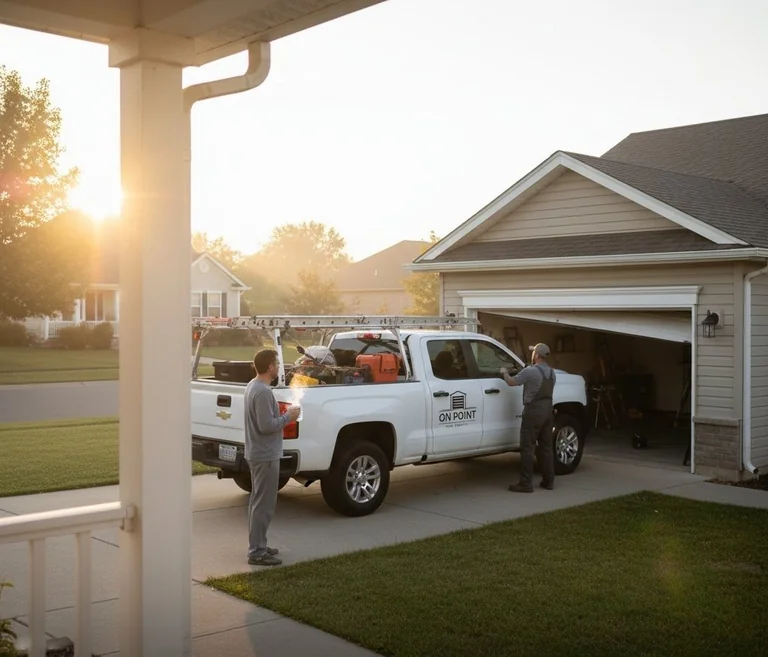
Emergency Repair: How We Handle It in Mountain Lakes
When your garage door fails in Mountain Lakes, you need a technician who already knows the neighborhoods, the housing stock, and the typical issues homeowners face here. Mountain Lakes sits about 27 miles from Midtown Manhattan, putting us inside our core same-day response zone. Local climate is coastal and inland four-season — heavy snow and salt-air corrosion near the shore, and that affects garage doors in predictable ways — frozen weatherstripping in winter, swollen wood panels in summer, salt-corroded springs in coastal pockets, and rust at the bottom seal where snow piles against the door.
If you are near Mountain Lakes train, you are squarely inside our daily service zone — we are there constantly.
Mountain Lakes Garage Door Brands We Repair
- Craftsman — 1/2 HP chain drive, 3/4 HP belt drive. Common issues we fix: discontinued parts on pre-2014 units; obsolete logic boards. Parent: legacy Sears.
- LiftMaster — 8500W jackshaft, 8550WLB belt drive, 8160W chain drive, 3585 commercial. Common issues we fix: logic board failure on 5+ year units; MyQ Wi-Fi pairing problems; rail belt fraying. Parent: Chamberlain Group.
- Chamberlain — B970 belt drive, B6753T smart, B1381 jackshaft. Common issues we fix: MyQ disconnect after firmware updates; sprocket wear at 8-year mark; wall console blink codes. Parent: Chamberlain Group.
- Wayne Dalton — ProDrive belt, TorqueMaster spring system, 9100 series steel. Common issues we fix: TorqueMaster sleeve replacement; panel hinge crack; quiet operator gear failure. Parent: Wayne Dalton.
If your brand is not on this list, call us anyway — we work on every major and minor garage door manufacturer in active service across Morris County, NJ.
Seasonal Garage Door Care in Mountain Lakes, NJ
Spring (April-May). Tune-up season. Springs that fatigued through winter are at peak risk now. Have the door balance checked — disconnect the opener manually and lift the door to chest height. It should stay roughly in place.
Spring (April-May). Pollen and tree debris clog tracks and photo eyes. Wipe the eye lenses, flush the tracks with a brush, and check that the bottom seal hasn't taken winter damage.
Summer (June-August). Heat softens lubricants and accelerates rubber seal deterioration. A seal that lasted 6 winters can fail in one humid summer. Inspect bottom seal in July and replace before it crumbles.
Winter (December-March). The biggest enemy is bottom-seal freeze-up. Snow melts during the day, refreezes at night, and bonds the rubber seal to the concrete. Lubricate hinges and rollers monthly with white lithium grease — never WD-40. Keep the seal area clear of snow.
The Garage Door Problems We See Most in Mountain Lakes
- Broken torsion springs. The single most common emergency call. Springs fatigue from cycle count — a daily-use door at 10,000 cycles is right at the average lifetime mark. We bring matched IPPT (inches per pound per turn) springs sized to your specific door, calibrate, and balance-test.
- Bottom bracket corrosion. The bottom bracket (where the cable attaches at the lowest panel) takes salt-water spray and snowmelt. Corroded brackets fail under tension. We replace with stainless or galvanized.
- Opener motor and logic board failure. Most residential openers run 12-18 years before the logic board or motor gives up. We service every major brand and keep common boards in stock for first-visit repair.
- Sticking or binding panels. Wood doors and steel doors can warp or develop hinge play. We tighten hinge hardware, lubricate the pivot pins, and adjust track spacing if needed.
- Weatherstripping and bottom seal degradation. The rubber bottom seal compresses and cracks after 5-8 years. Replacing it stops drafts, water intrusion, and pest entry. We use UL-rated EPDM seals.
- Remote and keypad failure. Dead remote batteries, water-damaged keypads, or rolling-code mismatches between old and new remotes. We diagnose, reprogram, or replace.
- Photo-eye misalignment and safety reverse failure. Federal UL 325 standard requires safety reverse. A door that won't close is almost always a photo eye issue — leaf, spider web, sun glare, or one eye knocked out of plumb.
The Step-by-Step Service Workflow in Mountain Lakes
1. Up-Front Pricing Before Any Work. We diagnose, then we quote. You approve the price in writing before any tool comes out of the truck. No surprises, no scope creep, no "while I'm here" upsells.
2. Phone Diagnostic Before Dispatch. When you call we ask three questions: what is the door doing right now, did you hear a loud bang or grinding sound, and what brand is the opener if you can read the label. From those answers we predict the failure mode and dispatch the right truck with the right parts.
3. Safety Reverse Calibration on Every Job. Federal UL 325 safety standard requires every residential opener to reverse on contact and reverse when the photo-eye beam is broken. We test both before we leave — every job, every time, even if you didn't call about safety.
4. Follow-Up Check-In. For new opener installs we follow up at 30 days to confirm everything is still operating cleanly. If anything is off, we come back free.
5. Written Warranty. 1 year parts and labor on standard springs, 3 years on high-cycle 25,000-cycle springs, 5 years on LiftMaster motors, 1 year on new openers, 90 days on most repair labor. Written on the invoice, not buried in fine print.
Sample Jobs from Our Mountain Lakes Service Logs
The misaligned photo-eye fix. Customer in Mountain Lakes called because the door kept reversing right before closing. On arrival we found the right-side photo-eye knocked out of plumb by 4 degrees — a kid had hit it with a basketball weeks earlier. Realigned, tightened the bracket, tested with multiple closing cycles. $79 service charge, problem solved.
The remote that won't program. Customer in Mountain Lakes bought a non-OEM clicker from Amazon. It pairs to the opener but only works from 5 feet away. Cheap clicker has a weak transmitter. We swap to a real LiftMaster Security+ 2.0 remote, pair on-site, range hits 35 feet. $89, ten minutes.
The water-damaged keypad. Friday afternoon storm soaked an outdoor keypad mounted on the garage frame in Mountain Lakes. Backlight flickered, then died. We replaced the keypad with a sealed Genie GIK-R rated for outdoor mounting, reprogrammed the customer's code, and re-sealed the housing. $149 done.
The HOA opener replacement. Property manager in Mountain Lakes called for a unit-by-unit replacement of 12 obsolete pre-2010 Stanley openers (Stanley exited the market — no parts available). We scheduled four units per day for three days, staged the LiftMaster 8500W replacements, programmed all remotes, and provided net-30 invoicing. Volume pricing kicked in at $480/unit installed.
Common Questions from Mountain Lakes Homeowners
Do you offer financing for big jobs?
Yes — instant approval at the truck for jobs over $1,000 through our financing partner. 12-month no-interest options available.
What should I do right now if my spring just broke?
Do not try to operate the door. A broken spring means the opener is fighting dead weight and can strip its gears or bend the rail. If a car is trapped inside and you must exit, do not manually lift the door past chest height — the cables are no longer guiding it and a panel can drop unexpectedly. Call us immediately and we will dispatch.
Do you service garage doors for landlords and property managers?
Yes — we offer net-30 invoicing, W-9 on file, COI/insurance certificates for portfolio approval, and a single point of contact for multi-unit work orders. Discounted rates for 5+ units.
Are you licensed and insured to work in Mountain Lakes?
Yes — fully licensed and insured for residential and commercial garage door work across all of NJ. Insurance certificates available on request for property managers and HOAs.
What's the difference between belt drive and chain drive openers?
Belt drive uses a rubber-reinforced belt and runs significantly quieter — best for garages attached to bedrooms. Chain drive is louder but cheaper and more durable. For most Mountain Lakes homeowners we recommend belt drive in finished homes, chain drive in detached garages or workshops.