
New Garage Door Installation in Lyndhurst, NJ
Full panel-and-track install in steel, wood-overlay, or insulated options. Serving Lyndhurst and surrounding neighborhoods.
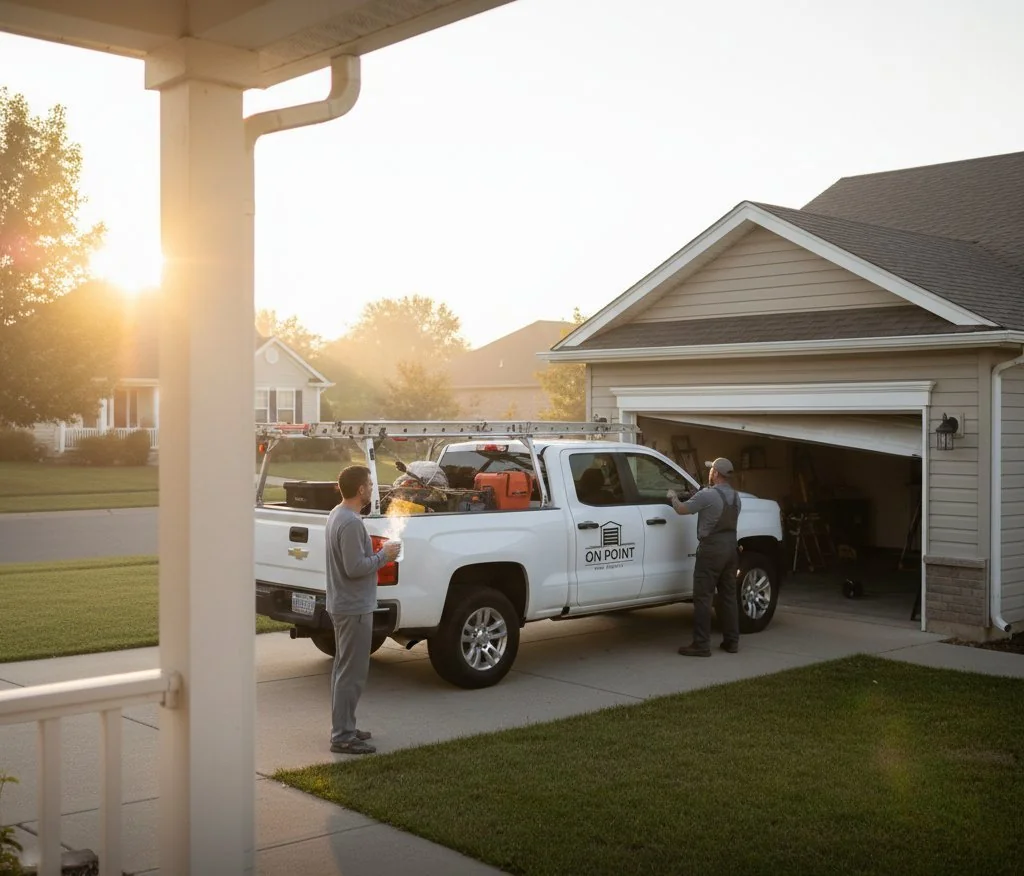
Trusted New Installation Across Lyndhurst and Surrounding Areas
Garage door problems in Lyndhurst are predictable once you've worked the area as long as we have. Same brands, same failure modes, same seasonal patterns — and we plan around all of it. Lyndhurst sits about 7 miles from Midtown Manhattan, putting us inside our core same-day response zone. Local climate is coastal and inland four-season — heavy snow and salt-air corrosion near the shore, and that affects garage doors in predictable ways — frozen weatherstripping in winter, swollen wood panels in summer, salt-corroded springs in coastal pockets, and rust at the bottom seal where snow piles against the door.
If you are near Riverside County Park, you are squarely inside our daily service zone — we are there constantly.
Our Daily Routes Through Lyndhurst
New Installation service in Lyndhurst runs across every neighborhood, from central Lyndhurst to central Lyndhurst. We have multiple trucks rotating through Bergen County, NJ every day so dispatch radius is short.
Lyndhurst has its own quirks for garage door work. The local climate, the housing stock, and the seasonal failure patterns all factor into how we diagnose and fix. We are not a national franchise dispatching from a call center — we are a local crew with local routes and local truck inventory tuned to NJ weather and NJ housing.
Recent Jobs We Handled in and Around Lyndhurst
The off-track surprise. Sunday morning. Customer in Lyndhurst backs the SUV out, rear bumper catches the bottom panel just enough to jump the rollers off the right-side track. Door tilts 30 degrees. Two-tech response, 40 minutes on-site, reset rollers, inspect track, full safety check. $310.
The opener repair vs replace decision. Customer in Lyndhurst had a 16-year-old Chamberlain that started skipping cycles. We checked the logic board (good), the motor (worn brushes), and the rail (acceptable wear). At 16 years the motor brushes were the weak point — repair $190, full replacement with new opener $599. Customer chose replacement and got 12-15 more years of life.
The HOA opener replacement. Property manager in Lyndhurst called for a unit-by-unit replacement of 12 obsolete pre-2010 Stanley openers (Stanley exited the market — no parts available). We scheduled four units per day for three days, staged the LiftMaster 8500W replacements, programmed all remotes, and provided net-30 invoicing. Volume pricing kicked in at $480/unit installed.
What People Ask Us About New Installation
What should I do right now if my spring just broke?
Do not try to operate the door. A broken spring means the opener is fighting dead weight and can strip its gears or bend the rail. If a car is trapped inside and you must exit, do not manually lift the door past chest height — the cables are no longer guiding it and a panel can drop unexpectedly. Call us immediately and we will dispatch.
How fast can you get a technician to Lyndhurst?
During business hours we are typically on-site within 60 minutes for emergency calls in Lyndhurst. For scheduled appointments we offer two-hour windows starting at 8 AM. After-hours dispatch is available for true emergencies — door stuck open, car trapped inside, broken spring blocking exit.
Why is my garage door so loud all of a sudden?
Three usual culprits: rollers wearing out (steel rollers grind as they age), hinges drying out (lubrication gone), or springs starting to fatigue. A tune-up usually solves all three for $129-$179. If the noise started after a specific event (storm, slammed shut), there may be a track issue we should inspect.
How often should I have my garage door serviced?
Once a year for residential, twice a year for high-cycle commercial. A tune-up catches worn rollers, fatigued springs, loose hinges, and misaligned tracks before they fail.
Are you licensed and insured to work in Lyndhurst?
Yes — fully licensed and insured for residential and commercial garage door work across all of NJ. Insurance certificates available on request for property managers and HOAs.
Do you offer warranties?
Yes — 1 year parts and labor on standard springs, 3 years on high-cycle springs, 5 years on LiftMaster motors, 1 year on new openers, 90 days on most repair labor. Written warranty provided on the invoice.
Do you handle insurance claims and homeowner warranties?
We work with all major homeowner-warranty providers and we provide detailed invoices, photos, and damage reports for insurance claims. We can talk to your adjuster directly if needed.
How We Run a Garage Door Job in Lyndhurst
1. Safety Reverse Calibration on Every Job. Federal UL 325 safety standard requires every residential opener to reverse on contact and reverse when the photo-eye beam is broken. We test both before we leave — every job, every time, even if you didn't call about safety.
2. Route Density. We run multiple trucks across Bergen County, NJ every day. The dispatch radius from the closest truck is short, which is why our typical response time in Lyndhurst is under 60 minutes during business hours — even at peak demand windows.
3. Follow-Up Check-In. For new opener installs we follow up at 30 days to confirm everything is still operating cleanly. If anything is off, we come back free.
4. Cleanup. Old springs, old cables, old opener heads, packing material — we haul it out on the truck. The garage stays cleaner when we leave than when we arrived.
5. Up-Front Pricing Before Any Work. We diagnose, then we quote. You approve the price in writing before any tool comes out of the truck. No surprises, no scope creep, no "while I'm here" upsells.
NJ Weather Impact on Garage Doors — What Lyndhurst Owners Should Know
Fall (September-November). Best time to schedule a tune-up before winter stress. We inspect cables for corrosion, test spring tension, lubricate, replace any rollers that are starting to grind, and confirm safety reverse is calibrated.
Spring (April-May). Tune-up season. Springs that fatigued through winter are at peak risk now. Have the door balance checked — disconnect the opener manually and lift the door to chest height. It should stay roughly in place.
Summer (June-August). Wood doors swell. Tracks expand. Photo eyes pick up sun glare and give false reverses. We see the most won't-close calls in July and August because of photo-eye sun blinding. Solution: shade the eye sensor or reposition slightly.
Fall (September-November). Falling leaves clog tracks. Inspect rollers for any leaf debris that can cause the door to bind. Photo eyes should be wiped clean. Recheck weatherstripping before snow arrives.
Failure Patterns We See Across Lyndhurst
- Photo-eye misalignment and safety reverse failure. Federal UL 325 standard requires safety reverse. A door that won't close is almost always a photo eye issue — leaf, spider web, sun glare, or one eye knocked out of plumb.
- Bottom bracket corrosion. The bottom bracket (where the cable attaches at the lowest panel) takes salt-water spray and snowmelt. Corroded brackets fail under tension. We replace with stainless or galvanized.
- Off-track door. A jumped roller, bent track, or impact damage can pull the door out of alignment. We dispatch two technicians, reset the door to the rail, inspect for hidden bent track, and replace damaged rollers.
- Worn rollers and noisy operation. Steel rollers wear and start grinding. Replacing all 10 rollers with 13-ball-bearing nylon rollers transforms a loud door into a quiet one.
- Noisy chain drive openers. An old chain drive opener with stretched chain and worn sprocket wakes up the whole house. Tightening the chain is a temporary fix; the real solution is sprocket and chain replacement or upgrade to belt drive.
- Sticking or binding panels. Wood doors and steel doors can warp or develop hinge play. We tighten hinge hardware, lubricate the pivot pins, and adjust track spacing if needed.
- Broken torsion springs. The single most common emergency call. Springs fatigue from cycle count — a daily-use door at 10,000 cycles is right at the average lifetime mark. We bring matched IPPT (inches per pound per turn) springs sized to your specific door, calibrate, and balance-test.
Our Service Guarantees
When you book a job with OnPoint Pro Doors, you are protected by written guarantees on parts, labor, and arrival timing. We do not hide behind asterisks or fine print, and we do not change the price between the quote and the invoice.
- 1-year parts and labor warranty on standard springs. If a torsion or extension spring we install fails inside 12 months, we replace it free including the call-out.
- 3-year warranty on high-cycle springs (25,000-cycle rated). For homeowners who use the door 4+ times a day, we recommend high-cycle springs because the standard 10,000-cycle units fatigue faster. The high-cycle warranty matches.
- 5-year motor warranty on LiftMaster openers. LiftMaster's factory motor warranty is the strongest in the industry — we honor the full term and handle any motor-related claim ourselves.
- 1-year full-system warranty on new openers we install. Including motor, rail, trolley, sensors, remotes, wall console, and labor.
- 90-day repair labor warranty. If the same issue recurs inside 90 days, we come back free, no diagnostic fee.
- On-time arrival guarantee. If we miss our 2-hour scheduled window without advance notice, the diagnostic fee is waived.
When to DIY and When to Call a Pro
We tell every customer the truth: there are some things you can absolutely DIY, and some things you should never touch. Here's the honest breakdown:
SAFE TO DIY:
- Replacing remote batteries (9V or AA, depending on model)
- Cleaning and dusting photo-eye lenses
- Tightening bolts on hinges and brackets if visible (use a 7/16" socket; do not over-tighten)
- Lubricating tracks, hinges, and rollers with white lithium grease (NEVER WD-40 — it's a solvent and washes lubricant out)
- Reprogramming HomeLink in your vehicle
- Resetting the opener via wall-console reset button
NEVER DIY:
- Spring replacement — the springs hold 800-1,500 lbs of stored energy and have killed DIYers
- Cable replacement — same stored-energy issue, plus precise tension calibration
- Track adjustment when off-track — door will fall
- Opener motor or logic board work — voltage hazard plus calibration issues
- Anything involving disconnecting the spring stack
If you've already started a DIY repair and the door is now in a worse state, we don't lecture — we just fix it. The "you started it" surcharge does not exist on our invoices.
Garage Door Safety — UL 325 Standard and Why It Matters
Federal UL 325 is the safety standard governing residential garage door openers. It exists because in the early 1990s, multiple children died in garage door accidents — doors closing on small bodies, doors falling because of broken safety systems. Every modern opener is required to meet UL 325, and we test compliance on every single job:
- Photo-eye reverse. The two photo-eye sensors near the floor must reverse the door if their beam is broken during closing. We test by walking through the beam path during a closing cycle. If it doesn't reverse instantly, we troubleshoot.
- Contact reverse. The door must reverse on physical contact with an obstacle. We test by placing a 2x4 block flat on the ground in the door path. The door must reverse upward within 2 seconds of contact.
- Force calibration. The opener's down-force setting controls how much resistance triggers a reverse. Set too high, the door can crush an obstacle before reversing. We calibrate per UL 325 using a force gauge.
- Manual release reachable. The red emergency-release cord must be accessible from inside the garage and rated to allow manual disengagement during a power outage.
If your door fails any of these tests, we don't leave until it's fixed — even if you didn't call us about safety. This is non-negotiable. Most "won't close" calls actually trace to a photo-eye misalignment which is a safety system catching a real problem; bypassing it is illegal under UL 325.