
Commercial Garage Door Repair in Copiague, NY
Roll-ups, dock doors, and high-cycle commercial gates. Serving Copiague and surrounding neighborhoods.
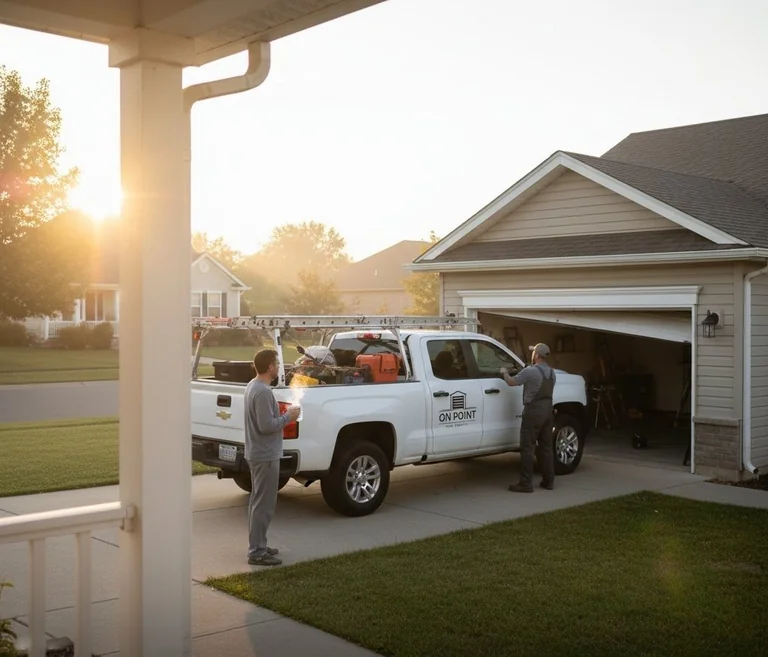
Why Copiague Homeowners Choose Us for Commercial Repair
Garage door problems in Copiague are predictable once you've worked the area as long as we have. Same brands, same failure modes, same seasonal patterns — and we plan around all of it. Copiague sits about 31 miles from Midtown Manhattan, putting us inside our core same-day response zone. Local climate is humid continental — cold winters that ice tracks and humid summers that swell wood, and that affects garage doors in predictable ways — frozen weatherstripping in winter, swollen wood panels in summer, salt-corroded springs in coastal pockets, and rust at the bottom seal where snow piles against the door.
If you are near Tanner Park, you are squarely inside our daily service zone — we are there constantly.
The Step-by-Step Service Workflow in Copiague
1. Route Density. We run multiple trucks across Suffolk County, NY every day. The dispatch radius from the closest truck is short, which is why our typical response time in Copiague is under 60 minutes during business hours — even at peak demand windows.
2. Cleanup. Old springs, old cables, old opener heads, packing material — we haul it out on the truck. The garage stays cleaner when we leave than when we arrived.
3. Phone Diagnostic Before Dispatch. When you call we ask three questions: what is the door doing right now, did you hear a loud bang or grinding sound, and what brand is the opener if you can read the label. From those answers we predict the failure mode and dispatch the right truck with the right parts.
4. Safety Reverse Calibration on Every Job. Federal UL 325 safety standard requires every residential opener to reverse on contact and reverse when the photo-eye beam is broken. We test both before we leave — every job, every time, even if you didn't call about safety.
5. Written Warranty. 1 year parts and labor on standard springs, 3 years on high-cycle 25,000-cycle springs, 5 years on LiftMaster motors, 1 year on new openers, 90 days on most repair labor. Written on the invoice, not buried in fine print.
6. Truck-Stocked Inventory. Every truck carries: torsion springs in the eight most common IPPT calibrations, lift cables in three gauges, full sets of nylon rollers, photo-eye sensor pairs, the ten most common LiftMaster and Chamberlain logic boards, weather seal in 16-foot rolls, and a complete bottom seal retainer kit. Result: 92% first-visit completion rate.
Top Reasons Copiague Homeowners Call Us
- Sticking or binding panels. Wood doors and steel doors can warp or develop hinge play. We tighten hinge hardware, lubricate the pivot pins, and adjust track spacing if needed.
- Photo-eye misalignment and safety reverse failure. Federal UL 325 standard requires safety reverse. A door that won't close is almost always a photo eye issue — leaf, spider web, sun glare, or one eye knocked out of plumb.
- Remote and keypad failure. Dead remote batteries, water-damaged keypads, or rolling-code mismatches between old and new remotes. We diagnose, reprogram, or replace.
- Frayed or snapped lift cables. Cables run inside the drums on both sides. They wear from corrosion, especially in NY weather. We replace both sides as a matched pair using 7×7 aircraft-grade cable rated to door weight.
- Weatherstripping and bottom seal degradation. The rubber bottom seal compresses and cracks after 5-8 years. Replacing it stops drafts, water intrusion, and pest entry. We use UL-rated EPDM seals.
Customer Stories from Copiague
The wood-door tune-up. Customer in Copiague has a 22-year-old wood overlay door with original springs. Annual tune-up: lubrication, hinge tightening, spring inspection, photo-eye test. We caught one cable starting to fray and replaced it before failure. Customer paid $179 for tune-up plus $190 for the cable, saving an emergency call later.
The frozen winter door. January morning in Copiague, temperature 18°F, customer hit the opener and motor strained — bottom seal had frozen to the concrete overnight. Trying to force it stripped the opener gear. We replaced the gear assembly, treated the bottom seal with silicone-based release lube, and added a heating tape recommendation for next winter. $340.
The misaligned photo-eye fix. Customer in Copiague called because the door kept reversing right before closing. On arrival we found the right-side photo-eye knocked out of plumb by 4 degrees — a kid had hit it with a basketball weeks earlier. Realigned, tightened the bracket, tested with multiple closing cycles. $79 service charge, problem solved.
The mid-week emergency. Tuesday morning at 7:15 AM, customer in Copiague hits the wall console — the door rises six inches, jolts, and crashes back down. Loud bang. Spring snapped. We were on-site in 47 minutes, replaced the matched torsion spring pair, balanced and cycle-tested, customer was pulling out of the driveway by 9:30 AM. Total: $420.
The heavy carriage-house panel. Customer in Copiague had a real-wood carriage-house door (310 lbs) and the opener was burning out trying to lift it. Diagnosis: original springs were undersized — door weighed more than the springs were calibrated for. We installed properly-sized high-cycle springs and the opener stopped struggling immediately.
NY Weather Impact on Garage Doors — What Copiague Owners Should Know
Fall (September-November). Best time to schedule a tune-up before winter stress. We inspect cables for corrosion, test spring tension, lubricate, replace any rollers that are starting to grind, and confirm safety reverse is calibrated.
Spring (April-May). Tune-up season. Springs that fatigued through winter are at peak risk now. Have the door balance checked — disconnect the opener manually and lift the door to chest height. It should stay roughly in place.
Summer (June-August). Wood doors swell. Tracks expand. Photo eyes pick up sun glare and give false reverses. We see the most won't-close calls in July and August because of photo-eye sun blinding. Solution: shade the eye sensor or reposition slightly.
Summer (June-August). Heat softens lubricants and accelerates rubber seal deterioration. A seal that lasted 6 winters can fail in one humid summer. Inspect bottom seal in July and replace before it crumbles.
Why Local Matters for Copiague Garage Door Service
National franchise call centers route your call to a dispatcher who has never been to Copiague. They quote a flat rate, send the closest available tech regardless of training, and when something complicated comes up they order parts and reschedule. We're different. Our crew has been to Copiague thousands of times. We know which streets have access constraints, which neighborhoods have older 7-foot doors versus modern 8-foot standard, and which NY weather patterns drive which failure types.
When you call us, you are not getting routed to a contact center. You are getting a dispatcher who can pull up your address on a route map and dispatch the closest of our trucks — usually under 60 minutes during business hours.
We carry insurance certificates for property managers and HOAs in Copiague who require proof for work-order approval. We file W-9s on request, accept ACH for commercial accounts, and offer net-30 invoicing for verified property management companies.
Where We Serve in Copiague
Commercial Repair service in Copiague runs across every neighborhood, from central Copiague to central Copiague. We have multiple trucks rotating through Suffolk County, NY every day so dispatch radius is short.
Copiague has its own quirks for garage door work. The local climate, the housing stock, and the seasonal failure patterns all factor into how we diagnose and fix. We are not a national franchise dispatching from a call center — we are a local crew with local routes and local truck inventory tuned to NY weather and NY housing.
Quick Answers — Commercial Repair in Copiague
My door reverses just before closing — why?
Almost always a photo-eye issue: a leaf, spider web, sun glare, or one eye knocked out of plumb. We clean, realign, and test. If photo eyes check out, the next suspect is the close-force setting on the opener — it may need recalibration.
Why is my garage door so loud all of a sudden?
Three usual culprits: rollers wearing out (steel rollers grind as they age), hinges drying out (lubrication gone), or springs starting to fatigue. A tune-up usually solves all three for $129-$179. If the noise started after a specific event (storm, slammed shut), there may be a track issue we should inspect.
Can I just replace one cable instead of both?
No, and any technician offering to do that is cutting corners. Cables are matched pairs — when one fails the other is right behind it. Replacing only one means another emergency call within 6-12 months. We always replace both sides.
Are your prices the same as the big national chains?
Generally lower. National chains build call-center overhead and franchise royalties into their pricing. We're a local crew — no franchise fees, no overhead bloat. Compare apples-to-apples and we usually beat the chains by 10-25%.
How often should I have my garage door serviced?
Once a year for residential, twice a year for high-cycle commercial. A tune-up catches worn rollers, fatigued springs, loose hinges, and misaligned tracks before they fail.
Will my opener still work after a power outage?
Yes — pull the red emergency-release cord to disengage the opener trolley from the rail, then lift the door manually. To reset, lower the door, pull the cord toward the door (not the motor), and run the opener once.
Do you handle insurance claims and homeowner warranties?
We work with all major homeowner-warranty providers and we provide detailed invoices, photos, and damage reports for insurance claims. We can talk to your adjuster directly if needed.
What's the difference between belt drive and chain drive openers?
Belt drive uses a rubber-reinforced belt and runs significantly quieter — best for garages attached to bedrooms. Chain drive is louder but cheaper and more durable. For most Copiague homeowners we recommend belt drive in finished homes, chain drive in detached garages or workshops.